
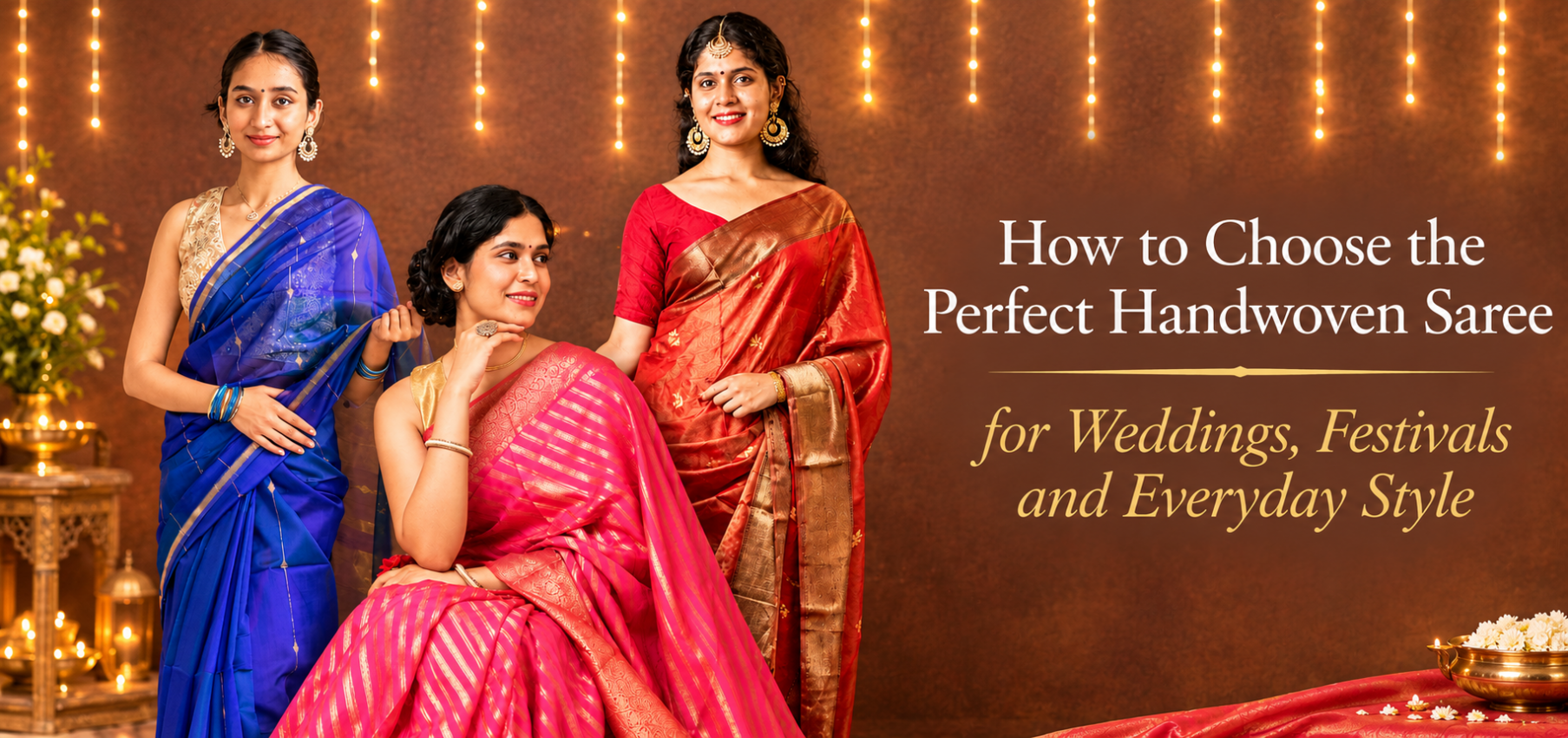
How to Choose the Perfect Handwoven Saree for Weddings, Festivals and Everyday Style
The best handwoven saree is the one that matches your occasion, your climate and how often you will wear it. Rich tissue and zari silks suit weddings, lustrous Maheshwari weaves suit festivals, and soft cotton or batik drapes suit daily wear. In India, one wardrobe must handle summer heat, monsoon humidity and winter wedding season, so this simple framework saves both time and money. This guide explains how to match weave, colour and budget to every occasion.
Why Choose a Handwoven Saree?
A handwoven saree is made on a loom by skilled artisans, so each piece carries subtle variations that machine-made fabric cannot copy. Indian weaving traditions such as Maheshwari, tissue, batik and checks have been refined over generations, and buying them directly supports weaver livelihoods.
Handwoven fabric is typically:
- Breathable: natural yarns suit India's hot and humid weather.
- Durable: well-woven silk and zari can last for decades with proper care.
- Versatile: a good drape can be restyled with different blouses and jewellery.
Before buying, check for even weaving, firm borders and a clear description of the fibre and weave.
Handwoven Sarees for Weddings
What to Look For
A wedding saree must look striking in photographs, hold its drape through long rituals and stay comfortable for hours. Prioritise these three points:
- Fabric: tissue silk and zari-rich silk offer natural shine and an elegant fall.
- Colour: red remains the classic bridal choice, while guests can choose jewel tones.
- Weight: pick a drape you can carry from the ceremony to the reception.
Brides and guests who want a fresh take can explore modern sarees for wedding celebrations, where traditional weaving meets lighter drapes and contemporary colour palettes.
Our Wedding Picks
For a classic look, the red golden tissue saree with golden border and butties pairs a traditional red base with a rich border. For a cleaner, understated finish, the Fresh Pink Saree With Woven Golden Stripes is an elegant alternative.
Maheshwari and Tissue Silk for Festivals
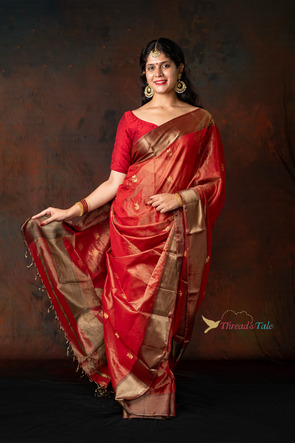
The Maheshwari weave is a practical festive favourite because it is light, graceful and easy to drape. When comparing Maheshwari silk sarees online, check the fibre content, border design and weaver details on the product page. The blue Maheshwari saree is a good starting point, and our collection of handwoven tissue silk sarees adds a soft shimmer to evening celebrations.
Everyday Handwoven Sarees
Daily wear should put comfort ahead of embellishment. Choose light cotton or soft blends in simple patterns that are easy to wash and maintain.
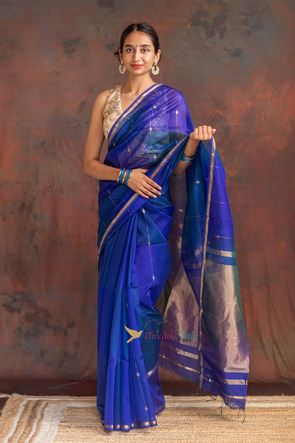
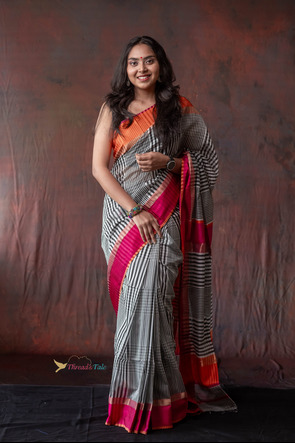
The red hand-crafted batik saree adds artistic colour to office days and casual outings. The black and white checks handwoven saree is a versatile monochrome option that pairs with almost any blouse. Keeping a few solid blouses on hand lets you restyle one saree many ways.
Quick Buying and Care Tips
- Decide the occasion and budget first.
- Check the fibre, weave and length. A standard saree is about 5.5 metres, plus a blouse piece.
- Study the border, pallu and weave evenness in the photographs.
- Read the return and care details before ordering.
Dry-clean silk and tissue sarees, store them in soft muslin, and refold them every few months to protect the zari. Wash cotton and batik sarees gently in cold water, separately, and dry them in the shade.
Find Your Perfect Handwoven Saree
Choosing a handwoven saree becomes simple once you know the occasion, fabric and drape you need. Invest in rich tissue or silk for weddings, Maheshwari for festivals, and breathable weaves for everyday style.
Frequently Asked Questions
Tissue silk or zari-rich silk in red, maroon or jewel tones is best. These fabrics offer shine, a graceful fall and comfort through long ceremonies.
Yes. Their light weight and elegant borders make them comfortable for long festive days, from Diwali pujas to family dinners.
Yellow, mustard, orange or soft pastels work best. Choose a light fabric that you do not mind staining.
Dry-clean silk and tissue, wash cotton and batik gently in cold water, and store sarees in muslin away from direct sunlight.
Yes. Breathable cotton, batik and checked weaves are comfortable and practical for daily wear in Indian weather.
-
 November 2nd, 2026
-
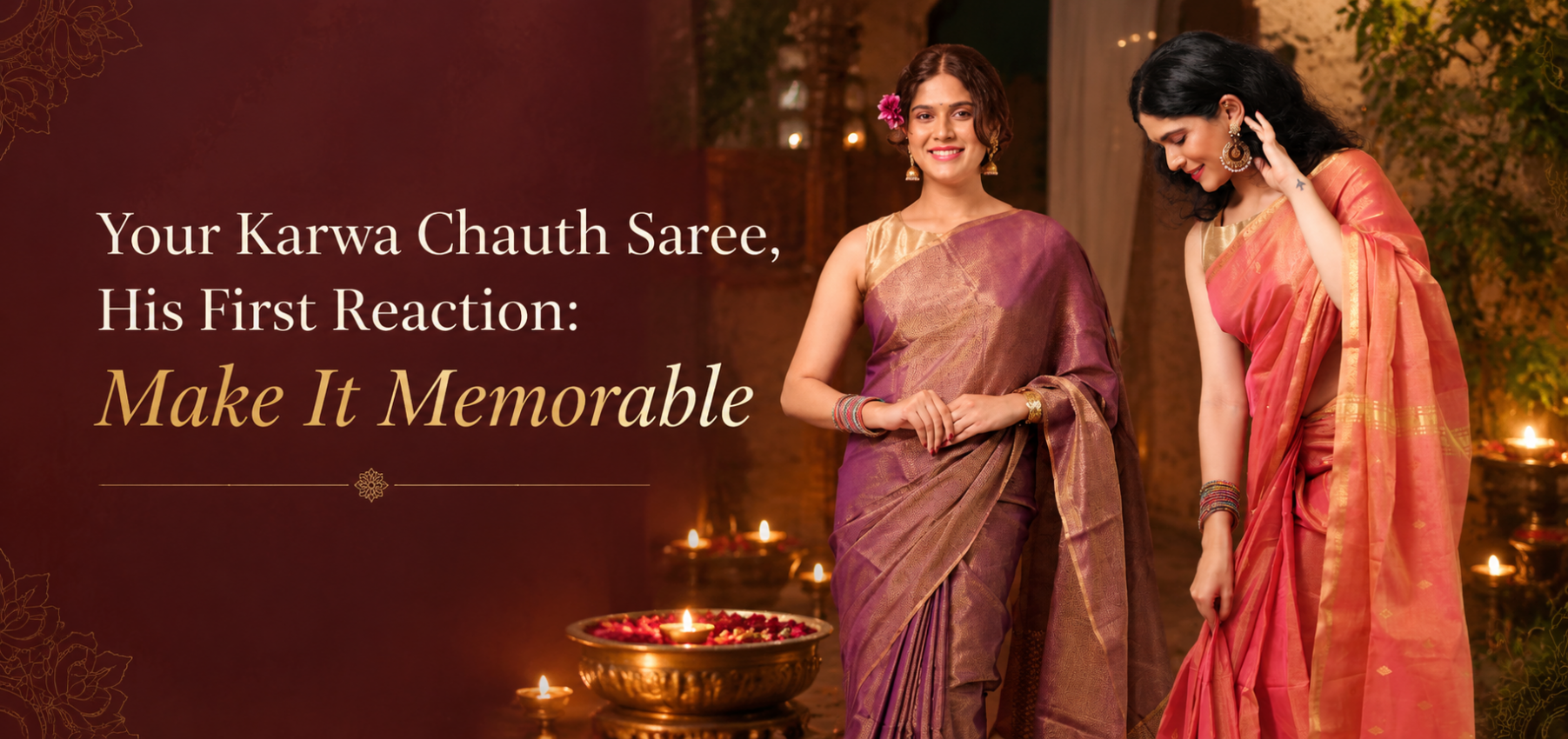
Your Karwa Chauth Saree, His First Reaction: Make It Memorable
October 22nd, 2026 -
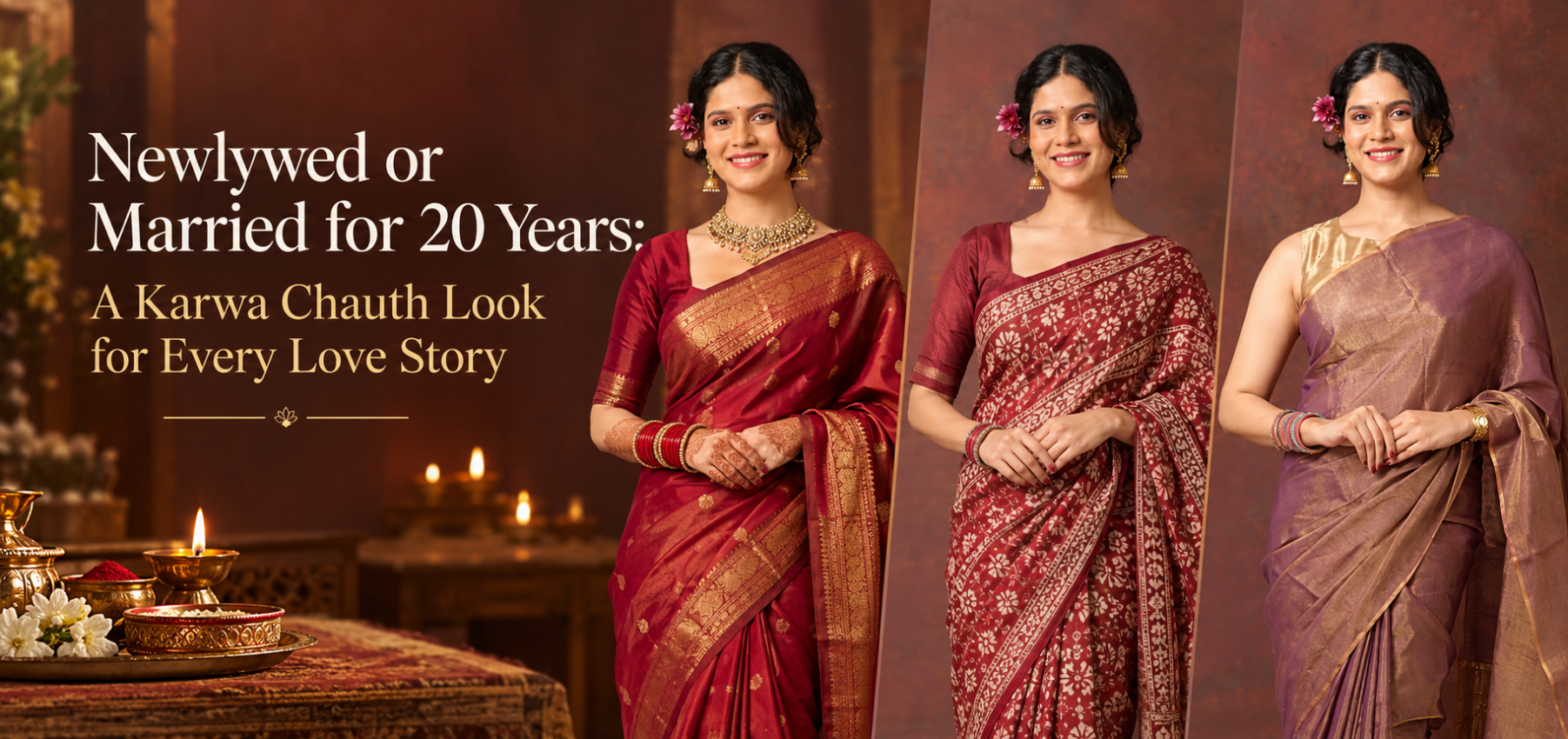
Newlywed or Married for 20 Years: A Karwa Chauth Look for Every Love Story
October 22nd, 2026 -

Beyond Red: Karwa Chauth Saree Colours You’ll Fall in Love With
October 21st, 2026 -
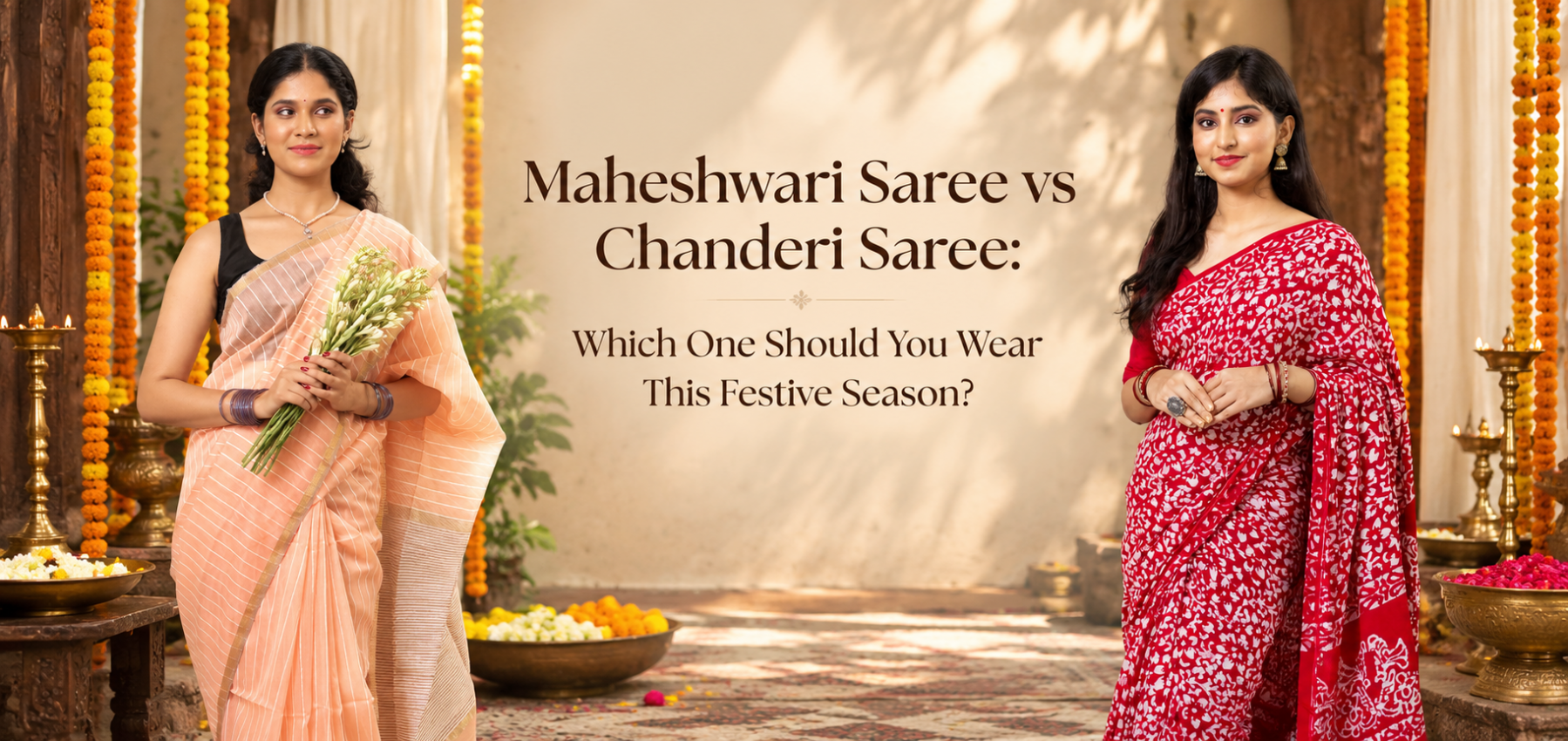
Maheshwari Saree vs Chanderi Saree: Which One Should You Wear This Festive Season?
September 29th, 2026