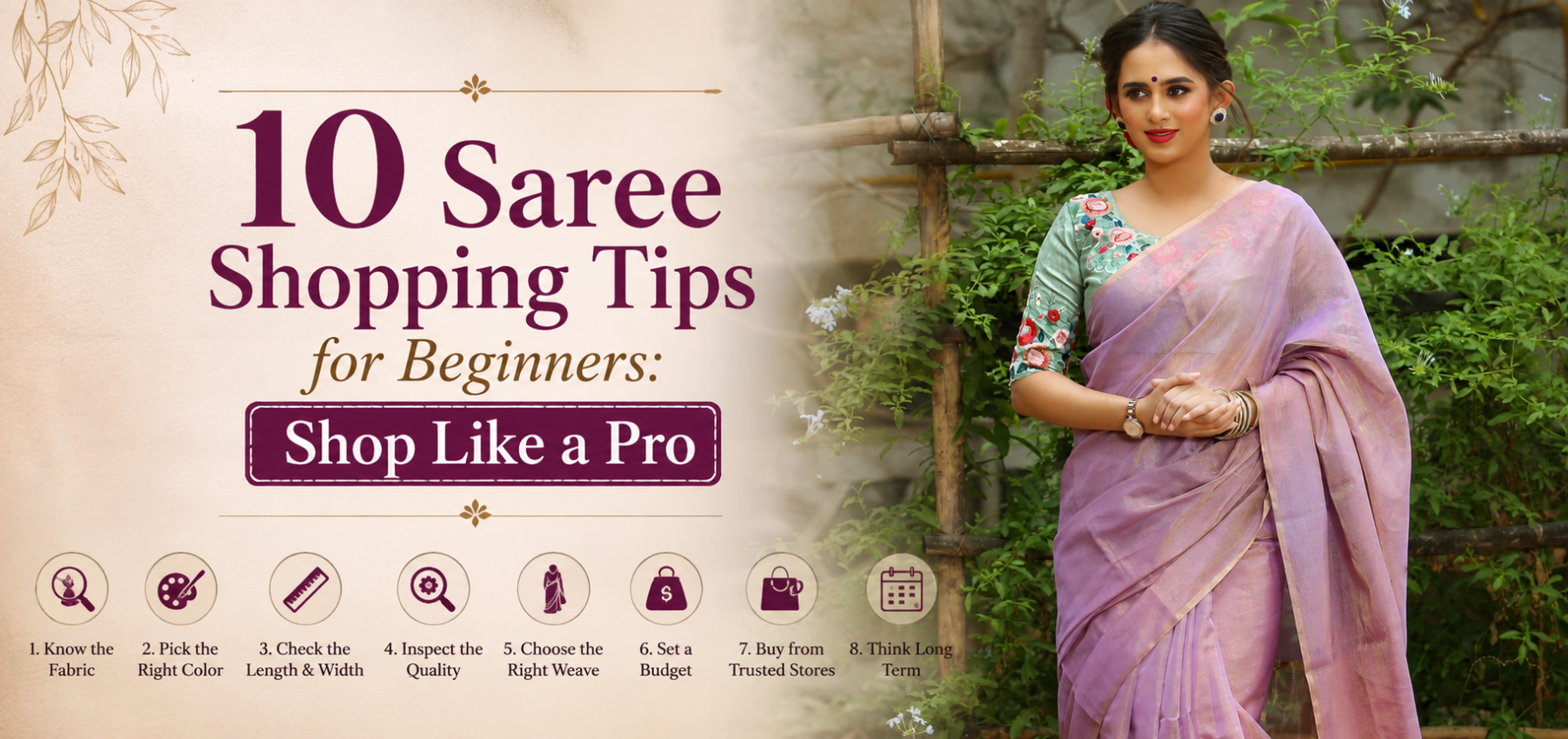
10 Saree Shopping Tips for Beginners: Shop Like a Pro
Buying your first few sarees can feel overwhelming — between fabric types, weaving techniques, blouse compatibility, and regional variations, it's easy to end up with a piece that looks beautiful on the hanger but doesn't work on the body. These saree shopping tips are built around the questions first-time buyers actually ask, so you can shop with the same confidence as someone who's been draping sarees for years.
What Should a Beginner Know Before Buying a Saree?
A beginner should first understand fabric weight, drape style, and blouse pairing before choosing a saree, since these three factors determine comfort and how the final look falls. Lightweight cottons and Chanderi blends are easier to manage for first-timers than heavy silk brocades or zari-dense weaves, which require more practice to drape neatly.
1. Start With a Fabric You Can Actually Manage
Not every fabric behaves the same way once it's on the body. Stiffer weaves like Kanjeevaram silk hold pleats well but are heavier and harder to drape solo, while softer, lighter fabrics like a chanderi silk saree with zari border drape more easily and forgive small pleating mistakes, making it a practical first choice for beginners.
Beginner-Friendly Fabrics
- Chanderi silk: Lightweight, sheer, easy to pleat, ideal for daytime events.
- Maheshwari silk-cotton blend: Slightly structured, holds shape without being stiff.
- Cotton handloom: Breathable and low-maintenance, best for everyday wear.
- Tissue or heavy silk: Better attempted once you're comfortable draping, not on the first try.
2. Understand the Difference Between Handwoven and Machine-Made
Handwoven sarees are made on traditional looms and can take several days to weeks to complete, depending on the pattern's complexity, while machine-made sarees are produced in bulk within hours. Handwoven pieces typically show small, natural irregularities in the weave — a sign of authenticity, not a flaw — whereas machine-made fabric has a uniform, repetitive texture throughout.
3. Check the Border and Pallu Work Closely
The border and pallu carry most of a saree's visual weight, so examine them before checking anything else. Run your fingers along the zari border to feel for raised, textured threadwork — genuine zari has a slightly rough texture, while printed or synthetic imitations feel flat and smooth.
4. Match the Saree to the Occasion, Not Just the Trend
A saree that photographs well online doesn't always suit the occasion it's bought for. Matching fabric weight and embellishment level to the event prevents both overdressing and underdressing.
Occasion-Based Saree Guide
- Workplace or daytime meetings: Structured cottons and lightweight silks that don't need constant adjusting are best suited for a saree for office wear look.
- Wedding functions: Richer weaves with zari or embroidery work well; many buyers now prefer modern sarees for wedding that blend traditional motifs with contemporary silhouettes.
- Casual or festive day events: Hand block-printed and batik sarees offer colour and comfort without heavy zari work.
- Gifting: Handwoven pieces with a strong craft story tend to be better received than mass-produced options.
5. Learn to Read a Saree's Care Label Before Buying
The care label tells you whether a saree needs professional dry cleaning, hand washing, or spot cleaning — information that affects long-term cost, not just the purchase price. Sarees with dense zari borders or hand embroidery typically require dry cleaning, while simpler weaves can usually be hand washed at home.
6. Buy the Right Saree Length and Width
Standard sarees run between 5.5 and 6.5 metres in length and roughly 44 to 48 inches in width, though this varies slightly by region and weaving tradition. Taller buyers or those planning specific drape styles, such as the Bengali or Gujarati style, should confirm the exact length before purchase, since a shorter saree limits how the pallu can be styled.
7. Don't Skip the Blouse Compatibility Check
A saree's fabric and border pattern should influence blouse choice, not the other way around. Heavily embellished borders pair better with simpler blouses, while plain-bodied sarees leave more room for statement blouse designs, embroidery, or contrast fabric.
8. Compare Natural Dye vs. Synthetic Dye Sarees
Natural dyes — derived from indigo, madder root, turmeric, and similar plant sources — tend to soften slightly with each wash and develop a muted, richer tone over time. Synthetic or chemical dyes hold a more uniform, bright colour from the first wash but are more prone to sudden fading if exposed to harsh detergents or direct sunlight.
9. Explore Regional Weaves Beyond the Popular Ones
Most beginners default to Banarasi or Kanjeevaram sarees because they're widely recognised, but India's weaving traditions extend far beyond these two. Hand-painted and resist-dyed styles, such as indian batik sarees, or cotton-silk blends like a pure maheshwari silk saree, offer distinct regional craftsmanship at often more accessible price points than mainstream silk weaves.
10. Buy From Sources That Disclose Weaving Details
A trustworthy seller will specify the weaving technique, fabric composition, and region of origin rather than using vague terms like "premium fabric" or "designer saree." This transparency matters most when shopping from a catalog of handmade sarees online, where fabric authenticity can otherwise be difficult to verify without seeing the piece in person.
Step-by-Step: How to Shop for Your First Saree
Following a clear sequence removes most of the guesswork from a first purchase. This is the order experienced buyers typically follow.
- Decide the occasion first — this narrows fabric weight and embellishment level immediately.
- Set a fabric preference between cotton, cotton-silk blend, or pure silk based on comfort and draping ease.
- Check the border and pallu texture for hand-finished detailing.
- Confirm saree length and blouse piece inclusion before checkout.
- Read the care label to understand long-term maintenance needs.
- Verify the seller discloses weaving technique and fabric origin.
Beginner Mistakes vs. Smarter Alternatives
- Mistake: Buying based on colour alone. Smarter approach: Prioritise fabric weight and draping ease first, then choose colour within that shortlist.
- Mistake: Choosing the heaviest, most embellished saree for a first purchase. Smarter approach: Start with lighter weaves to build draping confidence before investing in heavier pieces.
- Mistake: Ignoring the care label until after purchase. Smarter approach: Factor maintenance cost into the buying decision upfront.
Expert Insight: What Experienced Buyers Look For
Seasoned saree buyers typically check the reverse side of the fabric before the front. A hand-finished border shows slight thread irregularities on the back, while machine-embroidered or printed borders look identical on both sides — a quick way to judge authenticity before relying on the seller's description alone.
Frequently Asked Questions
What is the easiest saree fabric for a beginner to drape?
Lightweight fabrics like Chanderi silk or cotton handloom are easiest for beginners, since they hold pleats without excess weight and are more forgiving of small draping mistakes. Heavier silks like Kanjeevaram are better attempted after some practice.
How do I know if a saree is handwoven or machine-made?
Handwoven sarees usually show slight, natural irregularities in the weave and texture, especially along the border, while machine-made fabric has a uniform, repetitive pattern throughout. Checking the reverse side of the border often reveals the clearest difference.
How many metres of fabric does a standard saree have?
A standard saree is typically between 5.5 and 6.5 metres long and 44 to 48 inches wide, though exact measurements vary slightly by region and weaving style. Always confirm the length if you're planning a specific drape style.
Should beginners buy silk or cotton sarees first?
Cotton or cotton-silk blends are generally better for beginners, since they're lighter, easier to manage through a full day, and more budget-friendly for learning how to drape. Pure silk sarees are a good next step once draping feels comfortable.
What should I check before buying a saree online?
Check the fabric composition, weaving technique, saree length, and care instructions before buying online, and confirm whether a blouse piece is included. Sellers who disclose these details clearly are generally more reliable than those using vague product descriptions.
In Summary
Smart saree shopping comes down to matching fabric weight and drape style to your comfort level, checking border and pallu work by hand rather than photos alone, and choosing sellers who disclose weaving technique and origin. These saree shopping tips apply whether you're buying your first cotton handloom or building toward heavier silk weaves later, and they hold true regardless of which region's craft tradition you're drawn to.
-
Which Saree Should I Wear? Easy Choices for Weddings, Office, Festivals & Everyday
September 17th, 2026 -
 August 25th, 2026
 -
What to Wear for Ganesh Chaturthi: Saree Colours and Styling Guide
August 24th, 2026 -
 August 24th, 2026