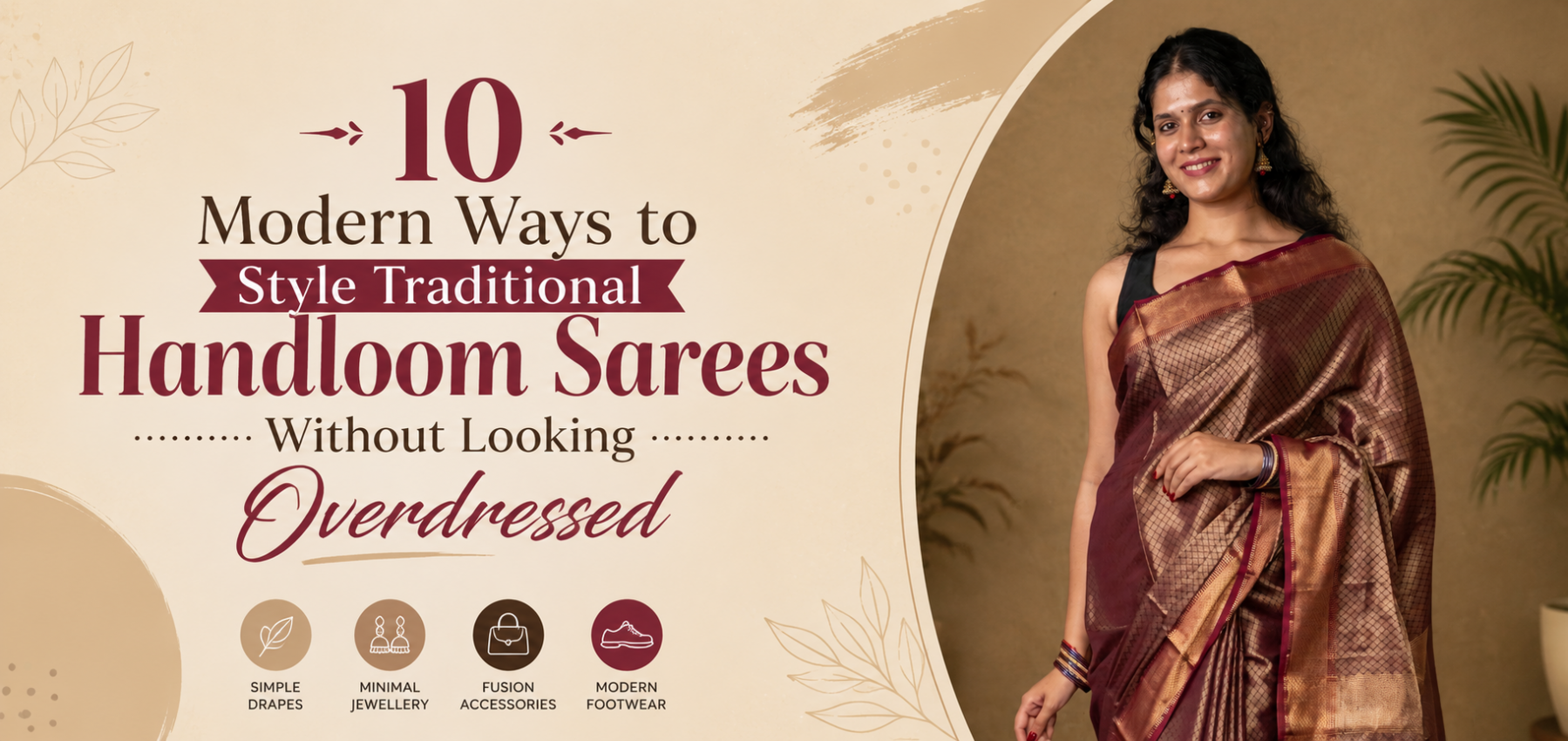
A Guide to Choosing Comfortable Sarees for Long Hours
In the vibrant landscape of Indian fashion, the saree remains an unparalleled symbol of grace, heritage, and professional authority. However, for many modern women—ranging from corporate leaders and educators to entrepreneurs and wedding guests—the primary challenge isn't just looking elegant, but maintaining that elegance through the physical demands of a long day. Whether it is a back-to-back meeting schedule, a day-long family ritual, or a travel-heavy itinerary, the art of choosing comfortable sarees is a skill that blends textile knowledge with practical styling.
India’s diverse climate, characterized by intense humidity and soaring temperatures, demands clothing that acts as a second skin. A saree that feels heavy or restrictive after just two hours is a liability. Conversely, a well-chosen handloom drape can feel as light as air, allowing for effortless movement and sustained focus. This extensive guide explores the intricate details of fabric construction, regional weaving clusters, and ergonomic strategies to ensure your ethnic wear supports you through the longest of days.
The Physiology of Textile Comfort
To understand what makes a saree comfortable, we must first look at the science of "thermoregulation." The human body constantly regulates its temperature through the evaporation of sweat. If a fabric is "non-breathable" (like many cheap synthetic polyesters), it traps a layer of hot, humid air against the skin. This leads to the "sauna effect," causing fatigue, skin irritation, and mental distraction.
Natural fibers, the cornerstone of Indian handlooms, are inherently superior for long-duration wear. Cotton, silk, and linen are porous and hygroscopic. They absorb moisture and facilitate its movement away from the body. This is why women who spend their days in high-pressure environments are increasingly searching for Handcrafted Sarees Online. Hand-loomed fabrics possess a microscopic irregularity in their weave that allows air to circulate more freely than the dense, uniform weave of power-loom textiles.
Decoding the Weaves: Central India’s Heritage Solutions
The Structural Brilliance of Maheshwari Textiles
When discussing long-wear comfort, the weavers of Maheshwar hold a centuries-old secret. Historically, the Maheshwari saree was designed to be regal enough for a queen but light enough for the sweltering heat of the Narmada riverbanks. A Pure Maheshwari Silk Saree utilizes a specific "Garbha Resham" technique—using pure silk in the warp and fine cotton in the weft. This creates a fabric that has the sophisticated sheen of silk but the airy breathability of cotton.
The weight of a Maheshwari drape is its greatest asset. Unlike heavy Kanjeevarams that can weigh up to two kilograms, a Maheshwari is often less than 500 grams. This significant reduction in weight prevents "saree fatigue," a common condition where the weight of the pleats and pallu causes strain on the waist and shoulders. For those navigating the digital marketplace, finding Maheshwari Silk Sarees Online ensures access to these ergonomically superior drapes that transition perfectly from a 9 AM presentation to a 7 PM dinner.
The Sheer Elegance of Chanderi
Often described as "woven air," Chanderi fabric is another champion of comfort. Its sheer texture and lightweight feel make it ideal for the Indian climate. The use of high-quality silk and fine cotton yarns, often embellished with small but intricate "buttis," ensures that you don't need heavy embroidery to look festive. For long hours, the lightness of Chanderi ensures that your movement remains fluid and unencumbered.
The Art of Prints: Batik and Beyond
Heavy embellishments, such as stones, sequins, and thick zari work, are the enemies of comfort. They add unnecessary weight and can often scratch the skin. Prints offer a beautiful alternative, providing visual depth without physical burden.
The Tactile Comfort of Batik Cotton Sarees
Batik is a traditional wax-resist dyeing technique that has been embraced by Indian artisans for generations. Batik Cotton Sarees are particularly celebrated for their softness. Because the fabric undergoes a process of waxing, dyeing, and boiling, the cotton fibers become incredibly supple. This "pre-softening" makes them feel broken-in and comfortable from the very first wear.
A Batik Print Cotton Saree is a staple for women in creative and academic fields who need an outfit that remains breathable through long lectures or field visits. The organic, crackled patterns of Batik also hide minor wrinkles that inevitably occur during long hours of sitting. When you look for Batik Print Sarees Online, you are investing in a textile that prioritizes the health of your skin while showcasing a unique, handcrafted aesthetic.
Technical Considerations: GSM and Drape Fluidity
In the textile industry, GSM (Grams per Square Meter) is a critical metric. For a saree intended for long-hour wear, the ideal GSM range is between 70 and 110. * **Low GSM (70-90):** These are extremely sheer and light, like Mulmul or Kota Doria. Medium GSM (90-110): These offer more structure and "fall" while remaining breathable, like Linen or Silk-Cotton blends. Anything above 150 GSM starts to feel heavy by the end of a six-hour window.
Fluidity, or "the fall," is equally important. A fabric that is too stiff will require more pins and constant adjustment. A fluid fabric, like a well-woven silk-cotton, follows the contours of the body, reducing the "drag" when you walk. This is a key part of choosing comfortable sarees—testing the fabric's movement before committing to a day-long drape.
Ergonomic Draping for the Modern Lifestyle
Even the most comfortable fabric can become a burden if the drape is poorly executed. Professional SEO writers and fashion experts agree that the mechanics of the drape contribute 40% to the overall comfort level.
1. Distributing the Waist Weight
The standard "Nivi" drape concentrates all the weight of the pleats at the navel. For long hours, this can lead to discomfort or even digestive pressure. To mitigate this, spread your pleats slightly (about half an inch apart) before tucking them in. This flattens the tuck and distributes the weight more evenly across your hip bone.
2. Shoulder Pinning Logic
Most women pin their pallu at the very top of their shoulder. This can cause the saree to pull on the neck muscles. Instead, pin the pallu about an inch or two further back, toward the shoulder blade. This allows the structural bones of your shoulder to carry the weight rather than the soft tissue of the neck.
3. Pleat Depth and Walking Ease
If you have a busy day ahead involving stairs or walking, make your pleats slightly narrower and more numerous. This creates a "fan" effect that allows for a larger stride. If you are wearing a Batik Print Cotton Saree, the fabric’s natural grip will ensure these pleats stay in place even with minimal pinning.
The Foundation: Blouses and Underskirts
We often focus so much on the six yards of fabric that we ignore what lies beneath. A saree’s comfort is only as good as its foundation.
- The Blouse: Avoid synthetic linings. Always insist on 100% cotton lining. If you are in a humid city like Mumbai or Chennai, consider sweat pads to protect your blouse and keep you feeling dry.
- The Petticoat/Shaper: The traditional cotton petticoat is the most breathable. If you prefer the sleek look of a saree shaper, ensure it is made of high-quality, moisture-wicking fabric with a slit at the bottom for easy movement.
Seasonal Adaptability: A Guide for the Indian Climate
India’s seasons dictate the rules of comfort. While a Pure Maheshwari Silk Saree is versatile enough for most of the year, specific seasons have their own champions.
Summer Survival (March to June)
During these months, light colors are your best friend. Pastel shades of lemon, mint, and peach reflect sunlight. Hand-loomed cottons and linens are the only logical choice for long hours under the sun.
Monsoon Management (July to September)
Humidity is at its peak. You need fabrics that dry quickly and don't become transparent when damp. Silk-cotton blends are excellent here as they have better structural integrity than pure cotton when exposed to moisture.
Winter Elegance (November to February)
This is the time to bring out the Tussar silks and heavier hand-block prints. The natural warmth of silk provides insulation without the bulk of a sweater, maintaining a professional silhouette.
Sustainability and the Ethical Choice
Comfort isn't just physical; it's also a state of mind. There is a psychological ease in knowing your clothing was produced ethically. Traditional handlooms use fewer chemicals and natural dyes. These are not only better for the environment but also for your skin. When you choose Batik Cotton Sarees or Maheshwari weaves, you are supporting a slow-fashion ecosystem that empowers artisans. This human touch ensures that every piece is unique and made with care, which translates to a better fit and feel for the wearer.
The Role of Color in Thermal Comfort
It is a well-known fact of physics that dark colors absorb more heat. If your day involves being outdoors, a black or dark blue saree can raise your body temperature significantly. For long-hour comfort, opt for whites, creams, and light greys. These colors reflect thermal radiation, keeping you significantly cooler. A light-colored Maheshwari Silk Saree Online purchase can be a game-changer for your summer wardrobe.
Conclusion: The Empowerment of Comfort
Choosing comfortable sarees is an investment in your daily well-being. When you are not distracted by a heavy pallu, a scratching border, or a non-breathable fabric, you are free to perform at your best. The rich textile heritage of India—from the hand-blocked Batik Cotton Sarees to the regal Pure Maheshwari Silk Saree—offers a solution for every woman and every occasion.
By prioritizing natural fibers, understanding weave density, and mastering the ergonomics of the drape, you can transform the saree from a "special occasion" outfit into a daily companion of ease and elegance. Support the artisans who keep these comfortable traditions alive and embrace a lifestyle of sustainable, breathable fashion.
Frequently Asked Questions
1. What is the most comfortable saree fabric for high humidity?
Pure cotton and linen are the best fabrics for high humidity because they allow for maximum air circulation and absorb sweat effectively. Hand-loomed cotton, in particular, is very porous and stays cool.
2. Why are Maheshwari sarees recommended for long hours?
Maheshwari sarees are made from a silk-cotton blend that is exceptionally lightweight and breathable. They offer a formal, polished look without the heavy weight of traditional silk, making them perfect for all-day wear.
3. How do Batik prints contribute to saree comfort?
The Batik process involves natural dyes and wax-resist techniques on high-quality cotton. This process makes the fabric extremely soft and skin-friendly, which is essential for avoiding irritation during long events.
4. Can I wear a comfortable saree to a wedding?
Absolutely. You don't need heavy zari to look festive. A Pure Maheshwari Silk Saree with its elegant borders provides a regal look while remaining light enough to allow you to enjoy the festivities for many hours.
5. Where can I buy authentic comfortable handloom sarees?
You can find authentic Handcrafted Sarees Online through platforms that work directly with weavers and artisans. Always check for descriptions that mention natural fibers and traditional weaving techniques to ensure maximum comfort.
-
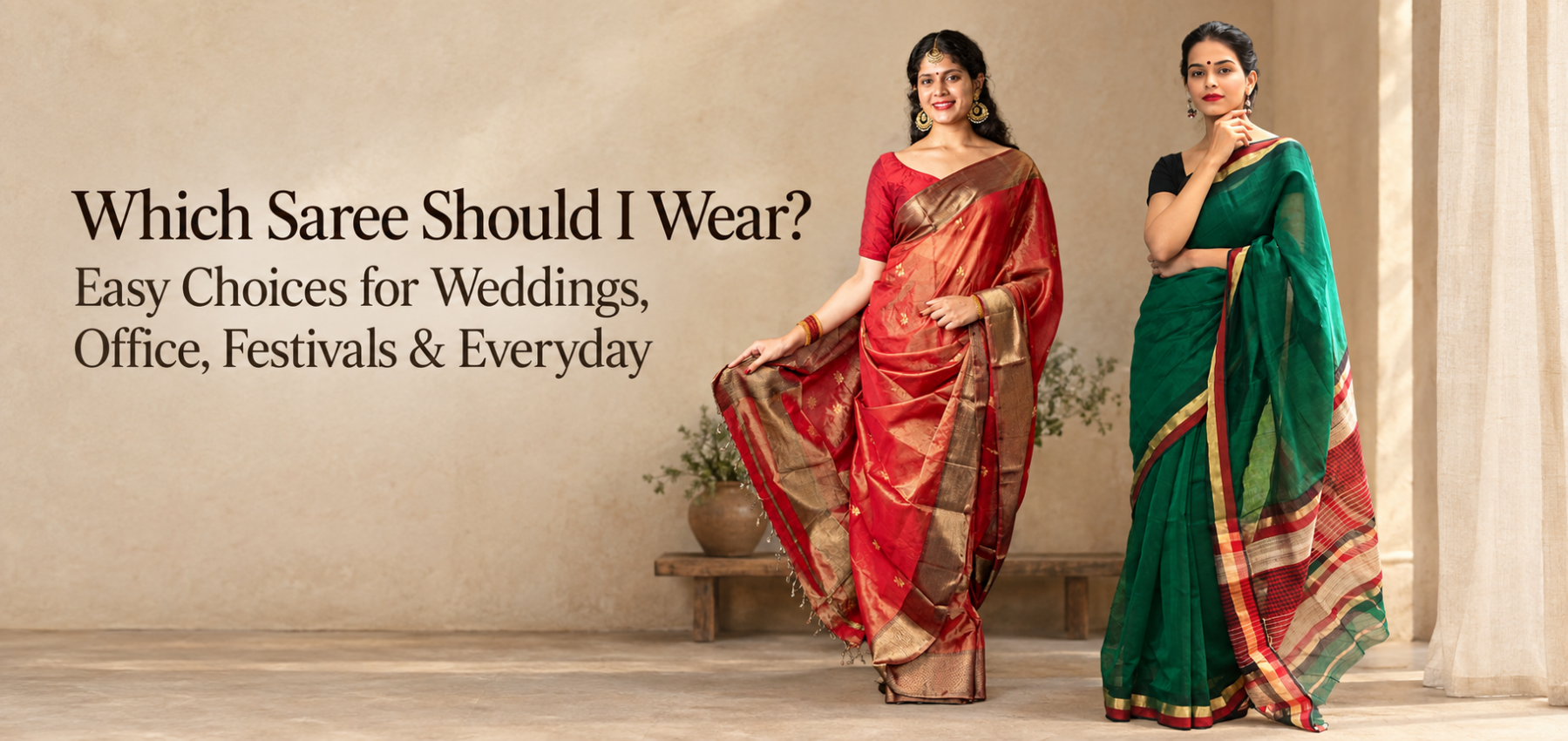
Which Saree Should I Wear? Easy Choices for Weddings, Office, Festivals & Everyday
September 17th, 2026 -
 August 25th, 2026
 -
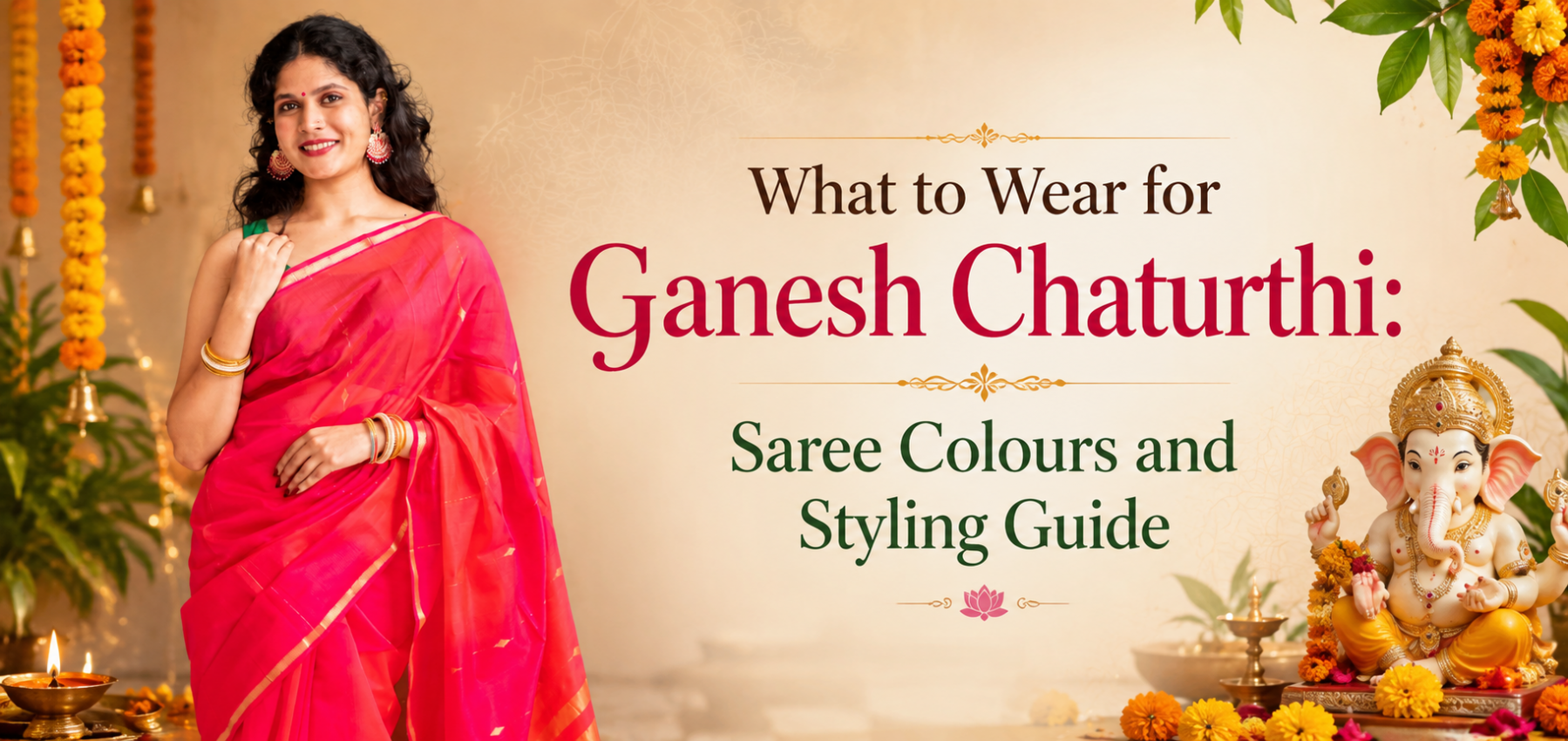
What to Wear for Ganesh Chaturthi: Saree Colours and Styling Guide
August 24th, 2026 -
 August 24th, 2026