A Region-by-Region Guide to Festive Saree Traditions Across India
Travel across India during festival season and you will notice something remarkable: the saree changes its character with every state border you cross. A red-and-white cotton drape in Kolkata, a gold-bordered cream weave in Kochi, a mirror-worked Bandhani in Ahmedabad, a nine-yard Nauvari in Pune — each one tells a different regional story, yet all of them belong to the same shared thread of Indian festival clothing.
This guide travels state by state to explore how India's festivals shape its sarees, why certain colours and weaves belong to specific celebrations, and how these traditions continue to thrive in modern wardrobes today.
Why the Saree Remains at the Heart of Indian Festival Clothing
Long before ready-to-wear fashion arrived, the saree was already doing the work of marking celebration, season, and status. It remains the most recognisable form of Indian festival clothing because it is endlessly adaptable — the same six yards can be draped, bordered, dyed, and woven in hundreds of distinct regional styles, each rooted in local craft traditions, climate, and the specific rituals of a festival. A Bengali woman's tant saree and a Tamil bride's Kanjeevaram may look nothing alike, yet both carry the same underlying purpose: honouring a moment through fabric.
East India: Bengal and Odisha's Festival of Colour and Story
In West Bengal, no festival is more closely tied to the saree than Durga Puja. The classic Lal Paar Sada Saree — a white cotton or tant saree with a red border — is worn on the final days of the festival, with red symbolising the goddess's strength and white representing purity. For evenings and cultural functions, many women reach for a Baluchari saree, whose pallu is famously woven with scenes from the Ramayana and Mahabharata, or a Garad Korial saree, an off-white silk with an unmistakable red border traditionally worn without any dye touching the body.
Neighbouring Odisha brings its own festive language through the Sambalpuri and Bomkai sarees. Woven using the region's distinctive ikat technique, Sambalpuri sarees are worn during Rath Yatra and other local festivals, their bold geometric patterns instantly recognisable against Odisha's temple-town backdrop.
North India: Banarasi Brocade and the Colours of Navratri
Uttar Pradesh's contribution to Indian festive wardrobes needs little introduction — the Banarasi silk saree, with its dense zari brocade and Mughal-inspired motifs, remains a first choice for Diwali, weddings, and Karva Chauth across North India.
Travel further west to Gujarat and Rajasthan, and the mood shifts entirely toward colour. During the nine nights of Navratri, women wear Bandhani sarees in tie-dyed patterns of red, yellow, and green, often choosing a specific colour for each day of the festival to align with its spiritual significance. Rajasthan's Leheriya sarees, with their wave-like dye patterns, follow a similar festive logic, worn especially during Teej and Gangaur celebrations.
West India: Maharashtra and Madhya Pradesh's Handloom Legacy
In Maharashtra, Ganesh Chaturthi calls for the Paithani saree, known for its peacock motifs and vivid pallu, alongside the historic Nauvari — a nine-yard saree draped dhoti-style, once worn by Maratha women for both practicality and symbolism.
Madhya Pradesh, meanwhile, offers a quieter but equally significant festive tradition through its Chanderi and Maheshwari weaves. A chanderi silk saree with zari border is a popular choice for Diwali and family celebrations thanks to its lightweight sheer texture and understated shine, while a pure maheshwari silk saree is favoured for its distinctive reversible border and comfortable silk-cotton blend, making it as suitable for a day-long puja as it is for an evening gathering.
South India: Temple Motifs, Gold Borders, and Harvest Festivals
South India's festive saree culture is built around two major threads: temple-inspired silk weaves and harvest celebrations. In Tamil Nadu, the Kanjeevaram saree, with its heavy gold zari border and temple motifs, is the definitive choice for Pongal, weddings, and classical dance performances. Karnataka answers with the Mysore silk saree, lighter and more understated than a Kanjeevaram, often chosen for daytime festival functions and gifting.
In Kerala, the Kasavu saree — a cream cotton weave with a gold border, worn as the traditional Mundum Neriyathum drape — is inseparable from Onam and Vishu, typically paired with jasmine flowers and gold jewellery. Meanwhile, Telangana's Pochampally Ikat sarees bring bold, geometric patterns to festival wardrobes across the region, echoing Odisha's Sambalpuri weaves through a shared ikat technique.
Northeast India: Assam's Bihu Weaves
Assam's festive identity is inseparable from the Mekhela Chador, a two-piece drape rather than a single stitched saree, traditionally woven in Muga silk, Eri silk, or cotton. Worn during Bihu celebrations and Assamese weddings, its golden Muga silk variant is especially prized for its natural sheen, which is said to deepen with every wash rather than fade.
Colour Symbolism Across India's Festive Sarees
One thread runs through almost every regional tradition: colour is never accidental. Red and white dominate Bengal's Durga Puja wardrobe as symbols of strength and purity, while Navratri's nine colours each carry a distinct spiritual meaning tied to the day's presiding form of the goddess. In the south, harvest festivals like Pongal and Makar Sankranti favour earthy mustard, green, and brown tones that reflect a connection to the land. This deliberate use of colour is one of the most consistent threads running through Indian festival clothing, regardless of region or weave.
How to Choose a Festive Saree for Any Regional Celebration
With so many regional options, choosing a festive saree often comes down to occasion, comfort, and the story you want to carry. For a lighter, everyday-festive look, a batik print cotton saree offers breathable comfort with artisanal hand-block detailing, ideal for daytime pujas or family gatherings. For evenings that call for a touch more shine without heavy embellishment, a handwoven tissue saree brings a soft metallic glow that works well across Diwali, engagement functions, and festive dinners.
Shoppers looking to build a versatile festive wardrobe often start by browsing maheshwari silk sarees online for everyday elegance, then add a curated piece from a collection of handcrafted sarees online for larger celebrations — pairing practicality with pieces that carry genuine regional craftsmanship.
Celebrating India's Weaving Heritage This Festive Season
Every regional saree tradition, from Bengal's red-bordered tant to Assam's golden Muga silk, represents generations of weaving knowledge passed down within artisan families. Choosing a handwoven festive saree over a mass-produced one isn't just a style decision — it's a way of keeping these regional crafts, and the livelihoods behind them, alive for the next generation of India's festivals.
Frequently Asked Questions
Which saree is traditionally worn during Durga Puja?
In Bengal, the Lal Paar Sada saree, a white cotton or tant saree with a red border, is the most iconic choice for Durga Puja, though many women also wear Baluchari or Garad silk sarees during the festival's later days.
What saree is worn for Onam in Kerala?
The Kasavu saree, an off-white or cream cotton saree with a gold zari border, is the traditional choice for Onam and other Kerala festivals, often paired with jasmine flowers and gold jewellery.
Why do saree colours change according to the festival?
In Indian festival clothing, colours often carry symbolic meaning. Red and white represent purity and strength during Durga Puja, nine distinct colours mark each day of Navratri, and earthy tones like mustard and green are common during harvest festivals such as Pongal and Makar Sankranti.
Which saree is worn during Bihu in Assam?
The Mekhela Chador, a two-piece traditional drape woven in Muga, Eri, or cotton, is worn during Bihu celebrations in Assam and is considered one of the region's most distinctive festival garments.
What makes South Indian festival sarees different from North Indian ones?
South Indian festival sarees such as Kanjeevaram and Mysore silk are known for temple-inspired motifs, wide gold borders, and rich silk textures, while North Indian sarees like Banarasi and Bandhani favour Mughal-inspired brocade patterns and tie-dye techniques respectively.
-
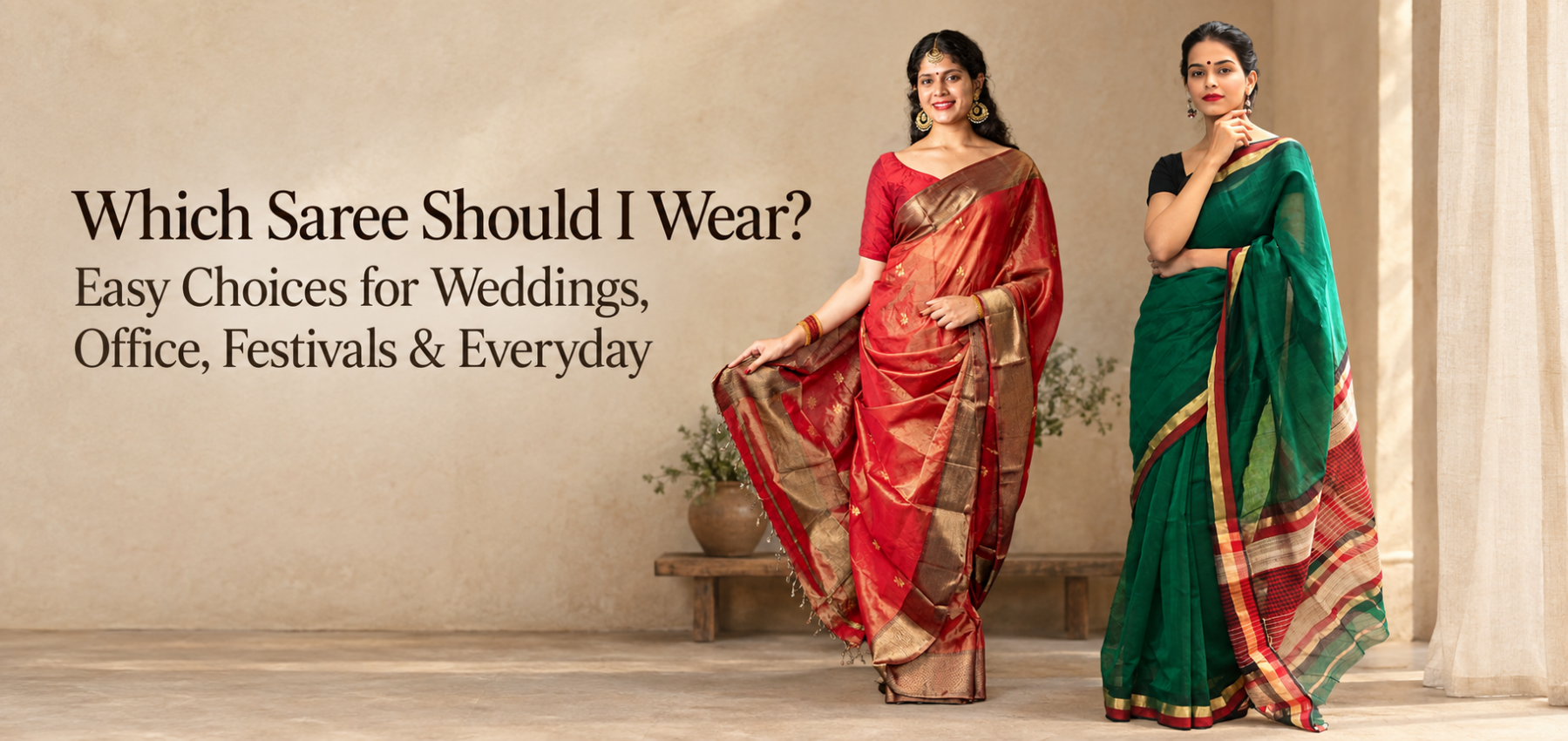
Which Saree Should I Wear? Easy Choices for Weddings, Office, Festivals & Everyday
September 17th, 2026 -
 August 25th, 2026
 -
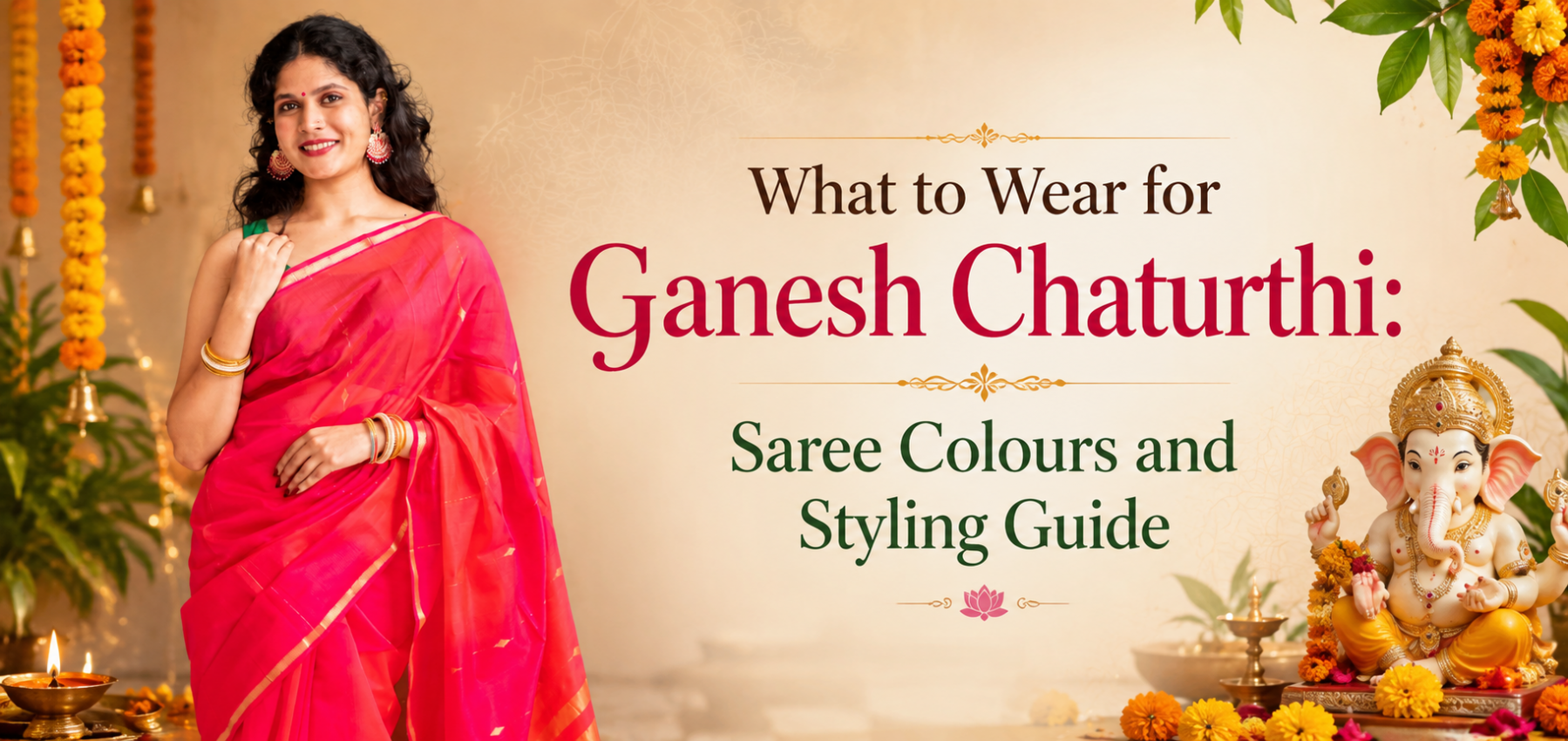
What to Wear for Ganesh Chaturthi: Saree Colours and Styling Guide
August 24th, 2026 -
 August 24th, 2026