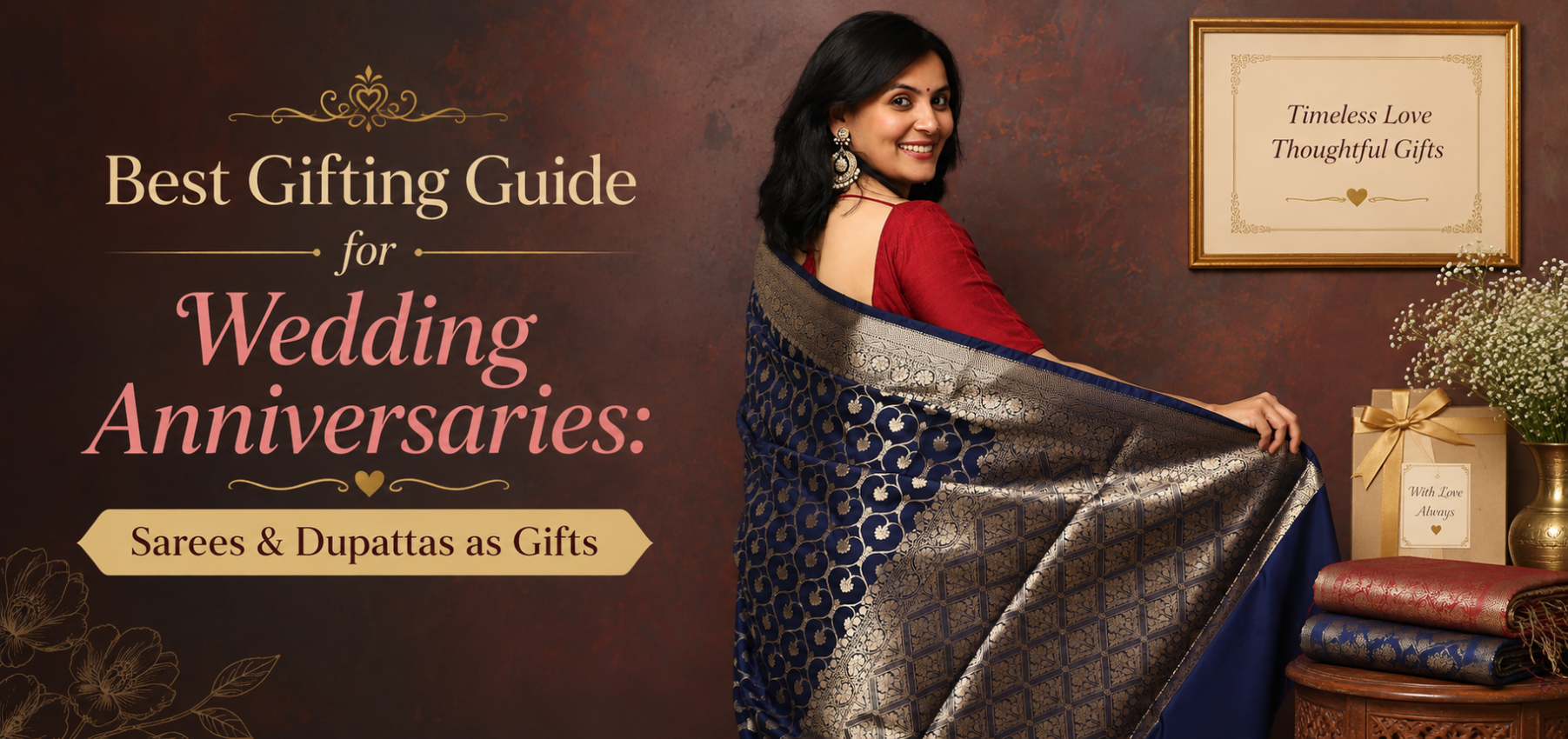
Best Gifting Guide for Wedding Anniversaries: Sarees & Dupattas as Gifts
A wedding anniversary calls for a gift that carries meaning beyond its price tag, and this is often where the search for the best sarees for anniversary occasions begins. In India, a handwoven saree or dupatta is rarely "just fabric" — it is a piece of craft history, wrapped around a memory in the making. Whether you are shopping for a first anniversary or a milestone year, choosing between Chanderi silk, Maheshwari weaves, and contemporary drapes can feel overwhelming. This guide breaks down what actually matters when selecting sarees and dupattas as anniversary gifts, from fabric and weave to occasion and personal style.
What Is the Best Saree for an Anniversary Gift?
The best saree for an anniversary gift is typically a handwoven silk saree, such as a Chanderi or Maheshwari weave, chosen for its craftsmanship, durability, and drape rather than seasonal trend value. Unlike mass-produced fabrics, handloom sarees are made using techniques passed down through generations of Indian weavers, which gives each piece lasting sentimental and material worth.
Why Sarees Remain a Meaningful Anniversary Gift in India
A saree is one of the few garments that doubles as an heirloom. Mothers pass sarees to daughters, and a well-chosen anniversary saree often becomes part of that same lineage decades later. This is different from most anniversary gifts, which are used once and stored away.
Sarees also adapt to the occasion. The same silk drape can be styled for a quiet dinner, a family puja, or a larger anniversary celebration, simply by changing the blouse, jewellery, or draping style. That versatility is part of why sarees continue to top gifting lists for couples across India, regardless of region or generation.
There is also a craftsmanship angle that matters to today's gift buyers. Handloom weaving supports rural artisan clusters in states like Madhya Pradesh, Uttar Pradesh, and West Bengal, so an anniversary gift of a handwoven saree indirectly supports livelihoods tied to India's textile heritage.
Choosing a Saree by Anniversary Milestone
Different anniversary years traditionally call for different textures and price points. Here is a practical way to match the saree to the milestone being celebrated.
- 1st to 3rd anniversary: Lighter cotton-silk blends work well here, or a chanderi silk saree with zari border for a first anniversary that still feels celebratory without being heavy or overly formal.
- 5th to 10th anniversary: This is where a pure maheshwari silk saree fits naturally, offering more weight, a structured drape, and the kind of durability that suits an anniversary a couple will remember for years.
- 25th anniversary (silver jubilee): Heavier Banarasi or Kanjeevaram weaves with silver zari work traditionally mark this milestone, reflecting the "silver" theme in the fabric itself.
- 50th anniversary (golden jubilee): Gold zari-heavy weaves, often in richer reds, maroons, or golds, are chosen to mirror the golden jubilee theme and are frequently gifted alongside family jewellery.
Dupattas as Anniversary Gifts: An Underrated Choice
A dupatta is often overlooked as an anniversary gift, but it deserves more consideration. A handwoven dupatta pairs easily with sarees or suits a recipient already owns, which means the gift gets worn more often rather than sitting in a cupboard for a single occasion.
Dupattas also work well as a secondary gift alongside a saree, or as a lighter, more affordable option for couples exchanging smaller anniversary tokens each year rather than one large gift on a single milestone.
Handloom vs Machine-Made Sarees: What to Check Before You Buy
Not every saree marketed as "silk" or "handcrafted" is genuinely handloom. Knowing the difference protects both the gift's value and its authenticity.
- Weight and texture: Handloom sarees tend to have slight, natural variations in weight across the fabric; power-loom sarees are uniformly even, which is actually a sign of machine production.
- Pallu and border finishing: Hand-finished borders often show minor irregularities in the zari work — this is a mark of authenticity, not a flaw.
- Selvedge details: The fabric edge on a genuine handloom saree usually carries small, visible weaving marks rather than a perfectly clean machine-cut edge.
- Certification: Look for GI (Geographical Indication) tags for region-specific weaves like Chanderi and Maheshwari, which confirm the saree was woven in its traditional cluster.
Buying from a source that specialises in handmade sarees online and works directly with weaver clusters makes it far easier to verify these details before purchase, rather than relying on marketing claims alone.
Matching the Saree to How the Anniversary Is Celebrated
Not every anniversary is marked the same way, and the saree should reflect the setting. Many Indian families still observe anniversaries with a small puja or ritual, which calls for something in the same bright, festive spirit as sarees for haldi ceremony — turmeric yellows, marigold-inspired prints, and lighter cottons or silk-cottons.
Couples hosting a larger anniversary party or renewal-of-vows event often lean toward modern sarees for wedding styles instead — pre-draped silhouettes, contemporary blouse cuts, or fusion detailing paired with a traditional handloom base fabric.
An Artisan's Perspective: Caring for a Handwoven Silk Saree
Handwoven silk needs different care than synthetic fabric, and this is where many gift-givers unintentionally shorten a saree's life. Weavers working with natural-dye Chanderi and Maheshwari silk generally recommend dry-cleaning for the first two to three washes, since natural dyes can bleed with harsh detergents before they fully set into the fibre.
After that, gentle hand-washing in cold water with a mild, pH-neutral soap is safe for most handloom silks. Storage matters just as much as washing — wrapping the saree in muslin cloth rather than plastic allows the fabric to breathe and prevents the zari threads from tarnishing over time, a detail artisans often mention but retailers rarely explain to buyers.
Frequently Asked Questions
What is the best saree fabric for an anniversary gift?
Chanderi silk and Maheshwari silk are widely considered among the best sarees for anniversary gifting because of their lightweight drape, natural sheen, and traditional zari work. Both are handwoven, which makes them more durable and meaningful as long-term keepsakes compared to synthetic alternatives.
How much should I spend on an anniversary saree gift?
Prices vary widely by weave and craftsmanship, from budget-friendly cotton-silk blends to premium heirloom-grade Kanjeevaram or Banarasi silk. As a general guide, milestone anniversaries like the 25th or 50th typically justify a higher investment than yearly anniversaries in between.
Is a saree or a dupatta a better anniversary gift?
A saree makes a stronger standalone statement gift, while a dupatta is a more versatile, lower-commitment option that pairs with existing outfits. Many gift-givers choose a dupatta for smaller anniversaries and reserve a full saree for milestone years.
How do I know if a saree is genuinely handwoven?
Check for slight natural variations in weight and border finishing, visible weaving marks on the selvedge edge, and GI tag certification for region-specific weaves. Uniform, perfectly even fabric with a flawless machine-cut edge usually indicates power-loom rather than handloom production.
Can a saree be gifted for a first wedding anniversary?
Yes, a first anniversary saree is a common and appropriate gift in Indian households, particularly in lighter cotton-silk or Chanderi weaves. It sets the tone for what often becomes a yearly or milestone tradition of gifting handloom sarees through the marriage.
-
Which Saree Should I Wear? Easy Choices for Weddings, Office, Festivals & Everyday
September 17th, 2026 -
 August 25th, 2026
 -
What to Wear for Ganesh Chaturthi: Saree Colours and Styling Guide
August 24th, 2026 -
 August 24th, 2026