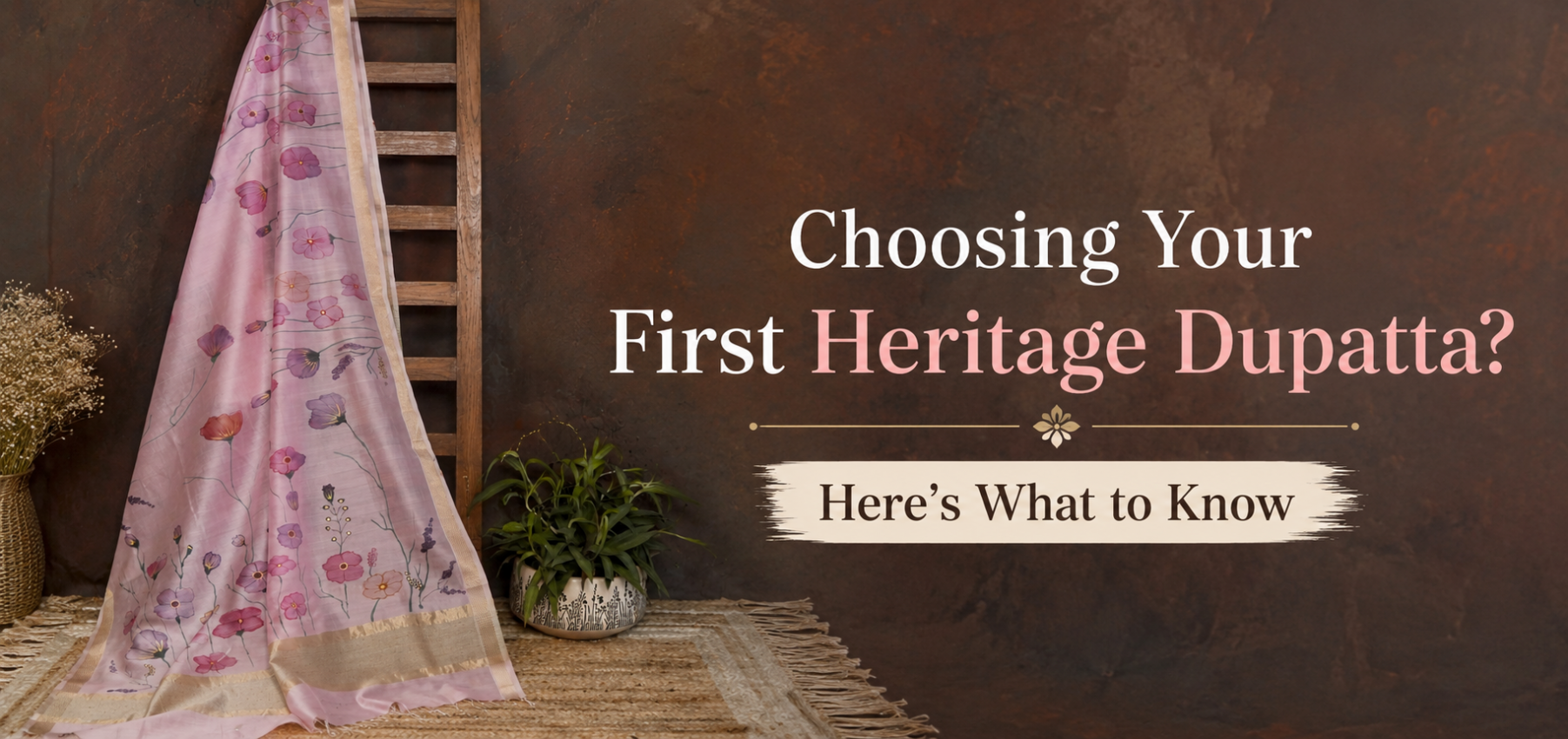
Choosing Your First Heritage Dupatta? Here's What to Know
Buying your first heritage dupatta can feel overwhelming — walk into any traditional textile store, and you'll be met with dozens of weaves, prints, and finishes, each with its own story and price point. Unlike everyday accessories, a dupatta rooted in Indian handloom tradition carries centuries of craftsmanship in every thread, which means the "right" choice depends on more than just colour matching.
This guide walks you through everything a first-time buyer needs to know — from understanding traditional weaves to spotting genuine handcrafted work — so your first piece becomes a wardrobe staple rather than a one-time impulse buy.
What Makes a Dupatta "Heritage" in the First Place?
Not every dupatta on the market qualifies as heritage wear. The term generally refers to pieces made using traditional Indian weaving or dyeing techniques passed down through generations of artisan families — think handloom cotton, silk brocade, block printing, or resist-dye methods practised in specific regions of India for hundreds of years.
What separates these pieces from mass-produced alternatives is the process itself: hand-thrown shuttles, natural dyes, and techniques that can take a skilled weaver several days to complete a single piece. Small irregularities in the weave aren't flaws — they're proof of human hands at work, something machine production simply cannot replicate.
Why Your First Purchase Deserves Careful Thought
A dupatta is often the most visible part of an ethnic outfit — it frames the face, drapes over the shoulder, and photographs beautifully at weddings and festivals. Because heritage pieces are an investment compared to synthetic alternatives, getting familiar with weave types, fabric weight, and regional techniques before you buy helps you choose a piece that suits your climate, wardrobe, and how often you'll actually wear it.
Understanding Traditional Dupatta Weaves and Techniques
India's textile map is enormous, but four techniques come up most often when shopping for heritage pieces. Here's what sets each apart.
Chanderi Silk Dupatta: Sheer and Lightweight
Woven in the Chanderi region of Madhya Pradesh, this fabric is instantly recognisable by its sheer texture and soft, glossy sheen. A chanderi silk dupatta is made using a blend of silk and cotton yarns, giving it a featherlight drape that works equally well over a saree or a suit. Because the weave is naturally translucent, it's a popular choice for daytime festive wear where you want elegance without heaviness.
Maheshwari Silk Dupatta: Everyday Elegance
Originating from the town of Maheshwar on the banks of the Narmada, this weave combines silk and cotton in a slightly denser structure than Chanderi. A maheshwari silk dupatta typically features distinctive reversible borders and simple checks or stripes, making it a versatile pick for both office wear and celebrations. Its balance of durability and softness makes it a common recommendation for first-time heritage buyers.
Handwoven Dupatta: The Broader Category
Beyond specific regional weaves, the term "handwoven" refers more broadly to any dupatta made on a traditional handloom rather than a power loom. A handwoven dupatta can be cotton, silk, or a blend, and its value lies in the weaver's skill — variations in thread tension and texture that give each piece a one-of-a-kind character no two pieces are ever identical.
Batik Print Dupatta: Wax-Resist Artistry
Unlike woven techniques, batik is a dyeing process where wax is applied to fabric in patterns before dyeing, creating intricate designs once the wax is removed. A batik print dupatta often features bold, nature-inspired motifs and rich, earthy colour palettes, making it a striking choice for those who want a heritage piece with a more contemporary visual edge.
How to Choose Fabric Based on Occasion
Matching the fabric to the occasion is one of the simplest ways to avoid buyer's remorse:
- Everyday and office wear — lightweight cotton or Maheshwari silk blends
- Weddings and festive events — Chanderi silk or zari-detailed weaves for added shine
- Casual outings or gifting — batik print or block-printed cotton for a relaxed, artistic look
- Layering over sarees — sheer Chanderi or tissue-based dupattas that don't overpower the base outfit
Colours and Motifs Worth Looking For
Traditional dupattas often carry regional motifs — paisleys, florals, temple borders, or geometric block prints — each tied to the craft technique used. When selecting your first handcrafted piece, consider starting with a neutral or classic colourway, such as ivory, maroon, or indigo, since these pair easily with multiple outfits and tend to age well without going out of style. Bolder batik prints or contrast borders can come later, once you have a sense of what suits your existing wardrobe. Many buyers also choose to build a small collection over time, starting with one versatile shade before exploring bolder regional prints.
How to Spot Genuine Handcrafted Work
A few practical checks can help first-time buyers distinguish authentic handloom pieces from machine-made imitations:
- Check the reverse side — hand-woven borders often look nearly identical on both sides, unlike printed imitations
- Feel the texture — genuine silk-cotton blends have a slightly uneven, warm hand-feel rather than a uniform machine finish
- Look for slight irregularities — small variations in weave density are a hallmark of handloom work, not a defect
- Ask about the origin — reputable sellers can tell you which region and weaving cluster a piece comes from
Caring for Your Silk or Cotton Dupatta
Natural fibres need a slightly different care routine than synthetic fabrics, but the extra effort is minimal once it becomes a habit:
- Hand-wash silk and silk-blend dupattas separately in cold water with a mild detergent
- Avoid direct sunlight while drying, as prolonged UV exposure can fade natural dyes
- Store folded in a breathable cotton cloth rather than plastic to prevent moisture build-up
- Iron on a low setting, ideally with a thin cloth between the fabric and the iron
Common Mistakes First-Time Buyers Make
Most regrets around a first heritage purchase come down to a handful of avoidable mistakes: choosing a fabric that's too heavy for the local climate, picking a print purely because it's trending rather than because it suits existing outfits, or skipping care instructions and damaging a delicate weave in the first wash. Another common misstep is assuming all "silk" dupattas are identical — blended weaves like Maheshwari and Chanderi behave very differently from pure mulberry silk, both in drape and in the way they need to be cleaned. Taking a little time to understand weave type and maintenance before buying goes a long way toward long-term satisfaction.
Why Buying Handcrafted Supports More Than Just Your Wardrobe
Every handwoven or hand-block-printed piece represents hours of skilled labour from artisan communities who have preserved these techniques across generations. Choosing a genuinely handcrafted dupatta over a mass-produced alternative directly supports weaver livelihoods and helps keep regional textile traditions — from Chanderi to batik — alive for the next generation of craftspeople.
This is also where slow fashion and heritage textiles naturally overlap. Unlike fast-fashion accessories that are replaced every season, a well-made handloom dupatta is designed to last for years with proper care, which makes it a more sustainable choice in the long run — both for your wardrobe and for the environment. Buying fewer, better-made pieces rather than frequent low-cost replacements is increasingly seen as a more thoughtful way to shop for ethnic wear.
Conclusion
Your first heritage dupatta doesn't need to be complicated to choose — once you understand the basics of weave type, fabric weight, and regional craft, the decision becomes far more intuitive. Whether you lean toward the sheer elegance of Chanderi silk, the everyday versatility of Maheshwari weaves, or the artistic appeal of batik prints, the right piece is one that fits your lifestyle and honours the artisan work behind it.
Frequently Asked Questions
1. What does "heritage" mean when buying a dupatta?
It refers to a piece made using traditional Indian weaving, printing, or dyeing techniques — such as handloom weaving, block printing, or batik — that have been passed down through generations of artisan communities.
2. Which fabric is best for a first-time dupatta buyer?
Maheshwari silk is often recommended for beginners because it's versatile, durable, and suitable for both everyday and festive wear, making it easier to style than sheer or heavily embellished weaves.
3. How can I tell if a dupatta is genuinely handwoven?
Look for slight irregularities in the weave, a similar finish on both sides of the border, and a warm, uneven texture — machine-made imitations tend to have a uniform, flat finish by comparison.
4. How should I wash a silk or hand-loomed dupatta?
Hand-wash in cold water with a mild detergent, avoid wringing the fabric, and dry away from direct sunlight to protect natural dyes and delicate threads.
5. What's the difference between Chanderi and Maheshwari dupattas?
Chanderi dupattas are sheer, lightweight, and glossy, ideal for festive daytime wear, while Maheshwari dupattas are slightly denser with distinctive borders, making them better suited to everyday and versatile styling.
-
Which Saree Should I Wear? Easy Choices for Weddings, Office, Festivals & Everyday
September 17th, 2026 -
 August 25th, 2026
 -
What to Wear for Ganesh Chaturthi: Saree Colours and Styling Guide
August 24th, 2026 -
 August 24th, 2026