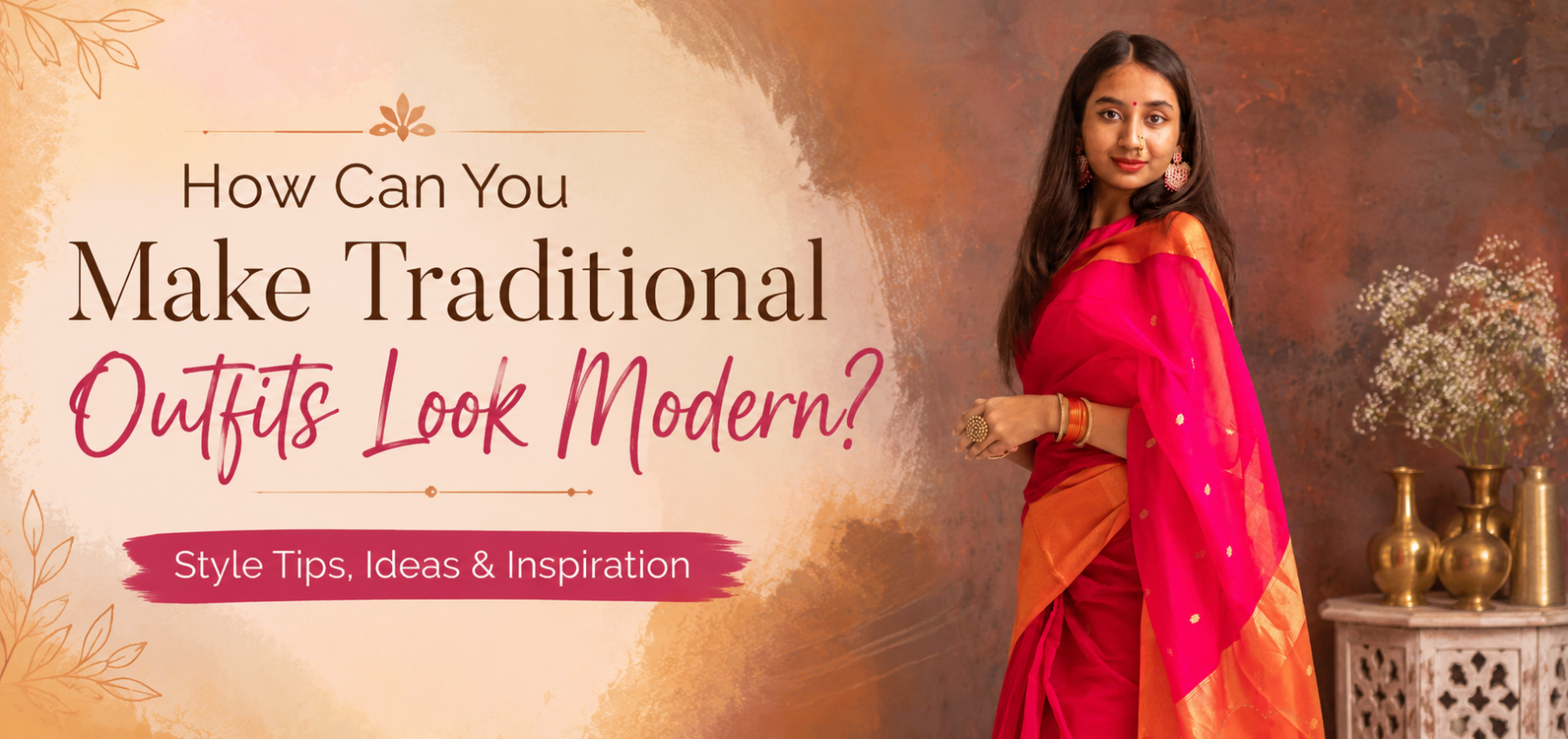
How Can You Make Traditional Outfits Look Modern?
A traditional outfit does not need to be replaced to feel current — it needs to be restyled. Among the most searched ethnic outfit ideas for women today is how to wear a handwoven saree, a Chanderi dupatta, or a block-printed drape in a way that feels fresh for a 2026 wardrobe. The answer lies less in buying new clothes and more in changing how existing pieces are draped, layered, and accessorized.
What Does "Modernizing" a Traditional Outfit Actually Mean?
Modernizing a traditional outfit means changing its silhouette, pairing, or styling context while keeping the original weave, print, or craftsmanship intact. It is not about altering the fabric's heritage — it is about reinterpreting the drape, blouse cut, layering, or accessories so the same handcrafted saree or dupatta suits a contemporary setting, from office wear to a cocktail evening.
Why Traditional Weaves Are Trending in Contemporary Wardrobes
Handloom sarees and dupattas are seeing renewed demand because shoppers are actively choosing slow fashion over fast fashion. Fabrics such as Maheshwari silk and Chanderi are woven on traditional pit looms by artisan clusters in Madhya Pradesh, a process that can take anywhere from three to seven days per piece depending on the zari and border work involved.
This shift is measurable: search interest in handloom and artisanal fashion has grown steadily across Indian metros over the past three years, driven largely by younger buyers who want provenance and story behind a purchase, not just a print. A pure maheshwari silk saree, for instance, carries a distinctive reversible border and a soft sheen that comes specifically from the combination of silk and cotton yarns used in Maheshwar's traditional weaving technique — a detail mass-produced synthetic sarees cannot replicate.
Pairing Handwoven Sarees with Contemporary Blouses
The fastest way to modernize a saree is through the blouse, not the saree itself. A structured off-shoulder, a corset-style blouse, or a plain solid-color blouse in a contrasting tone instantly shifts a traditional drape into contemporary territory.
Blouse Choices That Work Well with Traditional Weaves
- High-neck sleeveless blouse: Balances a heavily worked border, keeping the saree looking editorial rather than occasion-only.
- Cropped shirt-style blouse: Works particularly well with lighter weaves and cotton-silk blends, giving a day-to-evening versatility.
- Solid jewel-tone blouse: Lets a printed or Batik saree remain the visual focus while adding a modern color block.
Sarees crafted with indian batik sarees techniques, which rely on wax-resist dyeing rather than printing, already carry an artisanal, slightly irregular pattern that pairs naturally with minimal, solid-toned blouses — the imperfection in the wax-crackle finish becomes the statement.
Reinventing the Dupatta: From Traditional Drape to Statement Layer
A dupatta is one of the easiest pieces to restyle because it does not require tailoring. Draping it as a front cape over a kurta, knotting it at one shoulder over Western separates, or using it as a wide belt over a fitted dress are all ways to bring a heritage textile into a non-traditional outfit.
A chanderi silk dupatta is particularly suited to this kind of restyling because of its characteristic sheer, lightweight texture — a result of blending fine silk and cotton yarns on a handloom — which drapes fluidly whether worn traditionally over the shoulder or knotted as an accessory.
Mixing Prints and Weaves: Building a Fusion Look
Fusion dressing works best when one element stays traditional and the rest stays modern. Pairing a hand-block printed dupatta with a plain kurta and denim, or a woven silk saree with minimalist gold jewelry instead of a full traditional set, creates contrast without overwhelming the outfit.
Shoppers exploring batik print sarees online often look specifically for pieces with muted, earthy dye tones — indigo, rust, and ochre — because these shades transition easily between festive and everyday wardrobes, unlike brighter conventional silk palettes.
Step-by-Step: Restyling One Saree for Three Different Occasions
A single handwoven saree can be adapted for multiple settings by changing just three variables: the blouse, the drape style, and the accessories. Here is a practical breakdown:
- Office or day event: Pair with a plain cotton blouse, keep the pallu pinned in a single clean fold, and use minimal jewelry — a pair of studs and a thin bangle set.
- Evening or festive event: Switch to a structured sleeveless blouse, style the pallu in a pre-draped Belgian style for a sharper silhouette, and add statement earrings.
- Casual gathering: Drape it as a dhoti-style saree over a fitted top, skip the pallu pin, and pair with block heels or juttis instead of traditional footwear.
This one-saree, three-look approach is also a practical answer to sustainable dressing, since it reduces the need to buy separate outfits for separate occasions.
Occasion-Wise Ethnic Outfit Ideas for Women
Choosing the right traditional piece for the right setting matters as much as the styling itself. For weddings and festive functions, a richly bordered Maheshwari or Chanderi silk saree in warm, jewel tones works well with statement jewelry. For workwear or day functions, a lighter cotton-silk blend saree or a printed kurta with a draped dupatta offers comfort without losing polish. For casual outings, a Batik print dupatta over a simple co-ord set gives an effortlessly modern, culturally rooted look.
Common Styling Mistakes That Make Traditional Outfits Look Dated
Over-accessorizing is the most frequent issue — pairing a heavily worked saree border with a full jewelry set, a statement bag, and an ornate hairstyle all at once tends to compete rather than complement. Choosing one focal point, whether that is the weave itself or a single accessory, keeps the overall look cohesive.
Another common mistake is ignoring fit. A blouse cut in an outdated silhouette can make even a well-chosen fabric look old, regardless of how contemporary the drape is. Getting the blouse tailored to a current fit — whether fitted, cropped, or structured — often does more for a modern appearance than changing the saree itself.
Accessorizing Traditional Outfits the Modern Way
Accessories can modernize an outfit as much as the garment itself. Swapping a full traditional jewelry set for a single statement piece — oversized earrings, a layered necklace, or a metallic belt over a saree — creates a more contemporary silhouette. Footwear also plays a role: block heels, minimalist sandals, or sneakers under a saree have become a recognizable styling choice among younger wearers rather than an exception.
Sustainable Fashion Meets Modern Ethnic Wear
Handwoven textiles are inherently part of the slow-fashion movement, since each piece is made to order or in small batches rather than mass-produced. Choosing a handwoven dupatta or exploring maheshwari silk sarees online supports artisan livelihoods directly, since these weaves are typically produced by cluster-based weaving communities rather than industrial units. This makes restyling — rather than replacing — traditional garments a more sustainable long-term wardrobe strategy.
Frequently Asked Questions
How can I make a traditional saree look modern for daily wear?
Pair it with a plain, fitted blouse in a contrasting solid color, keep the drape simple with a single pallu fold, and add minimal jewelry. Comfortable footwear like block heels or flats completes an everyday, contemporary look without losing the saree's traditional character.
What is the easiest way to style a dupatta in a modern outfit?
Drape it as a front cape over a kurta or Western top, knot it at one shoulder, or use it as a belt over a dress. These styles let a traditional dupatta work with non-traditional outfits without any tailoring changes.
Are handwoven sarees suitable for everyday office wear?
Yes, especially lighter weaves like cotton-silk blends. Choosing a simple blouse, minimal accessories, and a clean drape style keeps a handwoven saree practical and comfortable for regular office settings.
What jewelry works best with modern ethnic outfits?
A single statement piece, such as oversized earrings or a layered necklace, works better than a full traditional set for a modern look. This keeps the outfit balanced rather than overly ornate.
Can one saree be styled for multiple occasions?
Yes. Changing the blouse, drape style, and accessories allows a single saree to move between office, festive, and casual settings, making it a practical and sustainable wardrobe choice.
Why are handloom weaves like Maheshwari and Chanderi popular in modern fashion right now?
Their lightweight texture, natural dyes, and artisan-made character align with the growing preference for slow, sustainable fashion, while their versatile drape makes them easy to restyle for contemporary occasions.
In summary: Making a traditional outfit look modern is primarily a styling exercise, not a shopping one — changing the blouse, drape, layering, or accessories around a handwoven saree or dupatta lets the original craftsmanship stay intact while the overall look shifts to suit contemporary settings. Handloom fabrics such as Maheshwari silk, Chanderi silk, and Batik-dyed weaves are especially suited to this because of their natural texture and drape. This approach also supports sustainable fashion by extending the use of each handcrafted piece across multiple occasions instead of one-time wear.
-
Which Saree Should I Wear? Easy Choices for Weddings, Office, Festivals & Everyday
September 17th, 2026 -
 August 25th, 2026
 -
What to Wear for Ganesh Chaturthi: Saree Colours and Styling Guide
August 24th, 2026 -
 August 24th, 2026