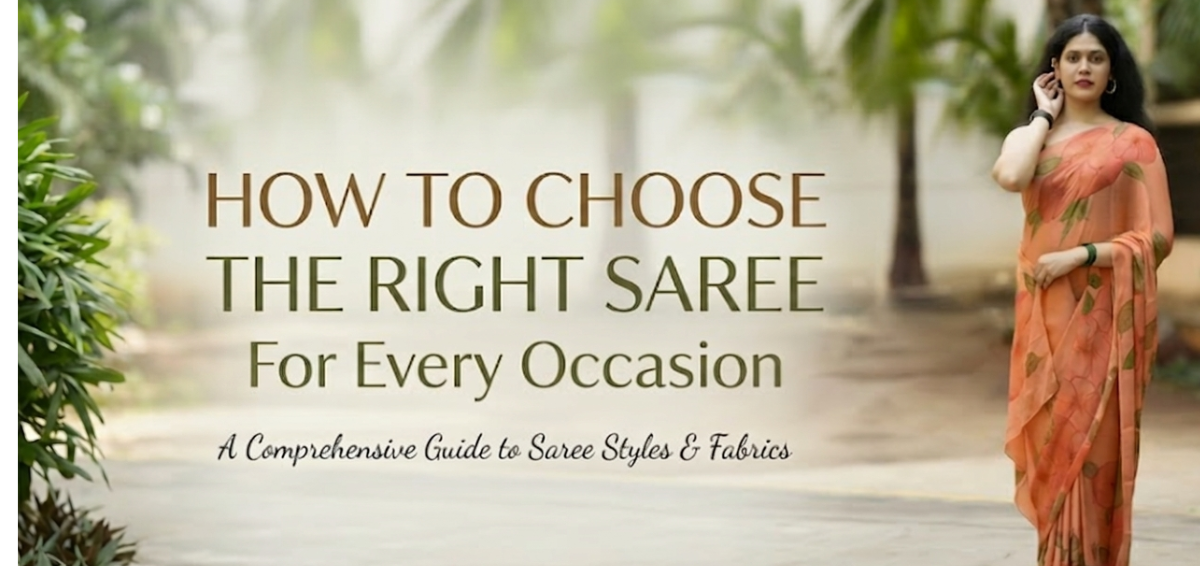
How to Choose the Right Saree for Every Occasion
In the evolving landscape of Indian ethnic wear, the saree remains a timeless vessel of culture and personal expression. However, the sheer diversity of weaves — from the intricate looms of Madhya Pradesh to the wax-resist dyes of Bengal — can make selection a daunting task. Mastering the art of choosing the right saree for every occasion requires a deep understanding of textile weight, drape, and the cultural nuances of the event.
At Thread's Tale, we believe that every weave tells a story. Whether you are browsing for handcrafted sarees online or seeking a heritage heirloom, your choice should reflect a balance between traditional craftsmanship and contemporary functional needs. Each handwoven piece carries within it the skill of artisans who have refined their craft across generations — a quality no machine can replicate.
Formal Corporate Events: Projecting Authority through Structure
Professional environments demand attire that is polished, breathable, and capable of maintaining its structure through long hours. In the corporate world, the saree is a power garment that signals sophistication and attention to detail. The right choice here is never about being understated — it is about being precisely appropriate.
1. The Elegance of Chanderi and Maheshwari
For high-stakes meetings or boardroom presentations, exploring Maheshwari silk sarees online will yield results perfectly suited to professional settings. These sarees are known for their reversible borders and lightweight texture. The subtle sheen of silk blended with the sturdiness of cotton provides a silhouette that is neither too flashy nor too casual — it occupies the ideal space between presence and restraint.
2. Minimalist Drapes for Maximum Impact
Avoid heavy embellishments or saturated palettes for work. Opt for neutral tones, pastels, or deep earthy shades. A well-draped cotton or silk-cotton blend ensures the pleats remain crisp throughout the day, allowing you to focus on your professional objectives rather than adjusting your drape. Muted tones like warm beige, slate grey, dusty blue, and olive green carry quiet authority.
Styling tip: For corporate sarees, pair with a simple, well-fitted blouse with a clean neckline. Keep jewellery minimal — stud earrings, a delicate chain, and a neat bun complete a polished, contemporary look.
Weddings and Grand Celebrations: Embracing Opulence
Indian weddings are a kaleidoscope of rituals, each requiring a specific aesthetic. From the vibrant Haldi to the grand reception, your attire must transition from playful to regal across different functions within the same celebration.
The Shimmer of Tissue and Zari
When attending a wedding, the goal is often to find a balance between being beautifully dressed and comfortable enough to participate in extended festivities. A handwoven tissue saree is an exceptional choice for evening receptions. Its metallic undertones and ethereal translucency catch the light beautifully, providing a royal aura without the excessive weight of heavy brocades.
Similarly, for bridesmaids or close family members, a Chanderi tissue saree offers a sophisticated sheen that complements gold and kundan jewellery perfectly. These fabrics represent the pinnacle of artisanal mastery — fine silk threads interwoven with metallic zari to create a fabric that feels both luminous and lightweight.
For pre-wedding functions like Sangeet or Mehndi, lighter fabrics in joyful colours are far more practical. Deep reds, royal blues, emerald greens, and vibrant coral are all classic choices that photograph beautifully and carry cultural weight.
Pro tip: For weddings, the blouse design is as important as the saree itself. An interesting neckline, an embroidered back panel, or an architectural sleeve elevates any saree from beautiful to unforgettable.
Casual Gatherings and Day Events: The Charm of Handcrafted Prints
For brunches, casual get-togethers, art gallery visits, or daytime pujas, the focus shifts towards breathability and artistic flair. This is where handcrafted techniques shine most naturally — offering a relaxed yet curated aesthetic that mass-produced garments simply cannot match.
Batik and Block Prints: Wearable Art
If you are looking for batik print sarees online, you are likely someone who values the quiet philosophy of slow fashion. Batik, a wax-resist dyeing technique, creates unique crackled patterns that are impossible to replicate mechanically. No two batik sarees are identical — each carries the character of the artisan's hand and the natural variation of the dye.
- Summer brunches: Opt for Mulmul or light linens with floral block prints in earthy or pastel tones.
- Art gallery visits: Indigo-dyed or abstract batik designs on Tussar silk create an artistic impression.
- Festive luncheons: Brightly coloured Maheshwari cotton sarees with simple zari borders balance celebration and ease.
Religious Ceremonies and Temple Visits: Graceful and Grounded
For pujas, temple visits, religious observances, and traditional family ceremonies, the saree choice is guided by both aesthetics and cultural respect. Modest, graceful, and well-draped — these are the guiding principles. Traditional handloom sarees with woven motifs feel most appropriate for these settings.
Classic colours for religious occasions include white with gold zari borders, deep saffron, mustard yellow, and traditional maroon. Fabrics should be breathable and manageable enough for extended periods of activity. Handwoven cotton and soft silk sarees perform best in these contexts.
The Sustainable Choice: Why Handloom Matters in 2026
In 2026, the shift towards Sustainable Slow Fashion is no longer a passing trend — it is a considered and growing movement. Choosing a handcrafted saree is an ethical decision that directly supports artisan communities and helps preserve ancient weaving techniques that might otherwise disappear.
When you select the right saree for every occasion from a platform that prioritises human skill over machine precision, you are contributing to a more conscious and circular economy. Handloom products often feature slight variations — but these are the hallmarks of authenticity, distinguishing each piece from mass production.
Every handcrafted saree is, in the truest sense, a wearable work of art — and wearing one is an act of cultural preservation.
Expert Tips for Saree Care and Longevity
To ensure your heritage weaves last for generations, proper care is essential. Traditional textiles like Chanderi, Maheshwari silk, and batik prints require gentle handling. Here is a quick reference guide:
| Fabric Type | Washing Method | Storage Tip |
|---|---|---|
| Silk / Tissue | Dry clean only | Wrap in muslin cloth; avoid plastic bags |
| Cotton / Batik | Hand wash in cold water | Air dry in shade; do not wring |
| Maheshwari Silk | Professional dry clean recommended | Refold periodically to avoid creases |
Finding Your Personal Style within India's Heritage
Ultimately, the right saree for every occasion is the one that makes you feel confident, comfortable, and connected to your roots. Whether it is the elegance of a Chanderi tissue saree for a gala evening, the professional refinement of a Maheshwari silk for a board meeting, or handcrafted batik prints for a relaxed afternoon — your choice reflects your appreciation for India's extraordinary textile legacy. India's handloom traditions are living inheritances. Every time you choose to wear a handcrafted saree, you carry that heritage forward — and make it visible, wearable, and alive. Explore the curated collection at Thread's Tale, where every drape is a celebration of craftsmanship, and every weave tells a story worth wearing.
Frequently Asked Questions (FAQs)
1. How do I choose the right saree for corporate events?
For corporate settings, opt for lightweight fabrics like Maheshwari or Chanderi in neutral or pastel shades. These provide structure, comfort, and a polished professional appearance suitable for long working hours.
2. Which saree fabrics are best for weddings and grand celebrations?
Tissue, silk, and zari-woven sarees are ideal for weddings. They offer a luxurious sheen and elegant drape while still allowing ease of movement during extended celebrations.
3. What are the most comfortable sarees for casual and daytime events?
Cotton, mulmul, linen, and batik print sarees are perfect for casual gatherings. These fabrics are breathable, lightweight, and ideal for daytime comfort while maintaining a stylish look.
4. Why are handloom sarees considered sustainable fashion?
Handloom sarees are crafted using traditional techniques with minimal machinery, supporting artisan communities and reducing environmental impact. Each piece is unique and built to last, aligning with sustainable slow fashion values.
5. How should I store and care for handcrafted sarees?
Store sarees in breathable muslin cloth, avoid direct sunlight, refold periodically, and dry clean delicate fabrics like silk. Proper care helps preserve colour, texture, and longevity.
-
Which Saree Should I Wear? Easy Choices for Weddings, Office, Festivals & Everyday
September 17th, 2026 -
 August 25th, 2026
 -
What to Wear for Ganesh Chaturthi: Saree Colours and Styling Guide
August 24th, 2026 -
 August 24th, 2026