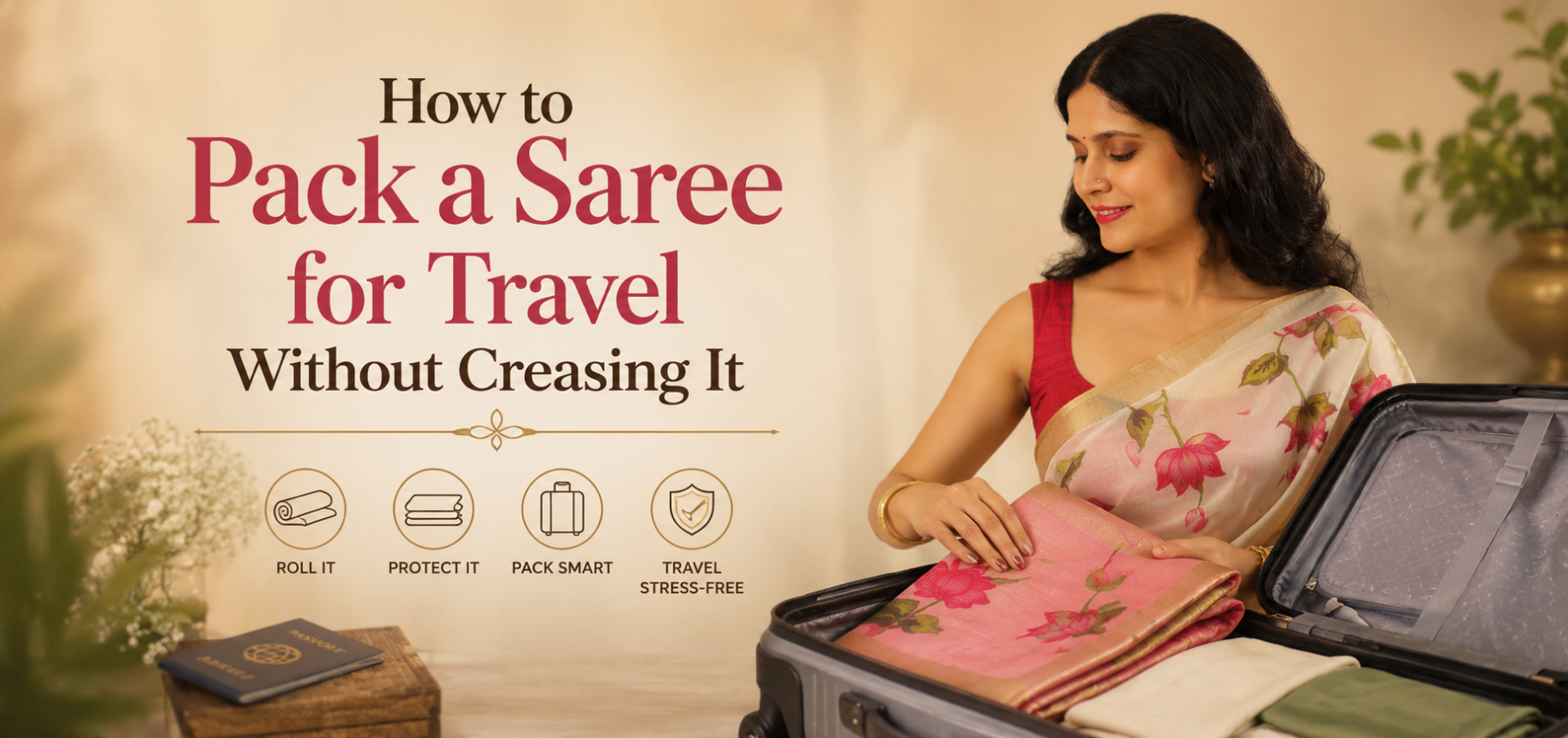
How to Pack a Saree for Travel Without Creasing It
A saree that arrives crushed at its destination rarely looks the same once unpacked, no matter how carefully it was ironed before the trip. Getting this right comes down to the right saree folding techniques, the order in which fabrics go into a suitcase, and a few packing habits that most travellers never think about until a favourite silk drape comes out looking worse for wear. This guide walks through exactly how to prevent that, fabric by fabric.
Saree folding techniques for travel refer to the specific methods of folding, rolling, and layering a saree so its pleats hold their shape and its fabric doesn't develop hard creases during transit. The two most reliable methods are the flat-fold-and-roll and the tissue-paper interleave, both of which reduce pressure on delicate zari, silk, and cotton weaves.
Why Sarees Crease More Easily Than Other Garments
A saree is a single, unstitched length of fabric, usually five and a half to nine metres long, which means every fold creates a pressure line across the entire cloth rather than a small, contained area. Suitcases compress everything inside them during transit, and a saree folded the wrong way absorbs that pressure along sharp, repeated lines.
Fabric Weight and Weave Matter
Heavier silks like Kanjivaram or zari-worked Banarasi hold their fold lines more stubbornly than lighter cottons, because the metallic thread and dense weave resist natural fibre recovery. Sheer fabrics such as organza or tissue silk crease faster but also release those creases faster once hung, which changes how they should be packed.
Suitcase Pressure and Movement
Every time a suitcase is lifted, tilted, or stacked under other luggage, its contents shift slightly, and any garment folded without cushioning takes the brunt of that movement. This is why airline cargo holds and checked baggage in particular tend to leave sarees more creased than carry-on bags, where handling is gentler and more predictable.
Saree Folding Techniques That Prevent Creasing
The two methods that hold up best for travel are the flat pleated fold reinforced with tissue paper, and the loose roll method, both of which distribute pressure across the fabric instead of concentrating it on a few sharp lines.
The Flat Fold and Tissue Interleave Method
- Lay the saree flat on a bed or large table, smoothing out the pallu and border completely before folding begins.
- Fold the saree in half lengthwise along its natural pleats, then fold again into thirds rather than tight, narrow strips.
- Place a sheet of acid-free tissue paper between every second or third fold to stop fabric from touching fabric directly.
- Fold the pallu separately if it carries heavy embroidery or zari work, and cushion it with an extra layer of tissue.
- Place the folded saree flat at the base of the suitcase, underneath other clothing, never squeezed into a side pocket.
The Roll Method for Lightweight and Sheer Sarees
Chiffon, georgette, and tissue-weave sarees respond better to rolling than folding, since a loose roll avoids the sharp horizontal lines that a fold creates on delicate fabric. Roll the saree loosely from the pallu end inward, keeping the roll wide rather than tight, then place it along the length of the suitcase rather than curled into a corner.
This rolling approach works especially well for a chanderi tissue saree, since its gossamer-light weight and translucent texture crease almost instantly under any concentrated pressure but recovers well once loosely rolled and gently shaken out on arrival.
Packing by Fabric Type
Different weaves demand different handling, and treating every saree the same way is the most common reason travellers end up with creased silk despite careful folding.
Pure Silk and Zari-Worked Sarees
A pure maheshwari silk saree holds its shape well because of its characteristic silk-cotton blend, but the zari border still needs cushioning to avoid pressure marks. Fold along the existing pleats where possible, since silk fibres remember their original creases and re-fold more easily along lines that already exist.
Cotton and Handloom Sarees
Cotton sarees crease more visibly than silk but also respond well to a light spritz of water and hang-drying, making them more forgiving for casual trips. A indian batik sarees collection piece, with its hand-waxed resist patterns, should be folded with the printed side facing inward to prevent the wax-dyed motifs from rubbing against zippers or buckles.
Organza and Sheer Fabrics
Sheer fabrics are the most prone to visible creasing but also the quickest to bounce back, so a loose roll wrapped in muslin cloth works better than any tight fold. Avoid placing heavy items like shoes or toiletry bags anywhere near organza and tissue sarees inside the suitcase.
Suitcase Placement and Packing Order
Where a saree sits inside the suitcase matters as much as how it is folded, since placement determines how much pressure it absorbs during transit.
- Bottom layer: Place folded sarees flat at the base of a hard-shell suitcase, where pressure is distributed most evenly.
- Middle layer: Add soft items like stoles, dupattas, and cotton kurtas above the sarees as natural cushioning.
- Top layer: Keep heavier items such as shoes, books, and electronics on top, never directly against fabric.
- Avoid side pockets: Narrow compartments force tight folds that leave permanent crease lines on silk.
- Use packing cubes: A dedicated flat cube for sarees prevents shifting during flights and long drives.
Tools That Make a Real Difference
A saree folding board, sold at most sari boutiques and online craft stores, keeps folds uniform and reduces the number of times fabric is handled before packing. Acid-free tissue paper, muslin cloth pouches, and a compression-free packing cube round out the essential kit for anyone who travels with silk or handloom pieces regularly.
Investing in a few flat, breathable saree pouches also protects handmade sarees from friction against other luggage contents, particularly on multi-city trips where a suitcase is opened and repacked several times.
Unpacking and Post-Travel Care
Unpack sarees as soon as possible after arrival, since fabric left folded inside a closed suitcase for days develops deeper, harder-to-remove creases. Hang the saree on a wide, padded hanger overnight before wearing or storing it, allowing gravity to naturally loosen most travel creases without any ironing.
Steaming Instead of Ironing
A handheld garment steamer is gentler than a direct iron on silk and zari work, and it avoids the risk of scorching delicate threads or flattening embroidered texture. Hold the steamer a few centimetres away from the fabric and let the steam do the work rather than pressing it directly onto the weave.
Storing Sarees Correctly at the Destination
If travelling for an extended stay, store sarees flat or loosely rolled in a wardrobe rather than folded inside a suitcase for the duration of the trip. Silk in particular benefits from being refolded along different lines every few weeks, even during travel, since permanent folds along the same lines eventually weaken the fibre.
Frequently Asked Questions
What is the best way to fold a saree for travel?
The best method is a flat pleated fold with acid-free tissue paper placed between every second fold, followed by placing the saree flat at the base of the suitcase. This distributes pressure evenly and prevents sharp, permanent crease lines from forming during transit.
How do I pack a silk saree without it getting crushed?
Fold silk sarees along their existing pleat lines, cushion the zari border separately with tissue paper, and place them under soft items like stoles rather than heavy luggage. Avoid tight rolling, since silk holds new fold lines more stubbornly than cotton.
Can I roll a saree instead of folding it?
Yes, rolling works particularly well for lightweight and sheer fabrics like chiffon, georgette, and tissue silk, which crease faster under a tight fold. Roll loosely from the pallu inward and place the roll flat inside the suitcase rather than curling it into a corner.
How do I remove creases from a saree after a trip?
Hang the saree on a padded hanger overnight first, since many travel creases loosen naturally with gravity alone. For remaining creases, use a handheld garment steamer held a few centimetres from the fabric rather than pressing a hot iron directly onto silk or zari work.
Is it better to check in or carry on a saree while flying?
Carrying a saree onboard reduces creasing significantly, since carry-on luggage is handled more gently and experiences far less compression than checked baggage. If checking in is unavoidable, pack the saree at the centre of the suitcase, cushioned on all sides by soft clothing.
Getting a saree through travel without creasing comes down to three habits: folding along natural pleat lines with tissue paper between layers, placing the drape at the centre or base of a suitcase away from heavy items, and unpacking it within hours of arrival rather than days. These saree folding techniques take a few extra minutes before any trip but save considerably more time — and fabric — once the destination is reached.
-

Which Saree Should I Wear? Easy Choices for Weddings, Office, Festivals & Everyday
September 17th, 2026 -
 August 25th, 2026
 -

What to Wear for Ganesh Chaturthi: Saree Colours and Styling Guide
August 24th, 2026 -
 August 24th, 2026