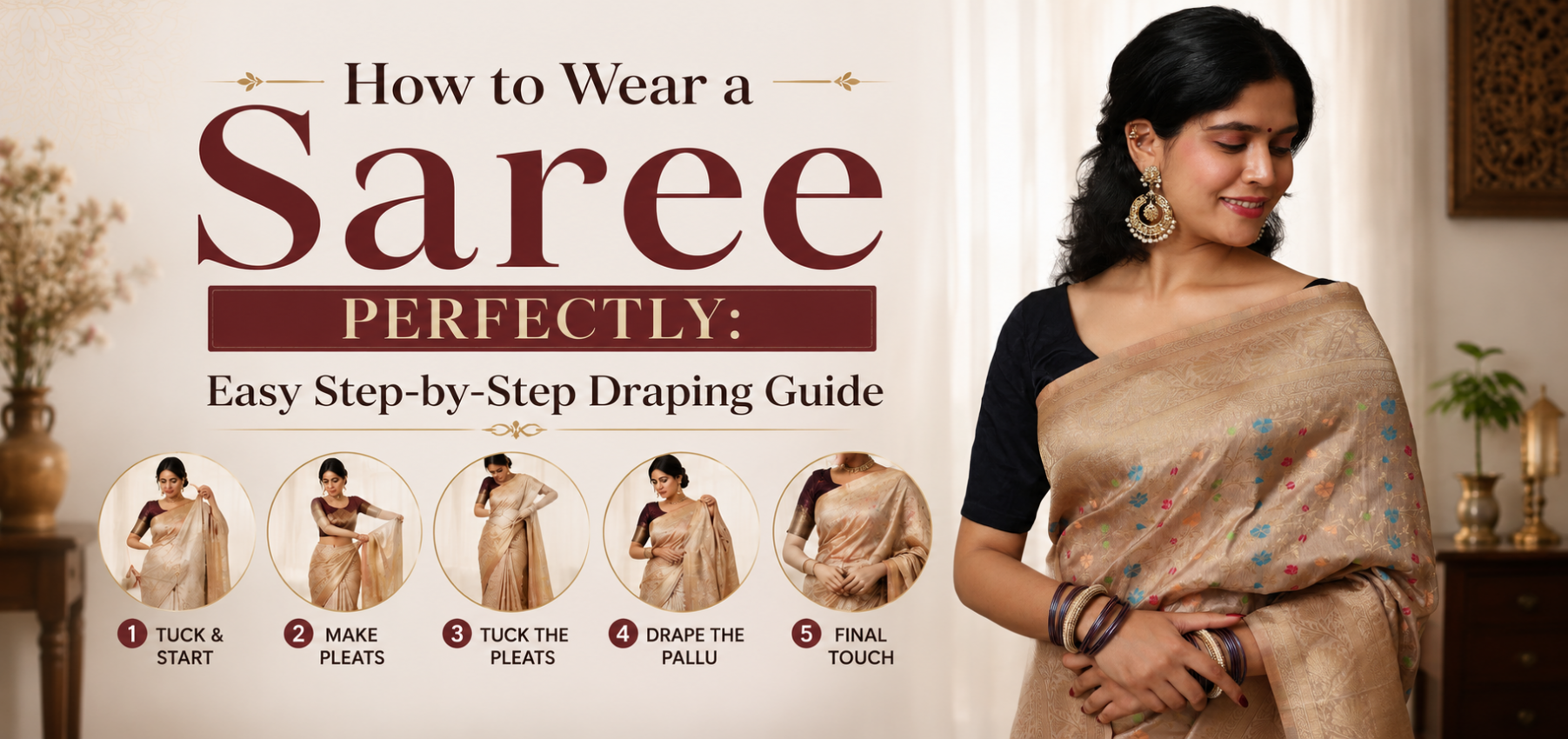
How to Wear a Saree Perfectly: Easy Step-by-Step Draping Guide
A saree is six to nine yards of unstitched fabric, and how it falls depends entirely on how it is draped. Learning how to wear a saree correctly comes down to three things: the petticoat fit, the pleat count, and how the pallu is set on the shoulder. This guide breaks the process into clear steps that work for cotton, silk, and georgette drapes alike.
What Is the Correct Way to Wear a Saree?
The correct way to wear a saree is to tuck the plain end into a fitted petticoat at the navel, wrap the fabric once around the waist, form 5 to 9 even pleats at the front, tuck them in facing left, and drape the decorative pallu end over the left shoulder. This is known as the Nivi drape, the most widely worn style in India today.
Getting the Foundation Right Before Draping
Most draping problems trace back to the petticoat and blouse, not the saree itself. A petticoat that sits below the natural waistline causes the pleats to droop within an hour of wear.
Choosing the Right Petticoat
- Match the petticoat colour to the saree's base shade or use nude/skin tone for sheer fabrics.
- Tie the drawstring at the natural waist, not the hip, so pleats have a firm anchor point.
- For silk sarees such as a pure Maheshwari silk saree, a cotton petticoat with a slight flare holds the fall better than a synthetic one.
Fitting the Blouse
The blouse should sit snug at the armhole and bust without pulling across the back. A blouse that is even half an inch too loose will cause the pallu pin to sag over the course of the day.
The blouse's shoulder seam also acts as the anchor point for the pallu pin, so its placement matters as much as the fit. A shoulder seam set too far back pulls the pallu off-centre, while one set too far forward makes the drape look bunched near the neckline. Trying the blouse on with the saree, rather than judging fit alone, gives a truer picture of how the final drape will sit.
How to Wear a Saree Step by Step
This seven-step method is the standard Nivi drape taught across draping tutorials in India and takes 8 to 12 minutes once practised.
Step 1: Tuck the Plain End: Starting at the right hip, tuck the plain end of the saree into the petticoat and wrap the fabric once around the body from right to left.
Step 2: Mark the Pleat Zone: Bring the fabric to the front-centre point, roughly aligned with the navel. This is where the front pleats will sit.
Step 3: Form the Pleats: Fold 5 to 9 pleats of equal width, usually 4 to 5 inches each, holding them together with one hand. Even pleat width matters more than pleat count for a neat finish.
Step 4: Tuck the Pleats In: Tuck the folded pleats into the petticoat at the navel, facing them slightly toward the left hip so they fall in one clean line.
Step 5: Wrap the Remaining Fabric: Take the remaining length around the back, from left to right, pulling it snug at the waist.
Step 6: Set the Pallu: Bring the decorative end over the left shoulder, letting it fall to knee length or ankle length depending on preference and the saree's border design.
Step 7: Pin and Finish: Pin the pallu at the shoulder seam of the blouse to stop it slipping. A second pin at the waist pleats adds extra security for events involving movement, such as weddings or dance performances.
Draping Tips for Different Saree Fabrics
Fabric weight and weave change how a drape behaves, so the same technique can look different across materials.
Silk and Zari-Border Sarees
Silk holds pleats crisply but is heavier, so pin the pallu in two places to prevent it from pulling down. A Chanderi silk saree with zari border in particular benefits from slightly narrower pleats, since the zari thread adds stiffness that wider folds can distort.
Tissue and Sheer Weaves
Tissue fabric has a metallic sheen and a slippery texture, which means it needs a well-fitted petticoat and safety pins at every fold. A handwoven tissue saree drapes with a natural shimmer once the pleats are secured, making it a common choice for evening functions.
Cotton and Handloom Weaves
Cotton sarees are the most forgiving for beginners because the fabric grips itself and holds pleats without heavy pinning. This makes handloom cotton a practical starting point for anyone learning the drape for the first time.
Georgette and Chiffon Sarees
Georgette and chiffon are lightweight and drape close to the body, which makes them flow well but harder to pleat precisely. Ironing the pleats flat before tucking, and using two to three pins along the fold, keeps the pleats from opening up during movement. These fabrics work best with a firm, well-fitted petticoat since the saree itself offers little grip.
Common Draping Mistakes and How to Fix Them
Most draping errors are simple to correct once identified:
- Uneven pleats: Lay pleats flat on a bed before tucking to check width alignment.
- Pallu slipping: Use a safety pin at the shoulder seam, not the fabric edge alone.
- Loose waist wrap: Tighten the second wrap-around before tucking the pallu, not after.
- Petticoat showing at the ankle: Adjust petticoat length to sit an inch above the saree's finished hemline.
- Front pleats sagging: Re-tuck against a firm petticoat waistband rather than soft fabric.
Adjusting the Drape for Different Occasions
The same base drape adapts to different settings by adjusting pallu length and pleat count.
- Weddings and festive events: Wider pleats (8-9) and a longer pallu draped to the knee for a fuller silhouette.
- Office or daily wear: Narrower pleats (5-6) and a shorter, single-pinned pallu for ease of movement.
- Travel or long events: Double-pinned pleats and pallu to withstand hours of movement without readjustment.
Building a Saree Wardrobe Rooted in Indian Weaving Traditions
Handcrafted sarees carry the weaving technique of the region they come from, and understanding this helps in choosing pieces that are easier to drape and maintain. Threads Tale works directly with artisan clusters practising Maheshwari and Chanderi weaving, so each saree's weight, border stiffness, and fall are consistent with traditional handloom standards rather than mass-produced approximations.
For those building a first collection, exploring maheshwari silk sarees online is a practical starting point, since the fabric's light structure suits both festive and everyday draping. Buyers looking for a wider range of weaving styles in one place can browse handcrafted sarees online, where each piece is made using natural dyes and hand-block or zari techniques passed down through generations of weavers.
Summary: Getting the Saree Drape Right
Wearing a saree perfectly depends on a well-fitted petticoat, even pleats tucked at the navel, and a pallu pinned securely at the shoulder. The Nivi drape remains the most practical method across fabrics, from cotton to zari-bordered silk, and takes roughly ten minutes once the sequence is familiar. Fabric weight, not skill alone, determines how many pins and how much pleat width a saree needs to hold its shape through a full day of wear.
Frequently Asked Questions
How many pleats should a saree have?
Most sarees are draped with 5 to 9 front pleats, each around 4 to 5 inches wide. The exact number depends on the saree's length and the wearer's height, but even width matters more than the total count for a neat finish.
How long does it take to learn to drape a saree?
With practice, the standard Nivi drape takes 8 to 12 minutes to complete. Most people become comfortable with the sequence after draping a saree five to six times, particularly with a cotton or handloom fabric that is forgiving to fold.
What petticoat colour should I wear under a saree?
The petticoat should match the saree's base colour as closely as possible so it doesn't show through the fabric. For sheer or tissue sarees, a nude or skin-tone petticoat is usually the safest choice.
Why does my saree pallu keep slipping off my shoulder?
Pallu slipping usually happens because the pin is placed on the fabric edge instead of through the blouse's shoulder seam. Pinning through both layers, and adding a second pin for heavier silk sarees, keeps the pallu in place through the day.
Is it easier to drape a cotton saree or a silk saree?
Cotton sarees are generally easier for beginners because the fabric grips itself and holds pleats without heavy pinning. Silk sarees, including zari-border weaves, hold a crisper pleat but need more careful pinning due to their weight and slight slip.
-

Which Saree Should I Wear? Easy Choices for Weddings, Office, Festivals & Everyday
September 17th, 2026 -
 August 25th, 2026
 -

What to Wear for Ganesh Chaturthi: Saree Colours and Styling Guide
August 24th, 2026 -
 August 24th, 2026