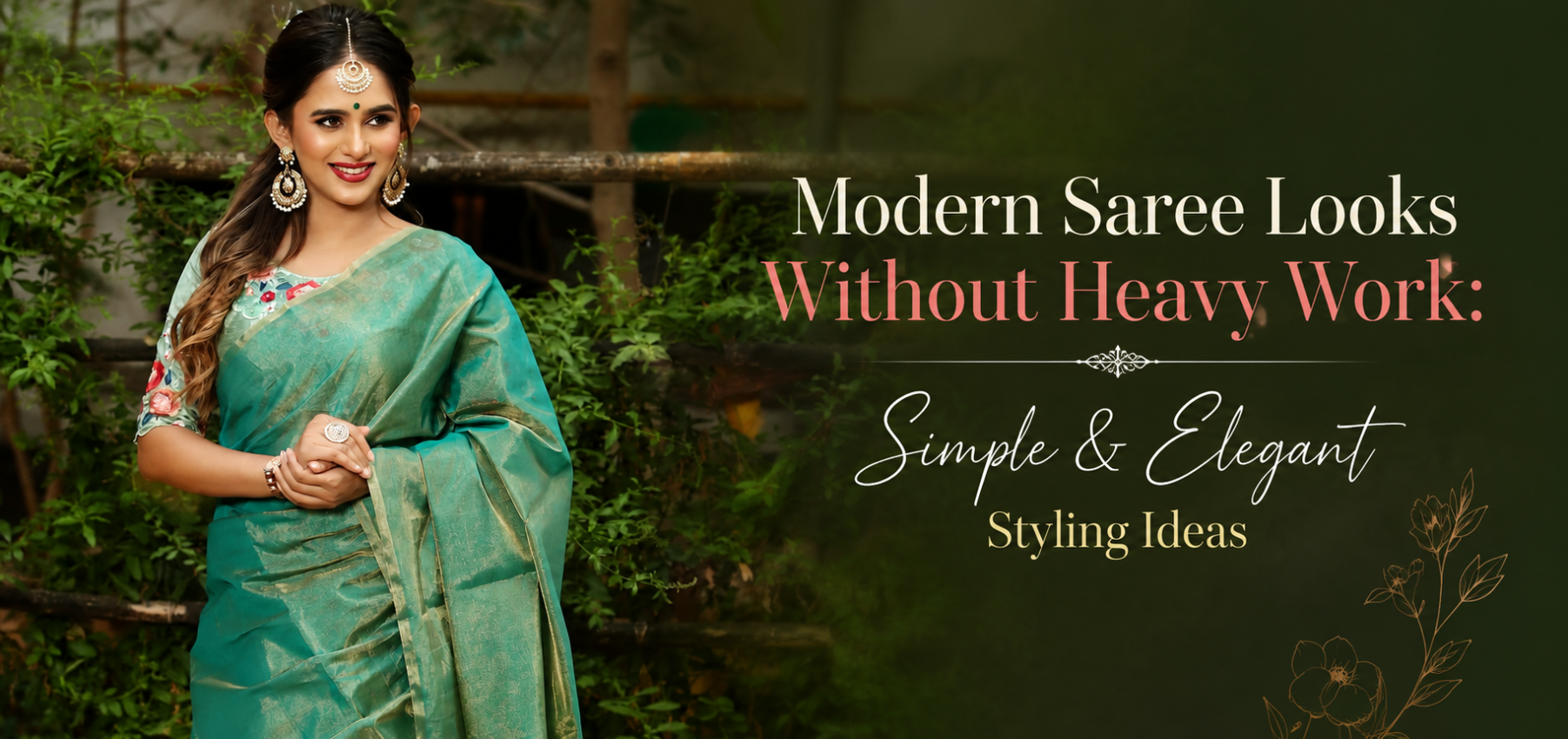
Modern Saree Looks Without Heavy Work: Simple & Elegant Styling Ideas
A saree does not need dense zari, sequins, or heavy embroidery to make an impression. Some of the most photographed Modern Saree Looks on Indian runways and street-style pages this year rely on plain weaves, subtle borders, and confident draping instead. For anyone who wants elegance without the weight, cost, or maintenance of heavy work, a shift toward minimal-but-refined saree styling is well underway across Indian cities.
This shift is not just aesthetic. Lighter sarees are easier to drape, travel with, and wear for long hours — practical reasons layered on top of a genuine design trend.
What Are "No Heavy Work" Saree Looks?
No heavy work saree looks refer to styling built around plain-weave or lightly-bordered sarees — such as Chanderi, Maheshwari, tissue, or linen weaves — worn with minimal jewellery and a well-fitted blouse. The focus stays on drape, fabric texture, and silhouette rather than embellishment, making the outfit versatile for both daytime and formal settings.
Why Minimal Styling Is Gaining Ground in Indian Ethnic Wear
Three forces are driving this change: comfort, cost, and craftsmanship visibility. Heavily worked sarees are typically reserved for weddings, while lighter handwoven pieces now dominate office wear, festive brunches, and destination functions.
Handloom bodies such as the Ministry of Textiles have repeatedly highlighted that India's handloom sector employs over 3.5 million weavers, many of whom produce plain and lightly-bordered weaves rather than embellished ones. Choosing these pieces directly supports that base of artisans, rather than mechanised embroidery units.
There is also a visible textural shift: buyers increasingly want the weave itself — the slight irregularity of a hand-thrown shuttle, the sheen of tissue zari, the crispness of Chanderi cotton-silk — to be the statement, not the ornamentation layered on top of it.
Choosing the Right Fabric for an Effortless, Elegant Look
Fabric choice does more work than any accessory when the goal is understated elegance. A few fabrics consistently deliver a clean, contemporary finish without embroidery:
- Chanderi silk — sheer, lightweight, and naturally lustrous, ideal for daytime festive wear.
- Maheshwari silk — known for its reversible border and stiff, structured drape that holds pleats well.
- Tissue weaves — a fine zari thread woven through cotton or silk that catches light without heavy metallic embellishment.
- Linen and cotton-silk blends — crisp, breathable, and suited to India's warmer climate for most of the year.
A Chanderi silk saree with zari border is a good example of how a single decorative element — the border alone — can carry an entire outfit, leaving the rest of the fabric plain and fluid. Similarly, a pure maheshwari silk saree offers structure and sheen through its weave density rather than added embellishment, making it easy to style for both work meetings and evening events.
Draping Styles That Keep the Look Simple Yet Sophisticated
The right drape can change how "dressed up" a plain saree feels. Three draping approaches work particularly well with minimal-work fabrics.
1. The Classic Nivi Drape with a Structured Pallu
Pleating the pallu neatly and pinning it at the shoulder gives even a plain saree a tailored, finished look. This drape photographs well and suits office and formal settings.
2. The Front-Pallu or "Seedha Pallu" Style
Common in Gujarati and Rajasthani draping, bringing the pallu to the front showcases the border and pattern of the fabric, which matters more when the saree itself has minimal work.
3. The Belted Saree Drape
A slim fabric or metal belt cinched at the waist adds a modern silhouette to a plain saree without needing embroidery, embellishment, or a statement blouse.
Blouse and Accessory Pairings for a Clean, Modern Silhouette
When the saree itself is understated, the blouse and accessories carry more visual weight — but restraint still matters. A structured, solid-colour blouse in a contrasting or tonal shade keeps the outfit from looking flat, while an ornate blouse can act as the single focal point of the look.
Jewellery choices generally fall into two directions for these looks: a single statement piece — oxidised silver neckpiece, temple jewellery choker, or layered gold chains — paired with a plain saree, or delicate minimal jewellery (small studs, thin bangles) when the blouse itself is more detailed. Wearing both a heavy blouse and heavy jewellery together tends to undercut the "minimal" effect the fabric is meant to create.
Occasion-Wise Styling: From the Workplace to Festive Evenings
These no-embroidery saree styles adapt easily across settings because the fabric itself does not signal "formal-only" or "festive-only."
Workplace and Daytime Events
Cotton-silk or linen sarees in solid or subtly striped patterns, paired with a fitted three-quarter-sleeve blouse and low heels, work well for office wear and daytime functions.
Festive Gatherings and Family Functions
A tissue or Maheshwari silk saree with a contrast blouse and one statement jewellery piece is enough to feel festive without embroidery-heavy embellishment.
Evening or Semi-Formal Events
Darker tones — deep maroon, bottle green, or navy — in Chanderi or tissue silk, styled with a belted drape and metallic accessories, translate well into evening settings.
Step-by-Step: Building a Minimal Saree Look
Building this look reliably comes down to five sequential decisions, in this order:
- Pick the fabric first — Chanderi or Maheshwari silk, tissue, or linen, based on the season and occasion.
- Decide the drape — Nivi for formal settings, front-pallu for regional or festive events, belted for a contemporary edge.
- Choose one focal element — either the blouse or the jewellery, never both.
- Match footwear to fabric weight — flat sandals for cotton and linen, block heels for silk weaves.
- Finish with a single accessory anchor — a bag, bindi shade, or hair accessory that ties the palette together, without adding a second focal point.
Where to Source Handcrafted Sarees for Minimal Styling
Sourcing matters as much as styling when the goal is a genuinely handwoven, minimal-work saree rather than a machine-made imitation with a printed border. Buying maheshwari silk sarees online or browsing handcrafted sarees online from weaver-linked catalogues makes it easier to verify weave origin, thread count, and production method before purchase.
For a fabric that reads as "quiet luxury" — light in hand, subtly shimmering, and traditionally significant — a handwoven tissue saree is worth examining closely; the fine zari running through the weft is often the only ornamentation the fabric needs.
Expert Insight: What Weavers Look for in a Minimal-Work Weave
Artisans working in Maheshwar and Chanderi typically judge a plain or lightly-bordered saree by thread evenness and border alignment, not embellishment density. A well-woven Maheshwari saree, for instance, is reversible — both sides of the border look identical, a mark of weaving precision that machine-made imitations rarely replicate. This kind of detail is invisible in a product photo but immediately noticeable once the fabric is draped, which is why handling the saree before purchase, or buying from a source that documents its weaving process, remains the most reliable way to judge quality.
Summary
Modern Saree Looks built without heavy work rely on fabric choice, drape, and restraint rather than embellishment — Chanderi, Maheshwari, and tissue weaves are the most dependable starting points. Styling success comes from choosing a single focal point, whether blouse or jewellery, and matching the drape to the occasion. For buyers prioritising authenticity, sourcing from weaver-linked, handcrafted catalogues remains the clearest way to tell a genuinely handwoven saree from a printed imitation.
Frequently Asked Questions
What are modern saree looks without heavy work?
These are saree styles built around plain-weave or lightly-bordered fabrics like Chanderi, Maheshwari, or tissue silk, styled with minimal jewellery and a well-fitted blouse, so the drape and fabric texture — not embroidery — create the visual impact.
Which fabric is best for a simple yet elegant saree look?
Chanderi and Maheshwari silk are among the most reliable choices, as both hold pleats well and carry natural sheen without added embellishment. Linen and cotton-silk blends work better for daytime or warmer-weather occasions.
How can I style a plain saree to look more festive?
Pair a plain silk saree with a contrast or embellished blouse, one statement jewellery piece, and a structured drape such as the Nivi or belted style. Keeping either the blouse or jewellery as the sole focal point prevents the look from feeling under-dressed.
Are handwoven sarees suitable for daily or office wear?
Yes. Lightweight handwoven cotton, linen, or cotton-silk sarees are commonly worn for office and daytime settings in India, as they are breathable, easy to drape, and do not require the maintenance heavier embellished sarees need.
How do I check if a saree is genuinely handwoven?
Look for slight irregularities in the weave, a reversible or well-aligned border, and a fabric label or seller documentation mentioning the weaving cluster of origin, such as Maheshwar or Chanderi. Genuine handloom pieces rarely have a perfectly uniform, machine-printed border pattern.
-
Which Saree Should I Wear? Easy Choices for Weddings, Office, Festivals & Everyday
September 17th, 2026 -
 August 25th, 2026
 -
What to Wear for Ganesh Chaturthi: Saree Colours and Styling Guide
August 24th, 2026 -
 August 24th, 2026