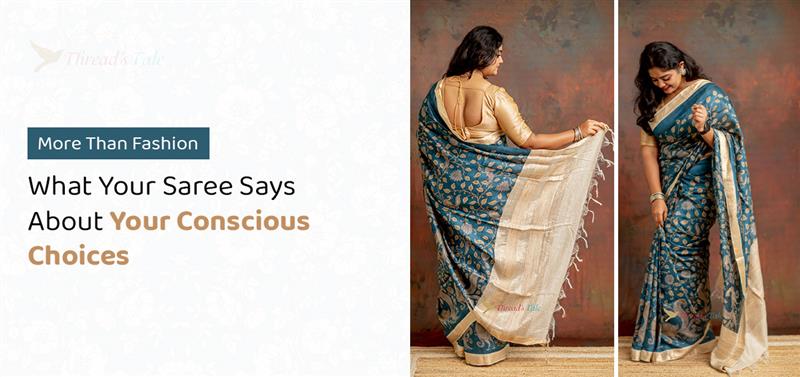
More Than Fashion: What Your Saree Says About Your Conscious Choices
In India, a saree is far more than a piece of clothing. It is a cultural symbol, a legacy of craftsmanship, and increasingly, a reflection of conscious living. As modern consumers become more aware of how their choices impact society and the environment, fashion is evolving beyond trends and aesthetics. Today, what you wear speaks volumes about what you value.
Choosing a saree is no longer just about color or design—it is about ethics, sustainability, and respect for heritage. This blog explores how your saree choices reflect mindful consumption and why traditional handwoven sarees are becoming powerful symbols of conscious living in India.
Fashion as a Reflection of Conscious Living
Conscious fashion focuses on responsibility—towards artisans, the environment, and future generations. Unlike fast fashion, which prioritizes speed and mass production, conscious fashion emphasizes quality, longevity, and ethical sourcing.
Sarees crafted using traditional techniques naturally align with these values. They are made slowly, thoughtfully, and with minimal environmental impact. When you invest in such garments, you move away from disposable fashion and towards meaningful ownership.
Buying Handcrafted Sarees Online allows consumers to directly support authentic artisans and age-old weaving traditions. Each saree tells a story of patience, skill, and cultural continuity, making it a deliberate and responsible fashion choice.
The Cultural Power of Handloom Sarees in India
India’s handloom heritage is one of the richest in the world. From silk to cotton, every region has developed unique weaving styles influenced by geography, climate, and history. These sarees are not seasonal trends; they are timeless expressions of identity.
Handloom sarees are woven on traditional looms, often within artisan households or community clusters. This decentralized production model reduces carbon emissions and sustains rural livelihoods. Wearing such sarees is a way of preserving intangible cultural heritage while embracing ethical fashion.
Why Craftsmanship Matters More Than Ever
In an era dominated by machine-made garments, handcrafted textiles stand out for their authenticity. The subtle irregularities, handwoven textures, and intricate detailing found in traditional sarees cannot be replicated by machines.
A Pure Maheshwari Silk Saree exemplifies this craftsmanship beautifully. Known for its fine silk texture, reversible borders, and elegant pallav designs, this saree reflects royal heritage while remaining practical for modern wear. Its durability ensures long-term use, making it a sustainable investment rather than a fleeting indulgence.
When consumers choose such sarees, they actively support skilled artisans and help sustain traditional weaving clusters across India.
Sustainability Woven into Every Thread
Sustainability is not an add-on in handloom sarees—it is inherent. Traditional weaving uses significantly less energy compared to power looms and synthetic fabric manufacturing. Natural fibers such as silk, cotton, and tissue blends are biodegradable and breathable, making them suitable for India’s climate.
A Handwoven Tissue Saree is a perfect example of sustainable luxury. Woven with fine yarns and subtle metallic threads, it offers elegance without excess. The lightweight fabric ensures comfort, while the slow weaving process minimizes waste and environmental harm.
Such sarees are designed to last for years, encouraging mindful consumption and reducing the cycle of frequent replacements.
Ethical Fashion and Artisan Empowerment
Every handwoven saree represents hours of skilled labor and generations of inherited knowledge. Ethical fashion recognizes this human effort and ensures fair compensation for artisans.
By choosing sarees rooted in traditional craftsmanship, consumers contribute to social sustainability. This support helps artisans maintain their livelihoods, pass skills to future generations, and resist migration driven by economic pressures.
Shopping Handcrafted Sarees Online also increases transparency, allowing buyers to make informed choices that align with their values.
Exploring Conscious Alternatives in Traditional Sarees
India’s textile diversity offers numerous options for conscious buyers seeking variety without compromising ethics. Traditional dyeing and painting techniques use natural or low-impact dyes, making them environmentally friendly.
Indian Batik Sarees are created using a wax-resist dyeing method that results in unique patterns. Each piece is distinctive, celebrating imperfection and individuality—key principles of conscious fashion.
Similarly, an Organza Hand Painted Saree combines delicate fabric with artistic expression. Hand painting ensures minimal waste while transforming each saree into a wearable canvas, perfect for women who value creativity and sustainability.
Everyday Elegance with Responsible Choices
Conscious fashion is not limited to special occasions. Many traditional sarees are designed for everyday elegance, offering comfort without compromising ethics.
Batik Cotton Sarees are an excellent example. Crafted using breathable cotton and traditional batik techniques, they are ideal for daily wear in India’s climate. These sarees prove that sustainability can be practical, stylish, and accessible.
Choosing such sarees reduces dependency on synthetic fabrics and promotes healthier consumption habits.
How Your Saree Communicates Your Values
What you wear often reflects what you stand for. A thoughtfully chosen saree communicates respect for heritage, awareness of environmental impact, and appreciation for craftsmanship.
A Pure Maheshwari Silk Saree conveys understated luxury rooted in tradition, while a Handwoven Tissue Saree reflects a preference for elegance with responsibility. These choices signal a shift from impulsive buying to intentional living.
Fashion becomes a form of self-expression not just in style, but in values.
Long-Term Value Over Short-Term Trends
One of the strongest arguments for conscious fashion is longevity. Handcrafted sarees are designed to endure—not just physically, but aesthetically. Their classic motifs and color palettes ensure they remain relevant across generations.
Investing in quality over quantity reduces waste and promotes a more thoughtful wardrobe. Over time, such sarees often become heirlooms, carrying emotional and cultural value far beyond their price.
Conclusion: Wearing Consciousness with Pride
A saree is never just fabric—it is philosophy, heritage, and responsibility woven together. In today’s world, where every choice has an impact, fashion becomes a powerful medium for conscious expression.
By choosing handwoven and ethically crafted sarees, Indian consumers contribute to environmental preservation, artisan empowerment, and cultural continuity. Whether worn daily or on special occasions, these sarees embody mindful living.
More than fashion, your saree becomes a statement—one that reflects care, awareness, and respect for the stories woven into every thread.
-
Which Saree Should I Wear? Easy Choices for Weddings, Office, Festivals & Everyday
September 17th, 2026 -
 August 25th, 2026
 -
What to Wear for Ganesh Chaturthi: Saree Colours and Styling Guide
August 24th, 2026 -
 August 24th, 2026