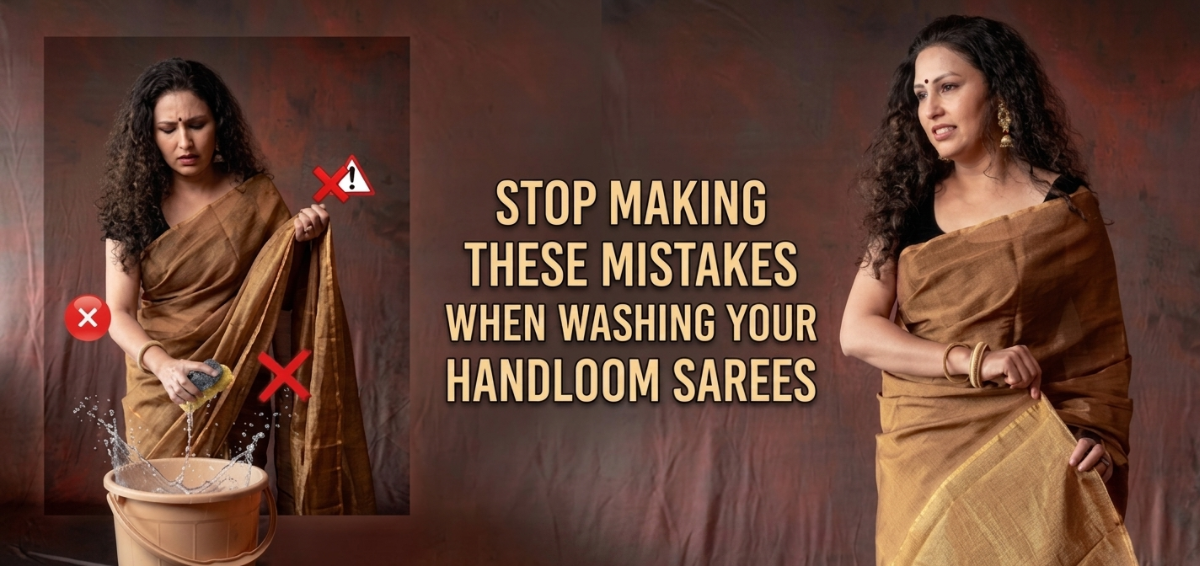
Stop Making These Mistakes When Washing Your Handloom Sarees
Handloom sarees are not just garments—they are timeless expressions of India’s rich textile heritage. From intricate weaves to natural dyes, every thread tells a story of craftsmanship, tradition, and human touch. However, maintaining their beauty requires more than just occasional care. Many saree owners unknowingly damage their precious pieces by following incorrect washing practices.
This guide uncovers the most common Handloom Saree Washing Mistakes and provides expert-backed solutions to preserve your sarees for years. Whether you own cotton, silk, or blended handlooms, understanding the right care methods can significantly extend their life and elegance.
Why Proper Care Matters for Handloom Sarees
Unlike machine-made fabrics, handloom sarees are delicate and often dyed using natural processes. The fibers are more breathable but also more vulnerable to harsh handling. Improper washing can lead to color bleeding, shrinkage, texture damage, and even permanent fabric weakening.
When you invest in Handcrafted Sarees Online, you are also investing in heritage and sustainability. Proper maintenance ensures that your saree retains its charm and continues to reflect its cultural value.
Common Mistakes People Make While Washing Handloom Sarees
1. Using Harsh Detergents
One of the biggest mistakes is using strong chemical detergents. These products are designed for durability, not delicacy. They strip away natural dyes and weaken the fibers.
What to do instead: Always use mild liquid detergents or specially formulated fabric cleansers. For silk-based sarees like a Pure Maheshwari Silk Saree, even baby shampoo can be a safer alternative.
2. Washing in Hot Water
Hot water can be extremely damaging to handloom fabrics. It causes shrinkage and accelerates color fading.
Best practice: Always wash your saree in cold water. This helps preserve both the texture and color integrity.
3. Ignoring Fabric Type
Not all handloom sarees are the same. Cotton, silk, and tissue sarees require different care techniques. Treating them all the same is a critical error.
For instance, a Handwoven Tissue Saree requires extremely gentle handling due to its delicate metallic threads.
4. Machine Washing Delicate Sarees
While it may be convenient, machine washing is one of the most damaging practices for handloom sarees.
Why avoid it: The spinning cycle can stretch, tear, or distort the weave structure.
Alternative: Always hand wash gently without twisting or wringing.
5. Soaking for Too Long
Leaving your saree soaked for extended periods can lead to dye bleeding and fiber weakening.
Ideal approach: Soak for no more than 5–10 minutes, especially for naturally dyed sarees like Batik Print Cotton Saree pieces.
6. Scrubbing or Brushing Fabric
Scrubbing removes dirt but also damages the weave and causes pilling.
Correct method: Gently swirl the saree in water instead of scrubbing.
7. Drying Under Direct Sunlight
Sunlight can fade colors quickly, especially in naturally dyed fabrics.
Better option: Dry your saree in shade with proper air circulation.
8. Wringing the Saree to Remove Water
Twisting the fabric can distort its shape and damage delicate threads.
Solution: Press gently between towels to remove excess water.
9. Ironing Without Checking Fabric Type
High heat can burn or damage the saree, particularly silk and tissue varieties.
Tip: Always use low heat or steam iron, and place a cloth over the saree while ironing.
10. Not Testing for Color Bleeding
Skipping a color test can ruin your saree and other garments.
How to test: Dip a small corner in water and check for dye release before washing.
Step-by-Step Guide to Washing Handloom Sarees Safely
Step 1: Pre-Wash Inspection: Check for stains, loose threads, or weak areas.
Step 2: Prepare Mild Cleaning Solution: Mix cold water with a gentle detergent.
Step 3: Gentle Washing: Dip and swirl the saree without rubbing.
Step 4: Rinse Carefully: Use clean cold water to remove soap residue.
Step 5: Drying Process: Lay flat or hang in shade.
Fabric-Specific Washing Tips
Cotton Handloom Sarees: Easy to maintain but prone to shrinking. Use cold water and avoid excessive wringing.
Silk Handloom Sarees: Require extra care. Dry cleaning is often recommended for premium silk sarees.
Batik Printed Sarees: These are known for their unique dye patterns. When buying Batik Print Sarees Online, ensure you follow dye-specific washing instructions to maintain the print quality.
Storage Tips After Washing
Proper storage is as important as washing. Here’s how to keep your sarees in pristine condition:
- Store in a cool, dry place
- Use muslin cloth for wrapping
- Avoid plastic covers
- Refold periodically to prevent permanent creases
How Proper Care Enhances Longevity and Value
A well-maintained saree can last for generations. When you choose Handmade Sarees Online, you are supporting artisans and sustainable fashion. Proper washing ensures that your investment remains intact while preserving the cultural significance of the piece.
Common Myths About Washing Handloom Sarees
Myth 1: All Sarees Can Be Washed the Same Way
Reality: Each fabric requires unique care.
Myth 2: More Detergent Means Better Cleaning
Reality: Excess detergent damages fibers.
Myth 3: Sunlight is Good for Drying All Fabrics
Reality: It causes fading in most handloom sarees.
Expert Tips to Avoid Handloom Saree Washing Mistakes
To truly avoid Handloom Saree Washing Mistakes, consistency is key. Follow a structured care routine and always prioritize gentle handling over convenience.
- Always read care labels
- Wash separately
- Avoid frequent washing
- Use natural drying methods
Conclusion
Handloom sarees are a celebration of India’s craftsmanship and cultural identity. By avoiding common mistakes and adopting proper washing techniques, you can ensure that your sarees remain as beautiful as the day you bought them.
In a world shifting towards sustainable fashion, caring for your garments responsibly is not just a necessity—it’s a responsibility. Make mindful choices, respect the fabric, and let your sarees continue to tell their stories for years to come.
Frequently Asked Questions (FAQs)
1. Can I wash all handloom sarees at home?
Not all. Cotton sarees can be washed at home, but delicate silk sarees are better suited for dry cleaning.
2. How often should I wash my handloom saree?
Wash only when necessary. Overwashing can damage the fabric.
3. What is the safest detergent for handloom sarees?
Mild liquid detergents or baby shampoos are the safest options.
4. Can I dry handloom sarees in sunlight?
No, always dry in shade to prevent color fading.
5. How do I store handloom sarees properly?
Wrap in muslin cloth and store in a cool, dry place away from moisture.
-

Which Saree Should I Wear? Easy Choices for Weddings, Office, Festivals & Everyday
September 17th, 2026 -
 August 25th, 2026
 -

What to Wear for Ganesh Chaturthi: Saree Colours and Styling Guide
August 24th, 2026 -
 August 24th, 2026