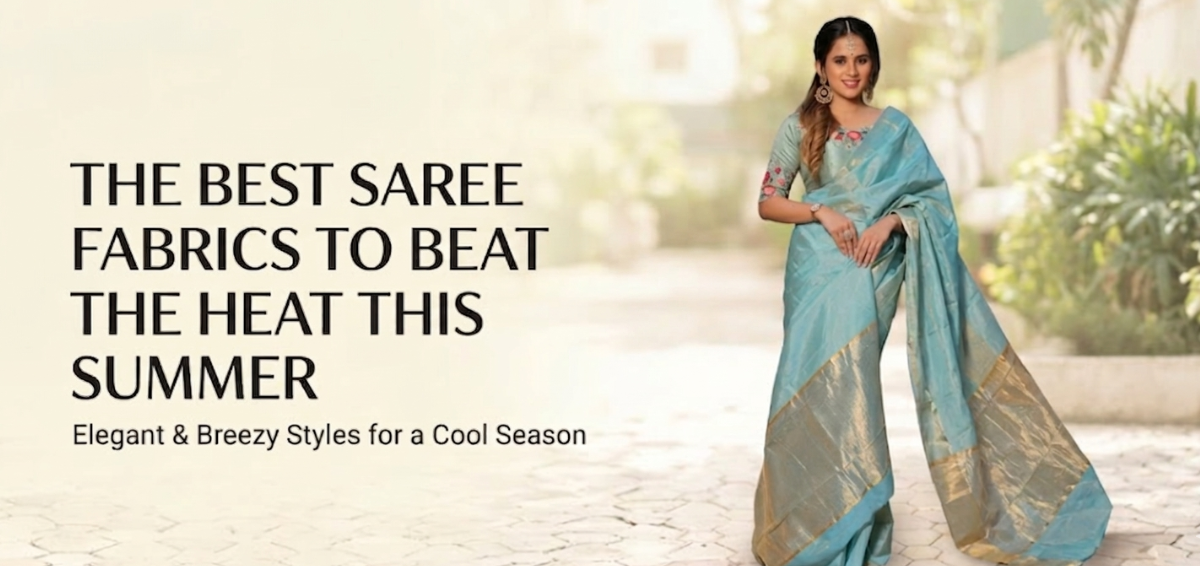
The Best Saree Fabrics to Beat the Heat This Summer
Indian summers are nothing short of relentless. From the parched heat of Nagpur to the sticky humidity of coastal cities and the soaring afternoons of central India, temperatures test both patience and wardrobe choices. And yet, the saree — that timeless six-yard wonder — refuses to step aside. The secret to wearing one with grace and real comfort through April, May, and June? It comes down entirely to fabric.
Not all sarees are built the same. A heavily embroidered silk saree may look breathtaking in photographs, but it can turn a simple outdoor gathering into an endurance test. The right weave, the right fibre, and the right weaving technique make all the difference between floating through a summer afternoon in quiet elegance and spending it wishing for cooler air.
This guide takes you through the finest saree fabrics for the Indian summer — focusing on traditional, handcrafted textiles that were originally designed for warm climates and have stood the test of centuries. Whether you are dressing for a casual day at the office, a weekend puja, a family celebration, or a festive gathering, knowing your fabrics means you drape with confidence and comfort every single time.
Why Fabric Is the Most Critical Decision in Summer Saree Dressing
When the temperature crosses 38°C, the human body perspires naturally to cool itself. The fabric resting against your skin either helps this process or hinders it. Synthetic fibres like polyester and nylon trap heat and moisture close to the body, creating a sticky, uncomfortable experience within minutes. Natural and heritage-blended fibres, on the other hand, allow the skin to breathe and moisture to evaporate.
There are a few key qualities to look for when choosing a saree for summer wear:
- Breathability — allows air to circulate freely through the weave structure
- Moisture absorption — draws perspiration away from the skin and helps it evaporate quickly
- Lightweight drape — adds no bulk, stays manageable through a long day
- Open or looser weave — enhances airflow and prevents fabric from clinging to the body
- Natural fibres and dyes — gentler on the skin, especially under prolonged summer heat
Traditional Indian handloom textiles have incorporated these qualities for centuries, long before air conditioning existed. Weavers from Maheshwar, Chanderi, Bengal, and other heritage regions understood their climate deeply and crafted their fabrics accordingly. This is exactly why heritage handwoven sarees remain among the most intelligent summer wardrobe choices available today.
Maheshwari Silk-Cotton: A Heritage Weave Born for Warm Weather
The Story Behind the Weave
Originating from the ancient town of Maheshwar on the banks of the Narmada river in Madhya Pradesh, Maheshwari silk sarees online have earned a well-deserved reputation as one of India's finest summer weaves. Queen Ahilyabai Holkar of the Holkar dynasty patronised this craft in the 18th century, inviting weavers from Surat and Malwa to settle in Maheshwar. The tradition has been passed through generations of skilled artisans ever since.
The defining characteristic of a Maheshwari saree is its silk-and-cotton combination. The warp is typically fine cotton thread while the weft uses silk, creating a fabric that has the lightweight comfort of cotton and the quiet sheen of silk. You get a saree that looks polished and refined while remaining genuinely breathable — a combination difficult to achieve in any single textile.
Maheshwari sarees are recognised by their distinctive reversible border, traditional checks, fine stripes, and small buti motifs woven directly into the fabric. Because these patterns are integral to the weave rather than embroidered or printed afterward, the saree remains flat, flexible, and comfortable across a full day of wear.
When to Reach for a Maheshwari Saree in Summer
A Maheshwari silk-cotton saree works across a wide range of settings. Its light weight makes it suitable for morning office meetings, daytime pujas, and casual family lunches. The subtle sheen is equally appropriate for an evening gathering without any additional styling effort. Pair it with a simple cotton blouse in a complementary colour, lightweight silver jewellery, and a small potli bag, and you have an outfit that looks thoughtfully assembled without demanding much from you in the heat.
Care Tip: Maheshwari sarees are best hand-washed with mild detergent in cool water. Avoid wringing — press gently, lay flat to dry in shade, and iron lightly on a low setting while slightly damp.
Chanderi Tissue: Gossamer Light and Quietly Glamorous
A Fabric Woven With Air and History
Chanderi, a small town in Madhya Pradesh, has been producing fine handwoven textiles since the Vedic era. The Chanderi tissue saree stands out as one of the most elegant choices for Indian summer dressing. Tissue fabric is created by weaving very fine metallic thread — gold or silver zari — through a sheer silk or silk-cotton base, giving it a translucent quality and a delicate shimmer that catches light beautifully.
Despite its festive appearance, a Chanderi tissue saree is remarkably light. The sheer nature of the base fabric allows excellent airflow, making it far more wearable in warm weather than its glamorous look might suggest. It drapes beautifully with very little effort and holds its structure through a long day without becoming heavy or uncomfortable.
What makes Chanderi tissue sarees truly special is the craft itself — each piece is handwoven by artisans working on pit looms, often taking several days to complete a single saree. The geometric motifs, floral butis, and kadwa borders characteristic of Chanderi weaving are created thread by thread. No two sarees are ever exactly alike.
Where Chanderi Tissue Shines
This is where the Chanderi tissue saree truly excels as the right saree for every occasion — a festive daytime wedding, a mehendi ceremony, a Navratri celebration, or even a corporate event that calls for elegant ethnic dressing. The combination of sheer fabric and zari threading reads as formal and celebratory without requiring additional embellishment.
Style it with a silk or brocade blouse in a contrasting colour to make the tissue base stand out. Minimal jewellery works best — a simple gold necklace or a pair of jhumkas lets the saree speak for itself.
Batik Print Cotton: Where Traditional Art Meets Summer Ease
The Ancient Craft of Wax-Resist Dyeing
Batik is one of the world's oldest textile art forms, and in India it has developed its own regional vocabulary — particularly across Gujarat, Rajasthan, and parts of Maharashtra. Batik print sarees online have gained significant popularity in recent years, not just for their striking visual appeal but for the wonderful wearability of the fabric beneath the print.
The Batik process involves applying hot wax to specific areas of fabric before dyeing, so that covered portions resist the dye and create a pattern. When the wax is removed, the design is revealed — often in rich earthy tones with the subtle crackle texture that characterises authentic handcrafted Batik. Each piece carries slight variations that speak to the human hand involved in its making.
Most high-quality Batik sarees are crafted on cotton or cotton-silk base fabrics, which makes them naturally breathable and well-suited to warm weather. The natural dyes commonly used in authentic Batik — indigo, turmeric, madder — are also gentle on the skin, an important consideration during summer when skin can be more reactive.
Why Batik Works So Well for Summer Occasions
Beyond breathability, Batik print sarees carry an artistic quality that makes them visually distinctive without relying on embellishment. The bold geometric or floral patterns — often in indigo-and-white, mustard-and-brown, or terracotta-and-cream — pair naturally with summer's lighter colour palette. They work effortlessly for outdoor events, casual daytime outings, art exhibitions, and cultural functions where you want to look genuinely individual without overheating.
Style Note: Batik sarees look best with solid-coloured blouses in one of the saree's accent tones. A sleeveless or quarter-sleeve blouse maximises comfort in summer heat.
Handwoven Tissue Sarees: Lightweight Luxury for the Season
In Indian handloom tradition, "tissue saree" refers to fabric woven with very fine metallic threads — typically gold or silver — integrated into a sheer or semi-sheer base. A handwoven tissue saree looks as though it might weigh a great deal but is, in practice, surprisingly featherlight.
The secret lies in the fineness of the threads. Skilled artisans work with threads of remarkable delicacy to create a fabric that is simultaneously airy and luminous. The metallic threads catch light and give the saree a natural gleam that suits festive and formal occasions, while the sheer base ensures the fabric remains breathable even in warm conditions.
Handwoven tissue sarees often feature traditional motifs — paisley, lotus, jaali work, or geometric patterns — created through the weaving process itself rather than added later. This means the saree is as beautiful from the reverse as from the front, and the design will never fade or peel with time or washing.
For summer weddings and evening events where you want to look your most refined without sacrificing comfort, a handwoven tissue saree is among the most sophisticated choices available. Pair it with a rich contrast blouse, minimal polki jewellery, and your most graceful draping style.
Handloom Cotton: The Everyday Essential for Indian Summers
No summer saree guide would be complete without dedicated space for handloom cotton — the fabric that has kept Indian women comfortable through scorching heat for thousands of years. While machine-made cotton sarees are widely available, handloom cotton occupies a different category entirely. The handloom weaving process creates a slightly more open, flexible fabric structure that machines cannot replicate, which translates directly into better breathability and comfort on the skin.
When you explore handcrafted sarees online from weaving communities across India, you find handloom cotton in a remarkable range of styles — from the crisp, structured drape of South Indian cotton handlooms to the soft, flowing hand of Bengal muslin. Each weaving tradition brings its own distinct character to this ancient fibre.
Handloom cotton sarees also absorb natural and vegetable dyes exceptionally well, which is why some of the most vivid and lasting colours in Indian textiles appear on cotton handlooms. Block-printed handloom cotton in particular has become a beloved summer choice, combining the breathability of the base fabric with the visual richness of traditional hand-printing techniques.
Quick Comparison: Summer Saree Fabrics at a Glance
Fabric Breathability Weight Best Occasion Fit Maheshwari Silk-Cotton High Very light Everyday to festive Chanderi Tissue High Featherlight Festive and formal Batik Print Cotton Very High Very light Casual to semi-formal Handwoven Tissue Medium-High Light Evening and celebratory Handloom Cotton Very High Very light Everyday and travel
Colour and Print: The Hidden Summer Comfort Factor
Fabric type is the primary consideration for summer comfort, but colour plays a more significant role in heat management than most people realise. Dark colours absorb more sunlight and radiate heat into the body, which can make even a breathable fabric feel warmer than it should. Light, soft shades — ivory, powder blue, mint green, pale yellow, dusty rose, and off-white — reflect sunlight and help maintain a cooler body temperature throughout the day.
For prints, the rule of thumb is to keep them organic and open. Large floral motifs, block-printed geometrics, and traditional buti patterns all work well in summer because they do not rely on heavy embellishment. Avoid dense sequin work, thick stone embroidery, or heavy zardozi in peak summer months — these add weight and restrict the fabric's natural breathability.
The most comfortable summer sarees tend to combine a light base colour with a single contrasting border or a scattered all-over print — giving the eye something beautiful to look at while keeping the overall look fresh, clean, and unencumbered by excess.
Occasion Guide: Finding the Right Saree for Every Summer Event
Summer 2026 brings a full calendar of reasons to wear a saree — weddings, Akshaya Tritiya, family gatherings, office events, and quiet everyday moments that deserve a beautiful drape. Knowing which fabric to reach for makes choosing the right saree for every occasion much more intuitive.
- Daily office wear: Handloom cotton or Maheshwari silk-cotton in soft tones or subtle prints. Minimal accessories.
- Daytime wedding or haldi ceremony: Batik print cotton in festive colours, or a Chanderi cotton with a simple border.
- Evening wedding or formal reception: Chanderi tissue or handwoven tissue in deep luminous tones — navy, forest green, terracotta, burgundy.
- Weekend puja or family gathering: Handloom cotton with a block-print border, or a soft Maheshwari with traditional checks.
- Travel or outdoor summer event: Batik cotton in earthy natural tones — comfortable, distinctive, and easy to manage in any weather.
Why Handcrafted Fabrics Perform Better in Summer Heat
Traditional Indian handloom textiles have endured for centuries because they were designed by human hands for human bodies, in the very climates the weavers themselves lived in every day. When a saree is woven on a handloom, the weaver controls thread tension, spacing, and fabric structure with a sensitivity no machine can replicate. This creates fabric with a slightly open, irregular weave — irregular not as a flaw, but as a feature. Those tiny variations in thread spacing are what give handloom fabric its characteristic softness and superior breathability compared to machine-woven alternatives.
Handcrafted sarees made using traditional techniques also use natural dyes, vegetable-based mordants, and hand-finishing methods that leave the fabric softer and more pliable than chemically treated options. For summer wear, this matters enormously — a chemically stiffened fabric feels harsh against warm, perspiring skin, while a naturally finished handloom fabric feels almost like a second skin.
At Threads Tale, every saree tells the story of a specific weaver, a specific technique, and a specific region of India's extraordinary textile heritage. The subtle imperfections in handwoven fabric are not errors — they are evidence of a human being's time, skill, and care.
Caring for Your Summer Sarees: Making the Craft Last
A handcrafted summer saree is an investment in cultural heritage as much as in personal style. A little mindful care ensures your sarees remain beautiful across many seasons.
Hand-wash handloom cotton, Maheshwari, and Batik sarees in cool water with a gentle, pH-neutral detergent.
Dry in shade — direct sunlight can gradually fade natural dyes. Spread flat or hang from the border to avoid stretching. Iron on a low setting while slightly damp. For tissue and Chanderi sarees, iron from the reverse side to protect zari threads. Store in soft muslin cloth rather than plastic bags — muslin allows the fabric to breathe during storage and prevents moisture buildup. Avoid strong perfumes directly on fabric — chemicals can react with natural dyes and damage delicate fibres over time.
The Summer Saree Wardrobe: A Final Note
Summer in India does not have to mean giving up your love for sarees. With the right fabric knowledge, you can build a summer wardrobe that is equally rooted in comfort and elegance — one that honours India's extraordinary handloom tradition while keeping you genuinely cool through the season's most demanding days.
From the heritage silk-cotton blend of a Maheshwari weave to the gossamer shimmer of a Chanderi tissue, from the bold artistry of a Batik cotton to the understated grace of a fine handloom — every fabric in this guide has earned its place through centuries of being worn by women who understood what it meant to dress beautifully in a warm country.
Choose your fabric with intention, drape with care, and let the craft do what it has always done best — make you feel like yourself, only more so.
Explore the full collection of summer-ready, handcrafted sarees at Threads Tale — where every weave carries a story worth wearing.
Frequently Asked Questions
1. Which saree fabric is best for summer?
Lightweight and breathable fabrics like handloom cotton, Maheshwari silk-cotton, Chanderi, and Batik cotton are ideal for summer. These allow airflow and help keep the body cool in hot weather.
2. Are silk sarees suitable for summer?
Pure heavy silk sarees may feel warm, but lightweight blends like silk-cotton Maheshwari or Chanderi tissue sarees are comfortable and breathable, making them suitable for summer occasions.
3. Why are handloom cotton sarees preferred in summer?
Handloom cotton sarees have a slightly open weave that improves breathability and absorbs moisture, making them extremely comfortable for long hours in hot climates.
4. Which colors are best for summer sarees?
Light shades such as pastel blue, mint green, ivory, pale yellow, and soft pink reflect heat and help maintain a cooler body temperature compared to darker colors.
5. How should I style a saree for summer comfort?
Choose lightweight fabrics, pair with breathable cotton blouses, keep accessories minimal, and opt for loose draping styles to stay cool and comfortable throughout the day.
-
Which Saree Should I Wear? Easy Choices for Weddings, Office, Festivals & Everyday
September 17th, 2026 -
 August 25th, 2026
 -
What to Wear for Ganesh Chaturthi: Saree Colours and Styling Guide
August 24th, 2026 -
 August 24th, 2026