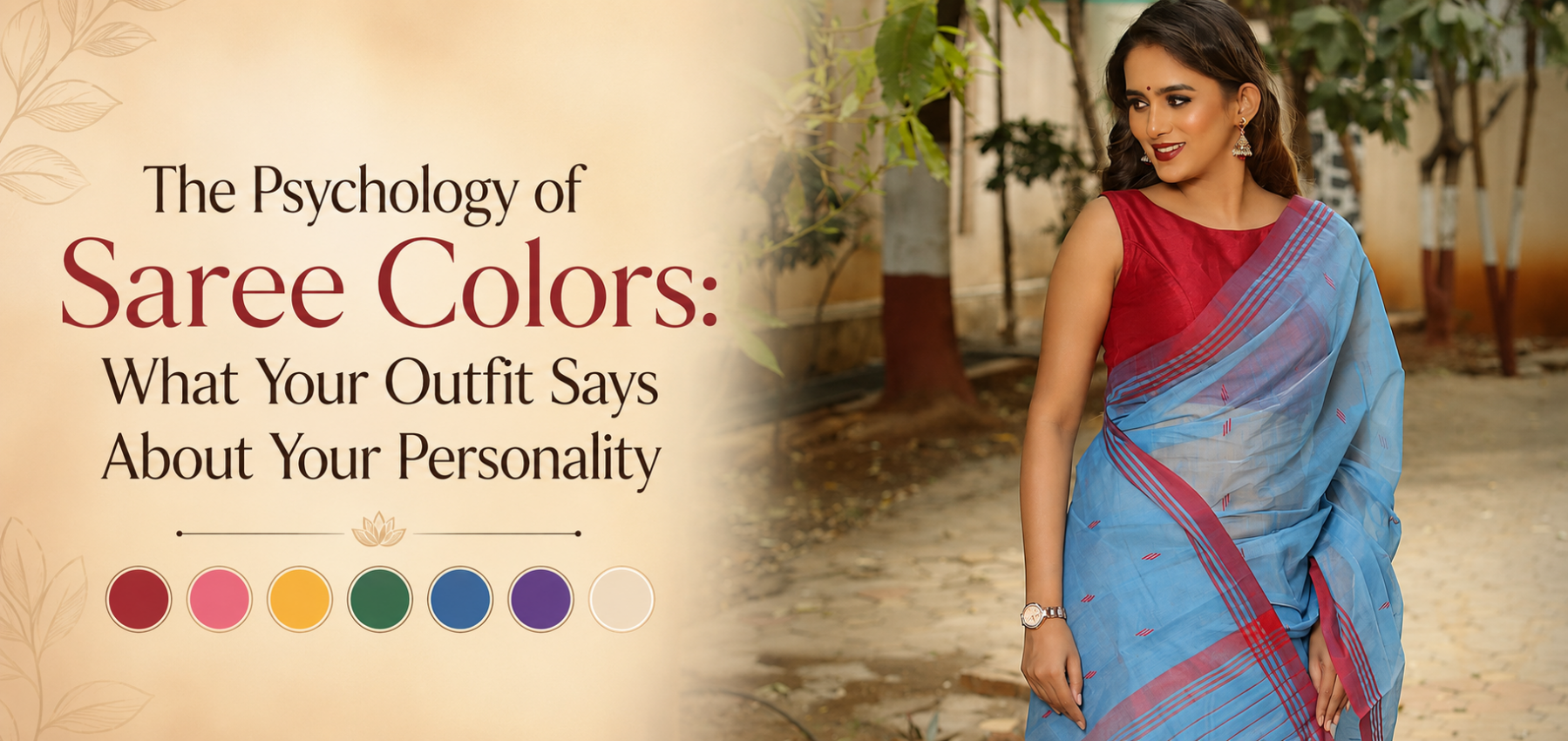
The Psychology of Saree Colors: What Your Outfit Says About Your Personality
Colour is one of the first things a person registers before they read a single detail of your outfit's craftsmanship. In Indian ethnic wear, this is even more pronounced — a saree's colour carries centuries of cultural meaning alongside its psychological effect on both the wearer and the viewer. Choosing among the best saree colors for an occasion is rarely random; it reflects mood, intent, and often, personality.
Colour psychology in sarees is the study of how specific hues — red, blue, green, yellow, and others — influence perception, confidence, and emotional tone when worn as a six-yard drape. A maroon saree signals authority and warmth, while a pastel saree suggests calm and approachability. Understanding this helps in dressing with intention rather than habit.
Why Saree Colors Influence How You're Perceived
Human beings process colour before shape, pattern, or fabric texture — a phenomenon well documented in visual perception studies. In a saree, this means colour does the first impression's heavy lifting, often before anyone notices the weave or embroidery underneath.
This is why brides gravitate toward red and gold, corporate professionals lean on navy or beige, and festive gatherings see a surge of yellow and green. Each choice, whether conscious or instinctive, communicates something specific to the room.
The Cultural Layer Behind Color Choices
In India, saree colours are rarely just aesthetic decisions. Red has long been associated with marital status and prosperity in North Indian weddings, while white and pastel shades carry associations with simplicity in states like Kerala and West Bengal. Yellow is tied to auspiciousness during festivals such as Vasant Panchami, and green is common in Eid and harvest celebrations. A saree's colour, in this sense, is doing cultural work as much as psychological work.
What Each Saree Color Says About Your Personality
Below is a breakdown of common saree colours and the psychological associations most frequently linked to them, based on both colour theory and observed style preferences among Indian saree wearers.
Red — Confidence and Passion
Red is the colour most associated with confidence, energy, and assertiveness. Wearers who consistently choose red sarees are often perceived as bold decision-makers who are comfortable being the centre of attention — which is part of why it remains the dominant choice for Indian bridal wear.
Blue — Calm and Trustworthiness
Blue, particularly indigo and navy, is linked to reliability and composure. It's a frequent choice for formal settings and professional environments because it projects steadiness without appearing severe.
Green — Growth and Balance
Green sarees are tied to renewal, balance, and groundedness. In Indian tradition, green is also strongly associated with fertility and new beginnings, making it common in engagement ceremonies and spring festivals.
Yellow — Optimism and Sociability
Yellow is the colour of visibility and cheer. Wearers who favour yellow sarees are often seen as approachable and energetic, and the shade's strong association with auspiciousness makes it a festive-season favourite.
White and Ivory — Simplicity and Clarity
Off-white and ivory sarees, especially in handwoven cotton or Chanderi, are associated with quiet confidence and minimalism. These shades work well for those who prefer their craftsmanship — rather than colour intensity — to carry the outfit.
Black — Sophistication and Control
Once considered inauspicious in some Indian communities, black has been steadily reclaimed in contemporary ethnic fashion as a colour of sophistication and quiet authority, particularly for evening events and cocktail functions.
How to Choose the Best Saree Colors for Your Skin Tone and Occasion
Picking from the best saree colors available isn't only about personality — undertone and occasion matter just as much. A structured approach removes the guesswork.
- Identify your undertone first. Warm undertones (yellow or golden hue in the skin) pair well with mustard, rust, and deep red. Cool undertones (pink or blue hue) suit royal blue, emerald, and fuchsia.
- Match intensity to occasion. Saturated colours like red and magenta suit weddings and festive events; muted tones like sage green or dusty rose suit daytime or office settings.
- Consider the weave and print. A hand block print or batik print cotton saree often carries earthy, natural dye tones that flatter most skin tones without needing bright saturation.
- Test under natural light. Many colours read differently indoors versus outdoors — always check a saree's true shade in daylight before finalising a purchase.
- Factor in the season. Cotton and linen sarees in lighter shades suit summer; silk and Chanderi in deeper tones suit winter and festive months.
Modern Saree Looks Without Heavy Work: Simple and Elegant Styling Ideas
A saree doesn't need dense embroidery or zari work to make an impression. Increasingly, Indian women are choosing minimal-work sarees — clean handloom weaves, subtle block prints, or hand-painted motifs — that let colour and craftsmanship speak for themselves.
Handloom Cottons for Everyday Elegance
Handloom cotton sarees in solid or two-tone shades remain one of the most versatile options for daily and office wear. Their breathability suits India's climate, and their understated look pairs easily with minimal jewellery. Shoppers looking for authenticated, artisan-made pieces increasingly search for handmade sarees online rather than mass-manufactured alternatives, largely because handloom weaves carry natural texture that machine-made fabric cannot replicate.
Hand-Painted and Batik Sarees for Understated Detail
Instead of heavy embroidery, hand-painted or batik techniques add visual interest through colour and motif rather than volume. An organza hand painted saree demonstrates this well — the sheer fabric carries painted detail without added weight or bulk, making it suitable for both day events and light evening functions.
Block Prints as a Craft-Forward Alternative
Traditional block printing, particularly from regions like Rajasthan and Madhya Pradesh, offers pattern and colour depth without any embroidery at all. indian batik sarees use wax-resist dyeing techniques passed down through generations of artisans, producing organic, non-repeating patterns that machine printing cannot fully replicate.
Minimal-Work Silks for Weddings and Festive Wear
Heavy zari work isn't mandatory for wedding-appropriate sarees. Handwoven silks with subtle temple borders or solid-colour Chanderi weaves are increasingly chosen for their quiet sophistication. Buyers researching modern sarees for wedding often prioritise weave quality and colour over embellishment volume, especially for daytime ceremonies.
Best Saree Colors for the Workplace
Office dressing calls for restraint in both colour saturation and print scale. Muted tones — soft grey, powder blue, olive, and beige — read as professional without appearing flat. For those researching the best saree for office wear, a handloom cotton or linen saree in a single muted shade, paired with minimal accessories, remains the most consistently recommended choice across Indian workplace dress norms.
Craftsmanship Note: Why Natural Dyes Change the Color Conversation
Sarees dyed with natural pigments — indigo, madder root, turmeric, and pomegranate rind — carry a depth and slight variation in tone that synthetic dyes don't replicate. This is a deliberate part of handloom production: artisans consider each piece unique because natural dye absorption varies slightly with every batch of fabric. That variation is not a flaw; it's proof of a handmade process, and it's part of why handcrafted sarees are frequently described as "wearable stories" rather than uniform products.
Quick Comparison: Saree Colors by Occasion
- Weddings: Red, maroon, gold, deep pink
- Festivals: Yellow, green, orange
- Office wear: Beige, grey, olive, muted blue
- Evening events: Black, emerald, wine
- Everyday wear: White, ivory, pastel cotton tones
In Summary
Saree colours are never just a visual choice — they carry cultural weight, psychological signalling, and personal identity in equal measure. The best saree colors for any individual depend on undertone, occasion, and the impression they intend to create, while the craftsmanship behind the fabric — whether hand-painted, block-printed, or naturally dyed — adds a layer of meaning that colour alone cannot. Choosing thoughtfully, rather than by trend, results in a wardrobe that reflects both personality and heritage.
Frequently Asked Questions
What is the psychology behind saree colors?
Saree colour psychology refers to how specific hues influence perception and mood — for instance, red is linked to confidence and passion, blue to calm and trust, and yellow to optimism. In India, these associations often overlap with cultural meanings tied to specific festivals and ceremonies.
Which saree color is considered the best for weddings?
Red remains the most traditional choice for Indian weddings, symbolising prosperity and marital status, though maroon, deep pink, and gold are also widely worn. Regional customs influence this significantly, so the "best" colour can vary by community.
What saree color is best for office wear?
Muted, low-saturation shades like beige, grey, olive, and powder blue are best suited for office wear because they read as professional and understated. Handloom cotton or linen sarees in these tones are a common recommendation for daily workplace dressing.
Can I wear a saree without heavy embroidery and still look elegant?
Yes — handloom cottons, block prints, batik, and hand-painted sarees achieve an elegant look through colour, texture, and craftsmanship rather than embellishment. These options are also generally lighter, more breathable, and easier to style for everyday or semi-formal occasions.
How do I choose the right saree color for my skin tone?
Start by identifying your undertone: warm undertones generally suit mustard, rust, and deep red, while cool undertones suit royal blue, emerald, and fuchsia. Testing the saree under natural daylight before purchase gives the most accurate sense of how the colour will actually look.
Do saree colors have different meanings in different parts of India?
Yes. Red is tied to marriage and prosperity in much of North India, white carries associations with simplicity in states like Kerala, and yellow is linked to auspicious occasions such as Vasant Panchami. Regional and community customs shape these meanings considerably.
-
Which Saree Should I Wear? Easy Choices for Weddings, Office, Festivals & Everyday
September 17th, 2026 -
 August 25th, 2026
 -
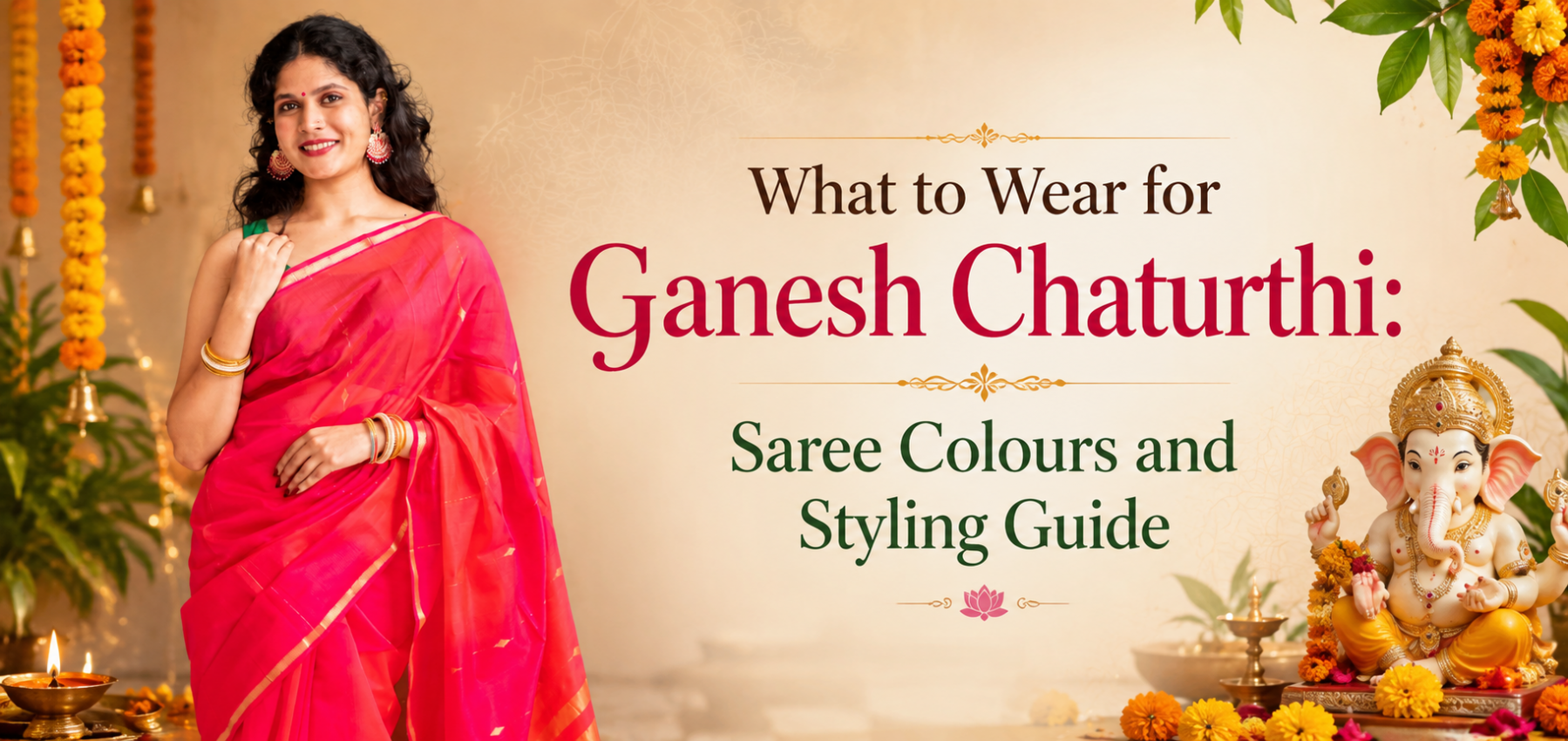
What to Wear for Ganesh Chaturthi: Saree Colours and Styling Guide
August 24th, 2026 -
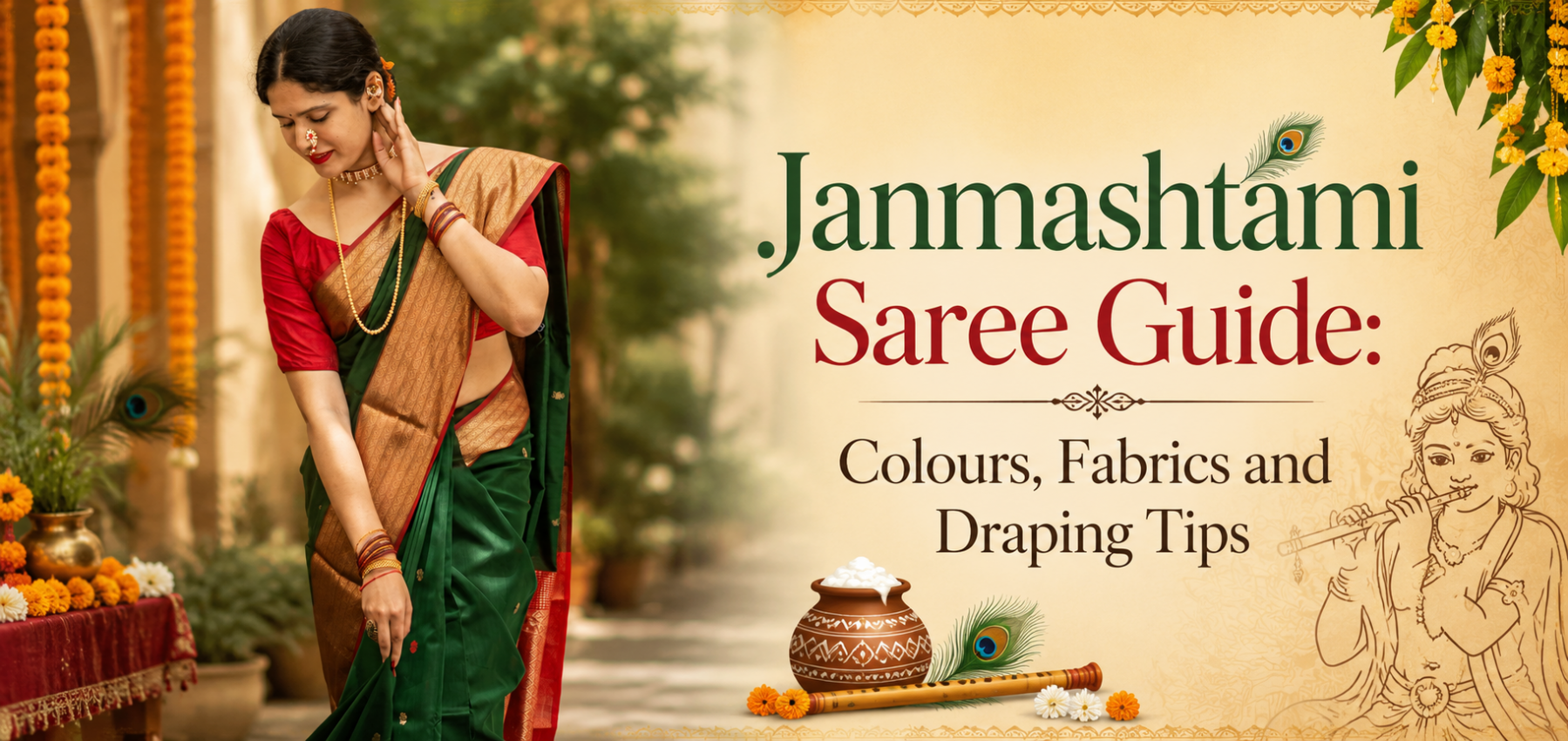 August 24th, 2026