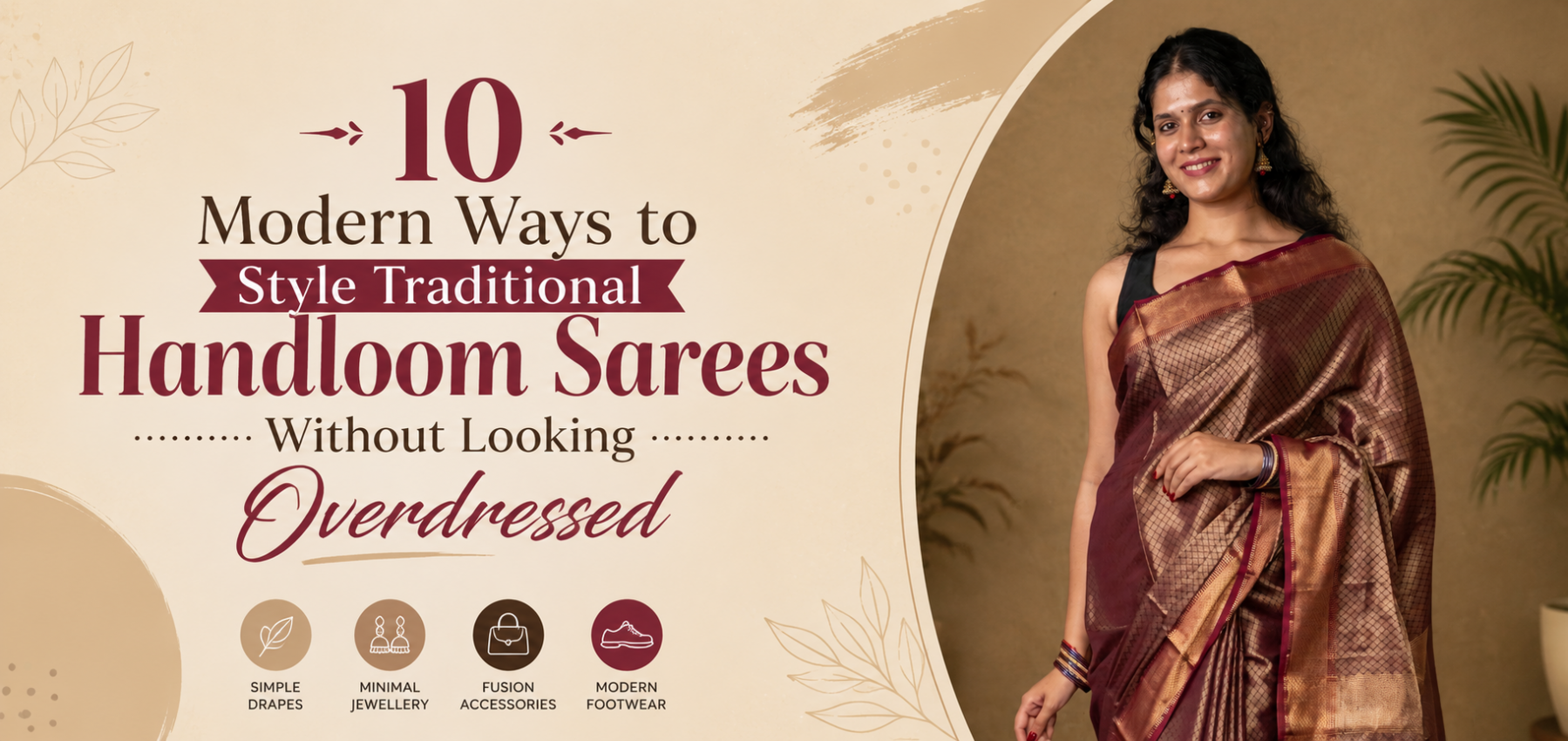
The Story Behind India’s Most Loved Handloom Fabrics
India’s textile heritage is among the richest in the world, woven through centuries of tradition, craftsmanship, and cultural storytelling. From royal courts to everyday wardrobes, handloom fabrics have played a vital role in shaping the country’s fashion identity. Today, as consumers increasingly shift toward mindful and sustainable choices, traditional weaves are witnessing a remarkable revival. These textiles are not merely garments — they represent artistry, regional culture, and the livelihoods of skilled artisans.
For modern Indian consumers, handloom fabrics symbolize authenticity, sustainability, and timeless elegance. Whether worn at weddings, festivals, or everyday occasions, handcrafted textiles continue to remain relevant. This blog explores the story behind India’s most loved handloom fabrics, their cultural significance, craftsmanship, and why they continue to be essential in contemporary wardrobes.
Why Handloom Fabrics Hold a Special Place in India
Handloom weaving in India dates back thousands of years, with each region developing its own distinctive techniques. Unlike mass-produced textiles, handwoven fabrics reflect individuality, patience, and human creativity. Every thread tells a story — of tradition, community, and heritage passed down across generations.
Handloom fabrics are also deeply connected to sustainable women fashion. They typically use natural fibers, eco-friendly dyes, and low-energy production processes. This makes them ideal for conscious consumers seeking ethical alternatives to fast fashion. Additionally, buying handloom products supports artisan communities, helping preserve traditional skills that might otherwise fade.
The Cultural Legacy of Chanderi Weaves
Chanderi fabrics originate from Madhya Pradesh and are known for their lightweight texture, sheer elegance, and intricate motifs. Historically favored by royalty, Chanderi textiles were often woven using silk and cotton blends, creating a luxurious yet breathable fabric. These weaves feature traditional motifs inspired by nature, temples, and geometric patterns.
Tissue Chanderi Fabric: A Blend of Luxury and Tradition
Tissue Chanderi Fabric stands out for its delicate sheen and fine weaving technique. The subtle metallic effect is achieved by blending silk threads with zari, creating a graceful drape ideal for festive and occasion wear. Its lightweight nature makes it comfortable for long hours, which adds to its popularity among modern women.
This fabric perfectly bridges tradition and contemporary styling. It can be styled as sarees, dupattas, or dress materials, making it versatile for multiple occasions. Many fashion-conscious buyers prefer this fabric because it reflects elegance without appearing overly heavy.
Maheshwari Weaving: Heritage from the Banks of Narmada
Maheshwari textiles originate from the town of Maheshwar in Madhya Pradesh. These fabrics gained prominence during the reign of Queen Ahilyabai Holkar, who encouraged artisans to develop unique weaving patterns. Maheshwari weaves are recognized for their reversible borders, striped patterns, and lightweight texture.
Pure Maheshwari Silk Saree: A Timeless Wardrobe Essential
Pure Maheshwari Silk Saree is admired for its graceful fall and subtle sophistication. Crafted using silk and cotton blends, these sarees are both luxurious and breathable. Their geometric patterns, striped pallus, and delicate zari borders make them suitable for both festive and formal occasions.
These sarees are particularly appealing to women who prefer understated elegance. They offer versatility, allowing styling for office wear, celebrations, and even intimate weddings. Their durability ensures they remain a long-term wardrobe investment.
The Artistic Appeal of Hand Block Prints
Hand block printing is another treasured Indian textile tradition practiced in Rajasthan and Gujarat. This technique involves carving designs onto wooden blocks, which are then dipped in dye and stamped onto fabric. The process requires precision, skill, and creativity.
Batik Print Sarees Online: Art Meets Modern Shopping
Batik Print Sarees Online have gained popularity among buyers looking for artistic and unique patterns. Batik printing involves wax-resist dyeing, which creates beautiful layered designs and distinctive textures. Each piece is slightly different, emphasizing handcrafted authenticity.
These sarees are ideal for women who appreciate artistic expression in their wardrobe. The versatility of batik designs allows them to be styled for casual wear, office attire, or festive gatherings. Online availability has made it easier for customers to access these handcrafted textiles from across India.
The Versatility of Handwoven Accessories
Handloom fashion extends beyond sarees and fabrics. Accessories like dupattas play a vital role in enhancing ethnic outfits. These pieces add texture, color, and cultural depth to even simple attire.
Handwoven Dupatta: A Must-Have Styling Element
Handwoven Dupatta serves as a versatile wardrobe addition. Whether paired with kurtas, sarees, or fusion outfits, it enhances the overall look effortlessly. Crafted using traditional techniques such as Chanderi weaving, Maheshwari patterns, or block prints, these dupattas carry regional identity.
They are lightweight, breathable, and suitable for year-round use. Many women prefer handcrafted dupattas because they allow styling flexibility while promoting artisan craftsmanship.
The Rise of Sustainable Women Fashion in India
The fashion industry is witnessing a growing shift toward sustainability. Consumers are increasingly choosing ethical products that align with environmental responsibility. Handloom fabrics naturally support sustainable women fashion due to their low carbon footprint and eco-conscious production methods.
Traditional weaving uses minimal machinery, reducing energy consumption. Natural dyes derived from plants further minimize environmental impact. Additionally, handcrafted textiles promote slow fashion — encouraging consumers to invest in durable and timeless pieces rather than disposable trends.
Why Modern Consumers Love Handloom Fabrics
- Breathable and comfortable for Indian climate
- Unique designs reflecting cultural heritage
- Sustainable and eco-friendly production
- Support for artisan communities
- Versatility for both traditional and modern styling
These benefits make handloom fabrics appealing to contemporary buyers who value authenticity and responsible consumption.
How Handloom Fabrics Support Artisan Communities
Purchasing handwoven textiles directly contributes to artisan livelihoods. Each product requires hours or even days of manual work. By choosing handcrafted items, consumers help preserve traditional skills and support rural economies.
This also promotes fair wages and ethical production practices. Many brands focus on artisan empowerment, ensuring transparency and sustainability across their supply chain.
Styling Handloom Fabrics for Modern Wardrobes
Everyday Wear
Lightweight cotton handlooms and minimal prints are ideal for daily use. They offer comfort without compromising on style.
Festive Occasions
Silk blends, zari borders, and traditional motifs make handloom sarees perfect for celebrations.
Fusion Styling
Pairing handwoven dupattas with western silhouettes creates contemporary ethnic looks.
Office Wear
Subtle Maheshwari and Chanderi weaves provide professional elegance.
How to Identify Authentic Handloom Fabrics
- Look for slight irregularities in weaving
- Check fabric texture and softness
- Examine handwoven borders and motifs
- Verify product descriptions and origin
- Buy from trusted handcrafted brands
Authentic handloom fabrics showcase human craftsmanship, which distinguishes them from machine-made alternatives.
The Future of Indian Handloom Fabrics
With increasing awareness around sustainability, Indian handloom fabrics are expected to grow in popularity. Digital platforms are making it easier for consumers to access traditional weaves directly from artisan communities. Designers are also blending heritage techniques with modern aesthetics, creating fresh interpretations of classic textiles.
The future of handloom fashion lies in preserving heritage while adapting to contemporary tastes. This balance ensures that traditional weaving continues to thrive in modern wardrobes.
Conclusion
The story behind India’s most loved handloom fabrics is one of tradition, artistry, and sustainability. From the elegance of Tissue Chanderi Fabric to the timeless charm of Pure Maheshwari Silk Saree, each textile reflects India’s cultural richness. The artistic appeal of Batik Print Sarees Online and the versatility of Handwoven Dupatta further showcase the diversity of handcrafted fashion.
As consumers increasingly embrace sustainable women fashion, handloom textiles continue to gain relevance. These fabrics not only enhance personal style but also support artisan communities and preserve heritage. Choosing handloom fashion means investing in authenticity, craftsmanship, and timeless elegance.
FAQs
1. Why are handloom fabrics considered sustainable?
Handloom fabrics are produced using manual weaving techniques that consume minimal energy. They often use natural fibers and eco-friendly dyes, making them environmentally responsible. Additionally, their durability encourages long-term use, reducing fashion waste.
2. What makes Chanderi and Maheshwari fabrics unique?
Chanderi fabrics are known for their lightweight texture and sheer elegance, while Maheshwari weaves feature distinctive borders and geometric patterns. Both fabrics combine tradition with modern usability, making them popular among Indian consumers.
3. How can I style handloom fabrics for modern occasions?
Handloom sarees can be styled with contemporary blouses, while handcrafted dupattas can be paired with fusion outfits. Accessories and minimalist jewelry further enhance modern styling.
4. Are handwoven textiles suitable for daily wear?
Yes, lightweight handloom cottons and silk blends are comfortable for everyday use. They are breathable and ideal for Indian weather conditions.
5. How does buying handloom products support artisans?
Purchasing handcrafted textiles directly contributes to artisan livelihoods. It promotes fair wages, preserves traditional skills, and encourages sustainable production practices.
-
Which Saree Should I Wear? Easy Choices for Weddings, Office, Festivals & Everyday
September 17th, 2026 -
 August 25th, 2026
 -
What to Wear for Ganesh Chaturthi: Saree Colours and Styling Guide
August 24th, 2026 -
 August 24th, 2026