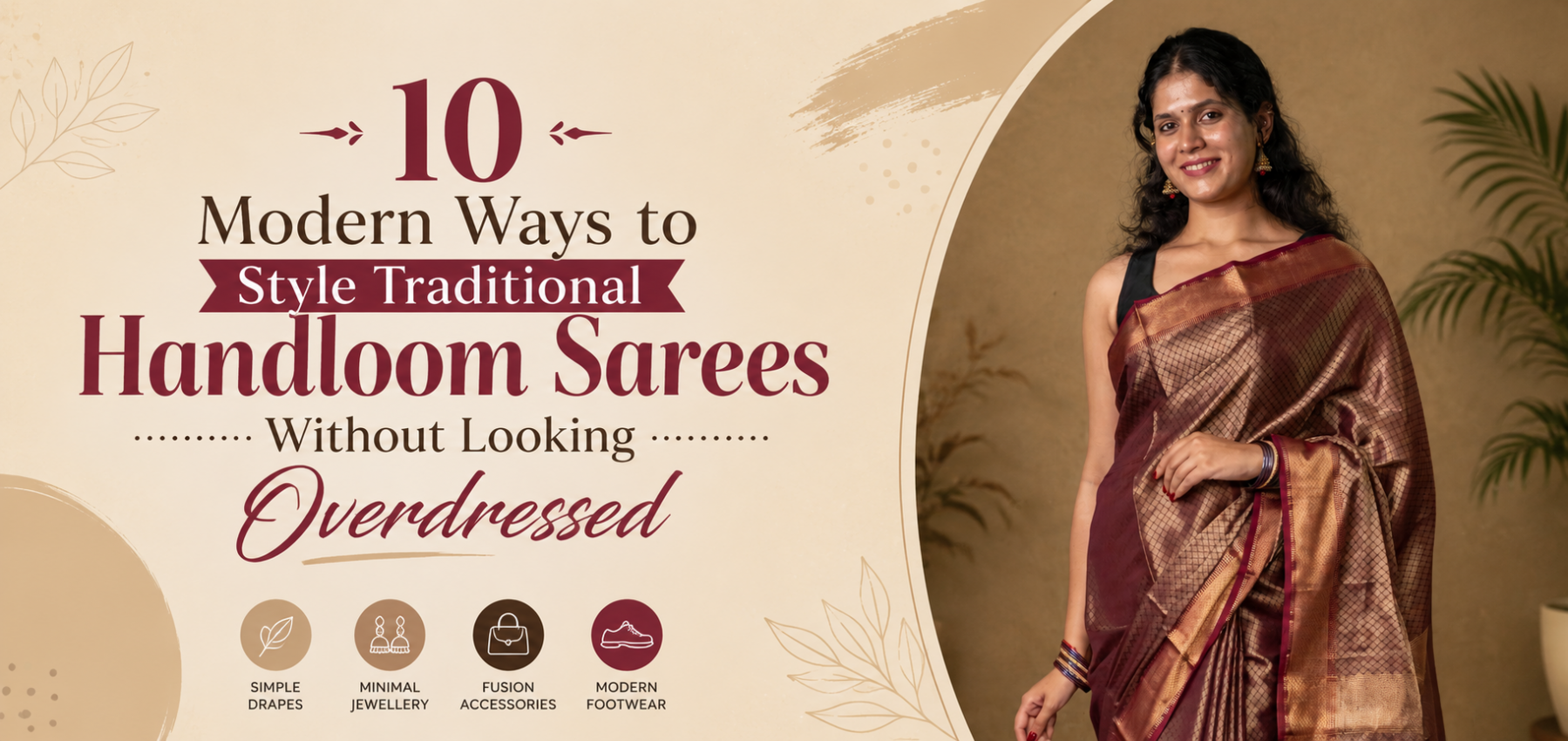
Things to Look for Before Buying Handwoven Sarees Online
Buying handwoven sarees online has become increasingly popular among modern shoppers who value authenticity, craftsmanship, and sustainable fashion. With the growing demand for artisanal textiles in India, many consumers are turning to digital platforms to explore traditional weaves without visiting physical stores. However, purchasing handcrafted textiles online requires careful evaluation to ensure quality, authenticity, and value for money.
Unlike machine-made garments, handwoven sarees reflect the skill of artisans, heritage weaving techniques, and cultural storytelling. From fabric texture to weaving details, every element matters. Understanding what to check before purchasing helps buyers make informed decisions and invest in pieces that last for years. This guide explains everything you need to consider before making your purchase, ensuring you choose authentic, sustainable, and high-quality sarees.
Understand the Difference Between Handwoven and Machine-Made Sarees
The first step before purchasing is understanding how handwoven sarees differ from machine-produced ones. Handwoven sarees are created manually on traditional looms, which means slight irregularities in patterns, weave density, or motifs. These variations are not defects; they are proof of authenticity and craftsmanship.
Machine-made sarees, on the other hand, offer uniformity and faster production but lack individuality. When browsing products, always check descriptions carefully to confirm whether the saree is genuinely handwoven. Authentic sellers usually provide information about weaving techniques, artisan communities, and fabric origins. This transparency builds trust and ensures buyers receive genuine handcrafted textiles.
Check Fabric Composition and Authenticity
Fabric plays a crucial role in determining the quality and durability of a saree. Handwoven sarees are often made from natural fibers such as silk, cotton, or blends. These fabrics provide breathability, comfort, and longevity. Before purchasing, always verify the material details mentioned in the product description.
If you are exploring Maheshwari Silk Sarees Online, look for clarity about silk content, cotton blend, and weaving origin. Genuine handwoven silk sarees typically have a soft sheen and lightweight texture. Avoid listings that lack clear fabric specifications, as transparency is a key indicator of authenticity.
Evaluate Weaving Techniques and Craftsmanship
Different regions in India have distinct weaving styles. Understanding these techniques helps buyers appreciate craftsmanship and make better purchasing decisions. Handwoven sarees may feature intricate borders, traditional motifs, or geometric patterns created manually.
For example, when considering a Pure Maheshwari Silk Saree, observe signature characteristics such as reversible borders, lightweight drape, and fine zari work. Authentic pieces often include traditional motifs inspired by architecture or nature. Carefully reviewing product images and descriptions helps you identify genuine craftsmanship.
Look for Detailed Product Descriptions
A reliable online store provides comprehensive product descriptions. These details should include fabric type, weaving technique, length, blouse piece availability, and care instructions. Transparent descriptions demonstrate brand credibility and help customers make informed decisions.
When browsing Handmade Sarees Online, prioritize listings that clearly explain production methods and artisan involvement. This information not only confirms authenticity but also aligns with conscious shopping values.
Examine Product Images Carefully
High-quality images play an essential role in online saree shopping. Look for multiple images showing close-ups of borders, pallu, fabric texture, and overall drape. Zoomed-in visuals allow you to inspect weaving details and color accuracy.
Authentic handwoven sarees often display slight variations in threads or motifs. These natural imperfections confirm handcrafted production. Avoid listings with overly edited images or insufficient visual details.
Understand Pricing and Value
Handwoven sarees require significant time and effort, which reflects in their pricing. Extremely low prices may indicate machine-made alternatives or synthetic fabrics. Instead of focusing only on cost, evaluate value based on craftsmanship, fabric quality, and artisan work.
Investing in Handcrafted Sarees Online ensures you receive unique pieces that support traditional weaving communities. Ethical brands often emphasize fair wages for artisans, making your purchase meaningful.
Check Brand Credibility and Authenticity
Choosing a trustworthy platform is essential when buying handwoven sarees online. Look for brands that highlight artisan stories, weaving heritage, and sustainability practices. Customer reviews and testimonials also help assess credibility.
Brands focused on Sustainable Slow Fashion usually emphasize transparency, ethical sourcing, and eco-friendly production. Supporting such platforms promotes responsible consumption and preserves traditional crafts.
Understand Saree Length and Specifications
Standard saree length is typically around 5.5 meters, with an additional blouse piece. However, variations may exist depending on weaving styles. Always verify length and width details before purchasing.
This is particularly important when exploring regional weaves, as traditional handwoven sarees may differ slightly. Clear specifications ensure the saree fits your draping style and preferences.
Check Color Authenticity and Dyeing Techniques
Handwoven sarees often use natural or traditional dyeing methods. These dyes create rich, subtle color variations. While browsing online, note that colors may appear slightly different due to screen settings.
Ethical brands usually mention dyeing techniques, whether natural or azo-free dyes. This transparency is especially valuable for buyers interested in eco-conscious fashion choices.
Review Return and Exchange Policies
Before placing an order, review the return and exchange policies. Since handwoven sarees are unique, some platforms may have limited return options. Understanding these policies prevents inconvenience later.
Trusted sellers provide clear guidelines about returns, shipping timelines, and customer support. This builds confidence in your purchase decision.
Consider Occasion and Styling Needs
Different handwoven sarees suit different occasions. Lightweight cotton weaves are ideal for daily wear, while silk-based sarees are perfect for festive events. Consider your purpose before selecting a design.
Modern buyers often choose versatile sarees that transition from traditional gatherings to contemporary styling. Handwoven pieces offer timeless elegance suitable for multiple occasions.
Look for Artisan and Heritage Information
Authentic handwoven sarees often come with information about the artisans or weaving clusters. This adds cultural value and ensures transparency. Knowing the story behind your saree enhances its emotional significance.
Brands that highlight artisan communities contribute to preserving India’s textile heritage. Supporting such initiatives promotes sustainable livelihoods.
Check Fabric Care Instructions
Handwoven sarees require specific care to maintain longevity. Silk sarees may need dry cleaning, while cotton weaves can often be hand washed. Always review care instructions before purchasing.
Proper care ensures your saree retains its texture, color, and structure for years. This makes your investment worthwhile.
Evaluate Sustainability and Ethical Practices
Many buyers today prioritize environmentally responsible fashion. Handwoven sarees naturally align with sustainable values because they involve low-energy production and minimal environmental impact.
Choosing sarees produced using traditional methods supports eco-conscious consumption. Ethical sourcing and artisan empowerment are key aspects of responsible shopping.
Compare Multiple Options Before Buying
Instead of selecting the first design you see, compare multiple sarees. Look at fabric, price, weaving technique, and brand credibility. Comparing options helps you find the best combination of quality and value.
This step ensures you make a confident purchase and avoid impulsive decisions.
Understand the Cultural Value of Handwoven Sarees
Handwoven sarees are more than garments; they represent India’s rich textile traditions. Each weave carries historical significance and regional identity. Purchasing such sarees helps preserve cultural heritage.
By investing in handcrafted textiles, you become part of a movement that values authenticity and craftsmanship.
Final Thoughts
Buying handwoven sarees online offers convenience and access to diverse traditional weaves. However, careful evaluation is essential to ensure authenticity, quality, and ethical sourcing. From fabric composition to brand transparency, every factor contributes to a satisfying purchase.
When you choose thoughtfully, you not only invest in a timeless garment but also support artisans and sustainable practices. Handwoven sarees are enduring pieces that combine heritage, elegance, and modern appeal. By following the guidelines above, you can confidently explore authentic handcrafted sarees and build a meaningful wardrobe rooted in tradition.
Frequently Asked Questions
1. How can I identify authentic handwoven sarees online?
Look for detailed product descriptions, close-up images, and information about weaving techniques. Authentic handwoven sarees often show slight irregularities that indicate manual craftsmanship.
2. Are handwoven sarees worth the investment?
Yes, handwoven sarees are durable, unique, and culturally valuable. They support artisans and promote sustainable fashion practices, making them a meaningful investment.
3. What fabric is best for everyday wear?
Lightweight cotton or cotton-silk blends are ideal for daily use. These fabrics provide comfort, breathability, and ease of maintenance.
4. Do handwoven sarees require special care?
Yes, silk sarees typically require dry cleaning, while cotton weaves can be gently hand washed. Always follow care instructions provided by the seller.
5. Why are handwoven sarees more expensive than machine-made ones?
Handwoven sarees involve manual weaving, skilled craftsmanship, and longer production time. The pricing reflects artisan effort, fabric quality, and authenticity.
-
Which Saree Should I Wear? Easy Choices for Weddings, Office, Festivals & Everyday
September 17th, 2026 -
 August 25th, 2026
 -
What to Wear for Ganesh Chaturthi: Saree Colours and Styling Guide
August 24th, 2026 -
 August 24th, 2026