Top 5 Handloom Sarees Under ₹6000 That Look Truly Luxurious
"Luxury is not about the price tag — it is about the hands that made it."
There is a quiet kind of luxury that does not announce itself. It lives in the soft shimmer of a zari border catching the evening light, in the cool drape of a tissue weave against the skin, in the tiny imperfection that tells you a real person sat at a loom and spent hours creating what you are now wearing. That is the luxury of Indian handloom — and the good news is, it does not demand a luxury budget.
If you have been searching for sarees under ₹6000 that look expensive, feel special, and carry genuine craftsmanship, you are in exactly the right place. India's handloom tradition spans over 3,000 years and dozens of distinct regional weaves — from the silks of Maheshwar and Chanderi to the hand-painted fabrics of Rajasthan and Gujarat. Many of these exquisite textiles are available at remarkably accessible price points when you buy directly from craft-focused labels.
This guide curates five specific sarees — each under ₹6000 — that have been selected for their artisan quality, visual richness, and versatility across occasions. Whether you are dressing for a festive puja, a family wedding, or simply want something beautiful on a Sunday, these picks deserve a place in your wardrobe.
Why Handloom Still Matters in 2026
India produces more handloom fabric than any other country in the world, yet the average consumer rarely thinks about the difference between handwoven and machine-made cloth when shopping online. The distinction, however, is profound — and increasingly relevant.
A handloom saree is made on a manually operated loom, typically by a family of weavers who have inherited their craft across generations. Every pass of the shuttle, every interlocking thread, is guided by human hands rather than mechanical precision. This means slight variations in texture, subtle irregularities in the border, and a natural inconsistency in the weave — all of which are hallmarks of authenticity, not flaws.
Did you know? According to the Ministry of Textiles, India's handloom sector employs over 35 lakh weavers — making it the second-largest employment generator in the rural economy after agriculture. Buying an authentic handloom saree directly supports these livelihoods.
From a fashion perspective, handloom fabrics also age better, breathe better in India's climate, and carry a textural richness that synthetic or power-loom alternatives simply cannot replicate.
Unlike mass-produced fabrics, handwoven sarees develop character over time. The more they are worn, the softer and more graceful their drape becomes. This timeless quality is one of the reasons why handloom sarees are often passed down through generations as treasured heirlooms.
Another reason handloom continues to matter in 2026 is the growing shift toward mindful and sustainable fashion. Consumers today are becoming more conscious about where their clothing comes from, who makes it, and how it impacts local communities. Choosing handloom supports slow fashion, reduces dependence on large-scale industrial production, and helps preserve India's centuries-old weaving traditions.
When you wear a handloom saree, there is also the quiet knowledge that your garment is unique. No factory line has produced an identical copy. Every weave carries the signature of the artisan behind it — making each saree feel deeply personal, elegant, and meaningful.
In a world increasingly filled with disposable fashion, handloom remains a symbol of authenticity, heritage, and understated luxury.
Saree 01 — Festive Pink Zari Brocaded Saree with a Three-Coloured Border
Category: Zari Brocade
Style: Festive Wear • Traditional
A Saree Built for Celebrations
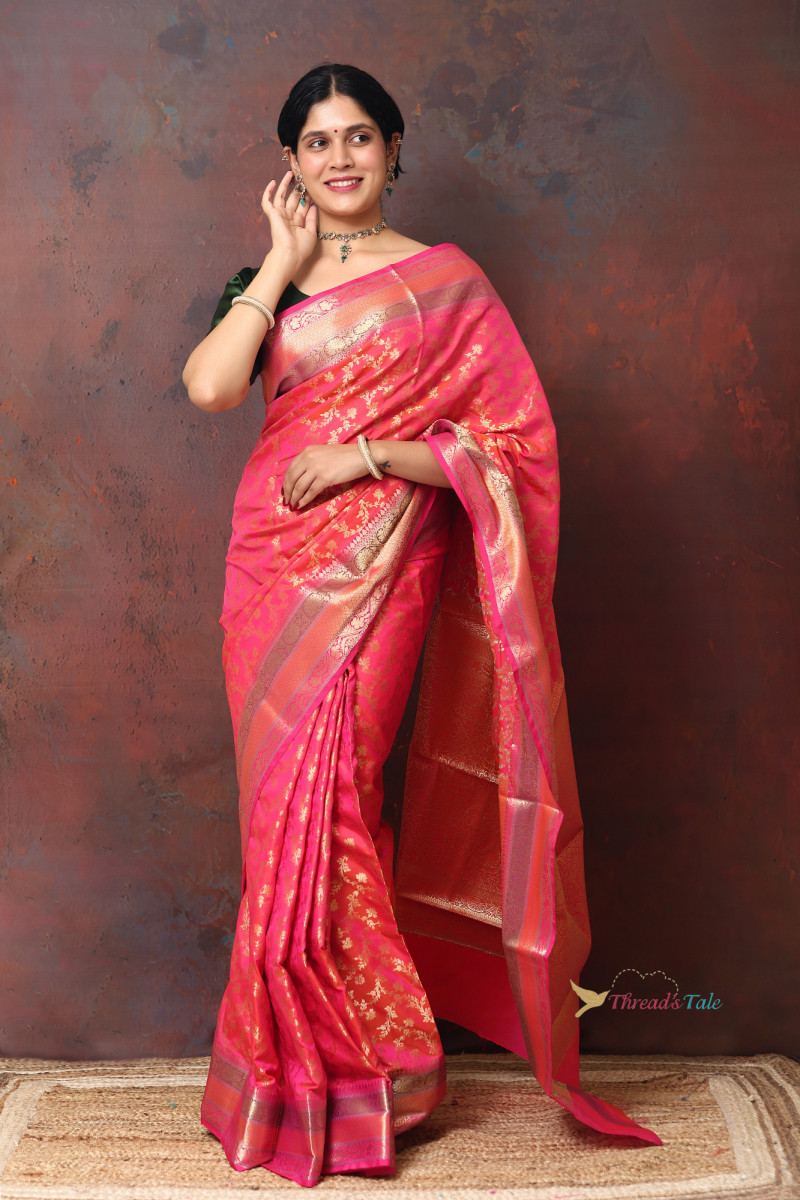
Brocade weaving is one of the oldest textile arts in India — originating in Varanasi and Surat before spreading across the subcontinent — and this festive pink variant captures everything that makes it beloved.
Zari, the metallic thread traditionally crafted from fine silver or gold-coated yarn, is woven directly into the fabric body to create intricate raised motifs that shimmer beautifully under light. This weaving technique gives the saree a regal richness that instantly elevates its appearance, making it look far more luxurious than its actual price point.
The three-coloured border is what truly sets this saree apart. Instead of relying on a single-tone frame, the layered border design creates depth and visual contrast, adding movement and sophistication to the overall drape. The interplay of colours makes the saree especially striking during evening functions and festive celebrations.
When styled correctly, this saree delivers a graceful statement without feeling overly heavy. Pair it with a contrasting blouse in gold, ivory, emerald green, or deep maroon to enhance the richness of the zari detailing. Traditional jhumkas, a soft bun adorned with flowers, and minimal gold jewellery complete the look beautifully.
Another reason this saree stands out is its versatility. While undeniably festive, it can easily transition between family functions, cultural celebrations, and wedding-related occasions without ever looking repetitive.
Visit This Saree: Festive pink zari brocaded saree with three colored border
Best worn for: Diwali celebrations, Navratri events, family weddings, engagement ceremonies, festive dinners, and temple festivals.
Saree 02 — Almond Hand-Painted Chinon Silk Saree
Category: Hand-Painted Chinon Silk
Style: Artistic • Elegant • Contemporary Ethnic
Wearable Art, Literally
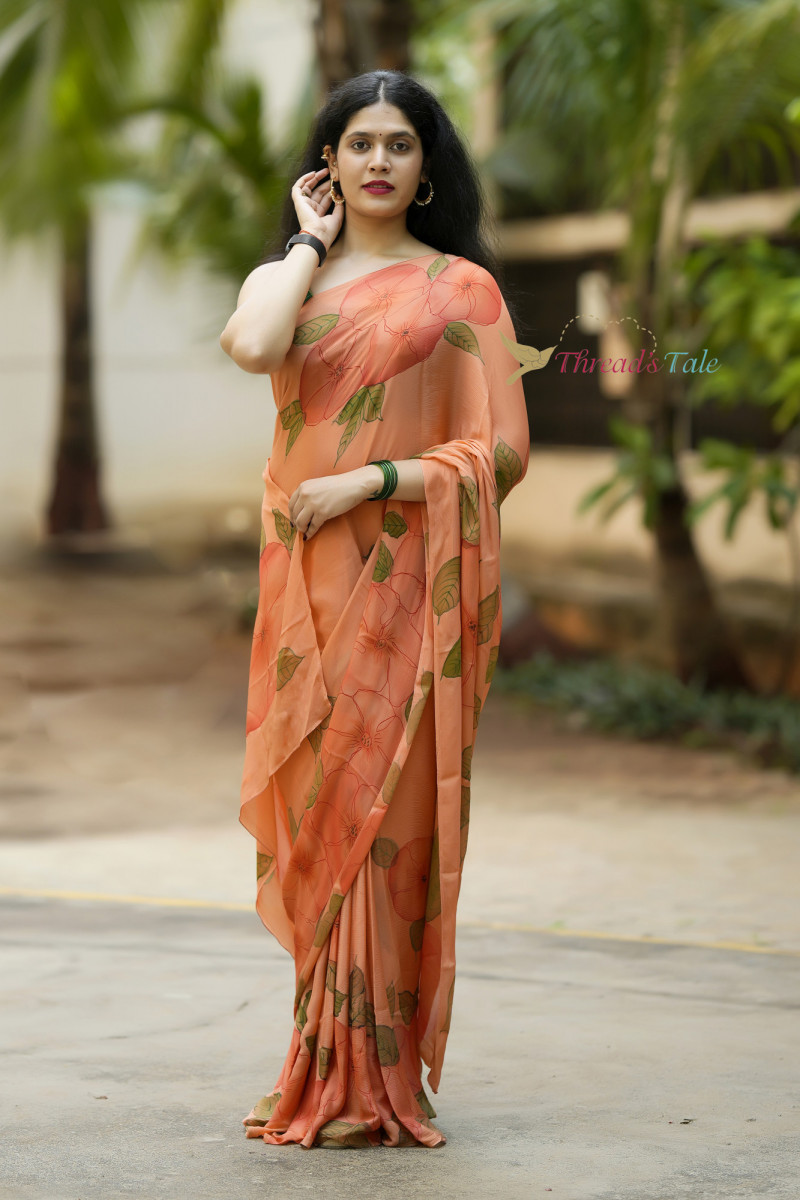
Not every luxurious saree relies on metallic thread or elaborate weaving techniques. Sometimes, the true luxury lies in the artistry itself — and this almond-toned hand-painted chinon silk saree proves exactly that.
Chinon silk is celebrated for its lightweight texture, graceful drape, and soft crinkled finish that moves beautifully with the body. Its subtle translucency adds an effortless sophistication, making it ideal for those who prefer understated elegance over heavily embellished attire.
What transforms this saree into something exceptional is the hand-painted detailing created directly by skilled artisans. Across India, hand-painting traditions have flourished for centuries — from the intricate Pichwai-inspired artwork of Rajasthan to the storytelling motifs of Madhubani art in Bihar. Every brushstroke is applied freehand, ensuring that no two sarees are ever completely identical.
The almond shade itself deserves attention. Unlike louder festive colours, this warm neutral tone feels refined, modern, and versatile. It complements a wide range of skin tones while offering endless styling possibilities for both daytime and evening occasions.
Pair this saree with pearl jewellery, oxidised silver accessories, or minimalist gold accents for an elegant contemporary look. A sleek bun, soft makeup, and handcrafted footwear can further elevate its artistic appeal.
For women who appreciate handmade sarees online that showcase genuine artistic labour rather than mass production, this piece delivers remarkable value. It feels thoughtful, sophisticated, and deeply personal — the kind of saree that naturally draws compliments and conversation wherever it is worn.
Visit This Saree: Almond hand painted chinon silk saree
Best worn for: Cultural events, art festivals, gallery openings, intimate celebrations, office parties, and corporate gatherings with an ethnic dress code.
Saree 03 — Pink Maheshwari Silk Saree
Category: Maheshwari Silk
Style: Heritage Weave • Everyday Luxe
The Timeless Weave from the Banks of the Narmada
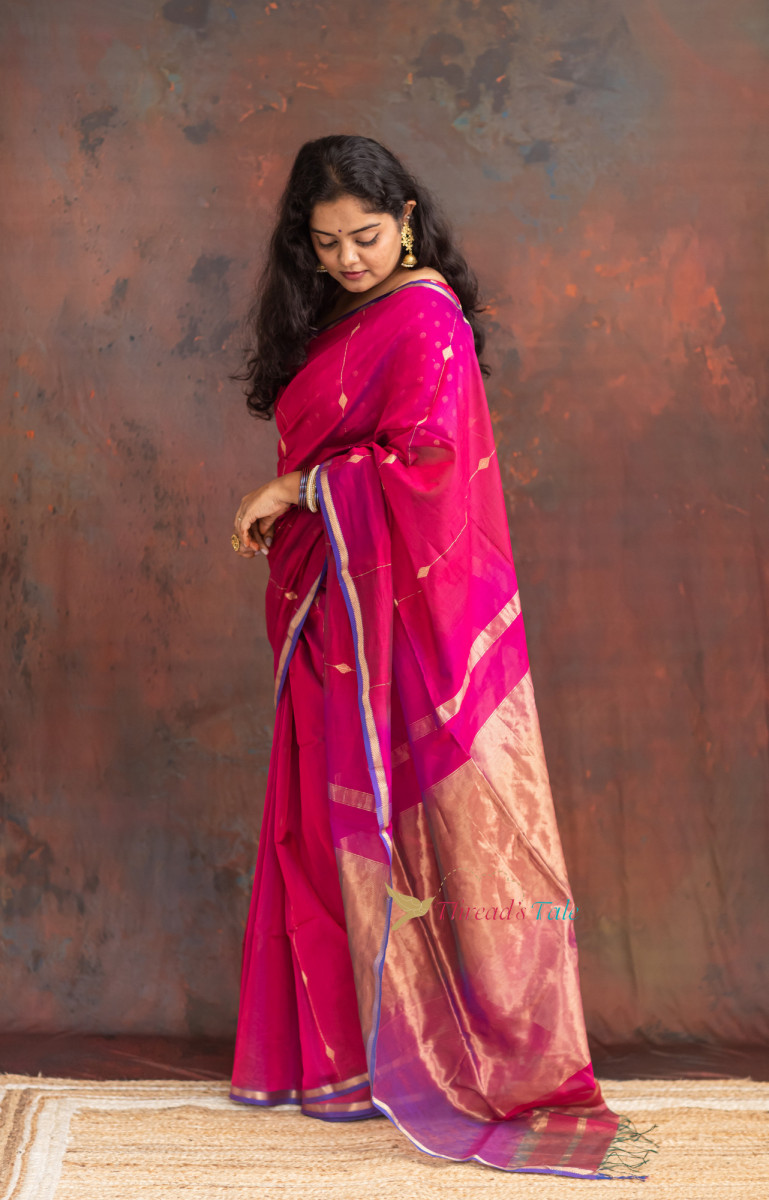
Maheshwar, a historic town situated along the banks of the Narmada River in Madhya Pradesh, has been celebrated for its exquisite weaving tradition since the 18th century. Under the patronage of the Holkar queens, Maheshwari sarees evolved into one of India’s most graceful textile legacies — admired for their lightweight feel, elegant borders, and refined simplicity.
The Maheshwari weave is instantly recognizable through its signature striped borders, commonly referred to as the “Chatai” pattern, along with its reversible pallu and balanced silk-cotton composition. This unique blend gives the fabric the perfect harmony of sheen and comfort — luxurious enough for special occasions, yet breathable enough for extended wear in India’s climate.
This pink Maheshwari silk saree is a beautiful example of understated sophistication. The shade sits delicately between soft femininity and festive vibrance, making it versatile across different occasions. It feels polished without appearing overly ornate, which is exactly what makes Maheshwari sarees so timeless.
The silk threads woven into the fabric create a gentle natural lustre that catches light elegantly without becoming overpowering. At the same time, the cotton component adds softness, structure, and ease of movement — allowing the saree to drape beautifully while remaining comfortable throughout the day.
For women exploring maheshwari silk sarees online, this pink variant serves as an ideal introduction to the weave. It feels traditional yet contemporary, simple yet refined. Styled with delicate gold jewellery, pearl accessories, or even handcrafted silver pieces, it effortlessly adapts to both classic and modern aesthetics.
Unlike heavily embellished occasion wear, this saree offers a quieter kind of luxury — one rooted in heritage craftsmanship, thoughtful weaving, and timeless wearability.
Visit This Saree: Violet pink handwoven shaded saree
Best worn for: Puja ceremonies, family lunches, intimate wedding functions, festive gatherings, or as a thoughtful gift for a mother, sister, or loved one.
Saree 04 — Red Maheshwari Silk Saree
Category: Maheshwari Silk
Style: Bold Colour • Wedding Season
Red That Speaks the Language of Every Indian Celebration
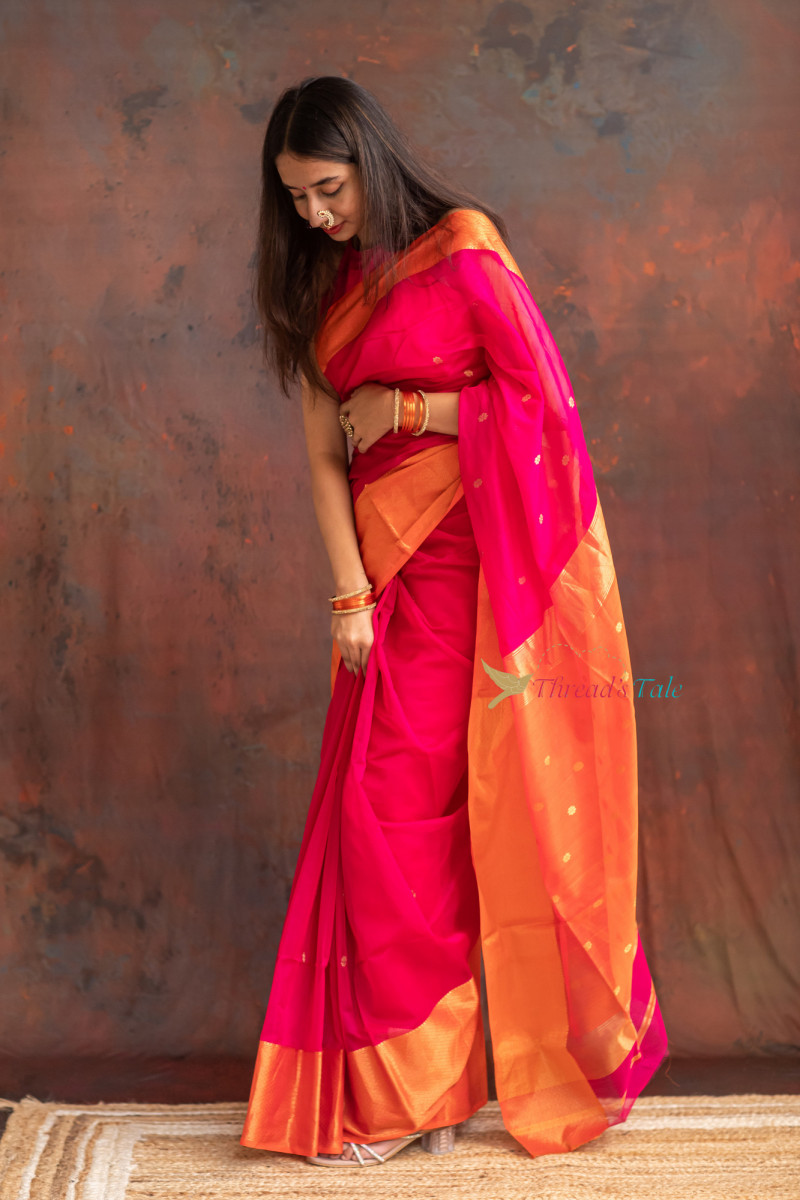
Red is not merely a colour in India — it carries centuries of symbolism, emotion, and celebration. From bridal traditions and festive rituals to temple ceremonies and family gatherings, red has long represented prosperity, strength, joy, and auspicious beginnings.
This red Maheshwari silk saree captures that cultural richness beautifully while maintaining the refined elegance that defines the Maheshwari weave. Unlike synthetic fabrics that often appear flat or overly glossy, genuine Maheshwari silk possesses remarkable depth and luminosity. The silk threads reflect light softly, creating a radiant glow that becomes especially striking during evening celebrations and indoor festive occasions.
Originating from the historic weaving town of Maheshwar in Madhya Pradesh, Maheshwari sarees are admired for their lightweight structure, elegant borders, and balanced silk-cotton composition. This unique blend allows the saree to feel luxurious without becoming excessively heavy, making it ideal for long hours of wear during weddings and traditional festivities.
The rich red tone of this saree instantly commands attention while still feeling graceful and timeless. Its structured border frames the drape beautifully, giving the saree a polished silhouette that enhances traditional styling. Where gold zari accents are woven into the design, they further elevate the regal appeal of the saree without overwhelming its elegance.
Pair it with antique gold jewellery, kundan sets, temple jewellery, or even heirloom accessories to create a classic festive look. A traditional bindi, soft curls, and a neatly pleated drape complete the aesthetic effortlessly.
For women seeking a saree that feels rooted in Indian tradition while remaining wearable and sophisticated, this red Maheshwari silk piece delivers enduring charm. It is bold without being loud, festive without appearing excessive, and timeless enough to remain relevant for years to come.
Visit This Saree: Festive pink handwoven saree with contras golden border and golden buttis
Best worn for: Teej celebrations, Karwa Chauth, Navratri events, wedding festivities, religious ceremonies, festive dinners, and traditional family occasions.
Saree 05 — Green Golden Tissue Saree with a Red Border
Category: Tissue Saree • Chanderi
Style: Wedding Guest • Luxe Occasion Wear
The Shimmer of India's Most Ethereal Fabric
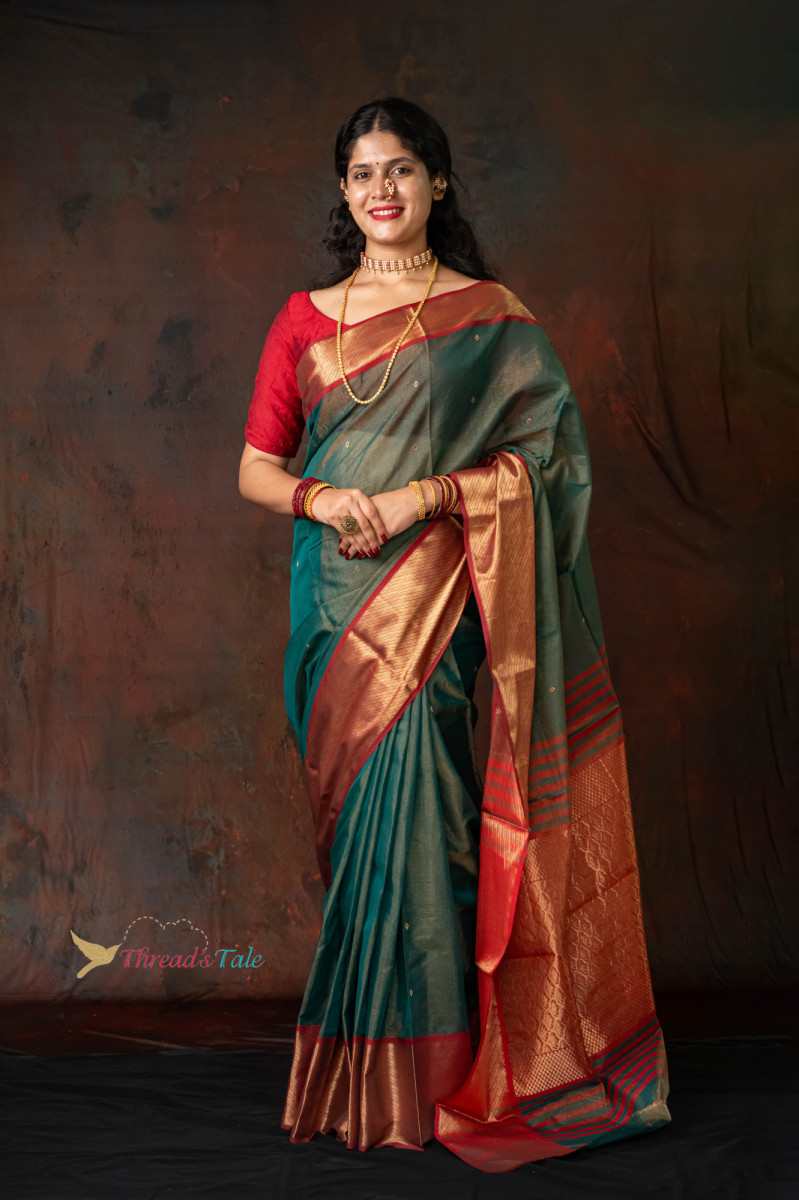
Tissue fabric is one of India’s most visually captivating textile traditions — celebrated for its luminous surface, delicate transparency, and unmistakable festive elegance. Woven using fine silk or silk-cotton yarns intertwined with metallic threads, tissue sarees possess a natural radiance that instantly feels luxurious.
Among the many regional weaving traditions in India, chanderi tissue sarees hold a particularly special place. Originating from the historic town of Chanderi in Madhya Pradesh, these sarees are admired for their feather-light texture, graceful drape, and soft shimmering finish that appears almost ethereal under light.
This green-golden tissue saree beautifully showcases the artistry of the Chanderi weaving tradition. The rich green base interwoven with delicate golden metallic threads creates an iridescent effect that changes subtly as the wearer moves. Instead of a flat, uniform shine, the saree reflects light in layers — giving it depth, fluidity, and extraordinary visual richness.
The contrasting red border is what elevates the saree even further. Deeply rooted in traditional Indian colour aesthetics, the combination of green, gold, and red has long been associated with celebration, prosperity, and bridal elegance. The bold border provides structure to the luminous body of the saree, creating a striking balance between softness and definition.
Despite its luxurious appearance, the saree remains lightweight and comfortable enough for extended wear during long celebrations. Pair it with traditional gold jewellery, kundan pieces, or statement earrings for a timeless festive look. A sleek bun, dewy makeup, and classic heels can instantly transform the entire ensemble into something worthy of a heritage couture showcase.
For women searching for a chanderi tissue saree that looks far more expensive than its price tag, this piece stands out effortlessly. It carries the refined sophistication of a boutique handloom creation while remaining accessible, wearable, and endlessly elegant.
Among all the sarees featured in this list, this is undoubtedly the one that delivers the strongest impression of grandeur and occasion-worthy glamour.
Visit This Saree: Green golden tissue saree with red border
Best worn for: Wedding receptions, sangeet ceremonies, anniversary celebrations, festive evening events, and any occasion where making a memorable impression matters.
How to Choose the Right Handloom Saree for Your Occasion
Not every saree suits every occasion — and part of the joy of building a thoughtful handloom wardrobe lies in understanding which weave complements which moment best. Different fabrics carry different moods, levels of formality, and visual textures. Choosing the right saree ensures that your outfit feels both appropriate and effortlessly elegant.
Here is a simple framework to help you choose the perfect handloom saree under ₹6000 for different occasions:
Festive Celebrations & Puja
For religious ceremonies, festive gatherings, and traditional family occasions, zari brocade and Maheshwari silk sarees are ideal choices. Their structured borders, subtle sheen, and traditional craftsmanship naturally suit the celebratory atmosphere of pujas, Diwali gatherings, and Navratri events.
Rich colours like red, pink, maroon, emerald green, and gold-toned weaves work especially well for these occasions, creating a timeless festive aesthetic without appearing excessive.
Wedding Functions & Reception Events
Tissue sarees are perfect for wedding receptions, sangeet ceremonies, and evening celebrations. Their natural shimmer reflects light beautifully, giving the wearer an instantly elevated appearance without the heaviness of traditional bridal silks.
Contrasting borders — especially combinations like green and red or gold and maroon — add drama and sophistication while remaining lightweight enough for extended wear.
Casual Gatherings & Cultural Events
Hand-painted sarees in soft neutral shades such as almond, ivory, beige, or pastel tones are excellent for daytime events, art festivals, exhibitions, and cultural gatherings. These sarees feel artistic and distinctive without becoming overly ornate.
Because each hand-painted piece is unique, they naturally encourage conversation and reflect a more individual, creative sense of style.
Gifting a Handloom Saree
A Maheshwari silk saree remains one of the safest and most appreciated gifting choices across generations. Elegant colours like pink, ivory, red, and muted gold feel timeless and versatile, making them suitable for mothers, sisters, relatives, and close friends.
Handloom sarees also carry emotional value — they feel thoughtful, personal, and culturally meaningful in a way that mass-produced garments often do not.
Office Wear & Semi-Formal Settings
Lightweight Chanderi and tissue sarees in muted or earthy shades work beautifully for office environments and professional events with ethnic dress codes. Their breathable texture, elegant drape, and wrinkle-resistant nature make them practical for long working hours.
Minimal jewellery and structured blouses can help create a polished professional look while still celebrating traditional craftsmanship.
Caring for Your Handloom Saree
A genuine handloom saree, when cared for properly, can last for decades and often becomes a treasured heirloom passed across generations. While these sarees are durable, thoughtful care significantly helps preserve their texture, colour, zari work, and overall beauty.
First Wash Protocol
For the first two to three washes, always opt for professional dry cleaning — especially for silk, tissue, and zari-work sarees. This helps stabilize the dyes and protects delicate metallic threads from loosening or tarnishing prematurely.
Dry cleaning also reduces the risk of colour bleeding, which is particularly important for deep reds, greens, and heavily pigmented festive shades.
Home Washing Guidelines
For sarees that are worn more regularly, gentle hand-washing is usually sufficient. Always use cold water and a mild, pH-neutral detergent designed for delicate fabrics.
Avoid hot water entirely for silk and tissue sarees, as heat can weaken fibres and affect the natural sheen of the fabric. Never wring, twist, or scrub the saree aggressively. Instead, gently press out excess water between dry towels and allow the saree to air dry naturally in shade.
Proper Storage
Store each saree wrapped in soft muslin or breathable cotton cloth rather than plastic covers. Plastic traps moisture and heat, which can gradually damage silk fibres and dull metallic zari work over time.
It is also important to refold sarees along different lines every few months. This prevents permanent crease marks and fabric weakening along the same fold areas.
Care Tip for Zari Sarees: Allow zari-work sarees to air out occasionally even when not in use. Exposure to fresh air helps slow down tarnishing. Placing a small piece of sandalwood or neem nearby can also help naturally repel insects while preserving the fabric.
Why Buying from Craft-Focused Brands Makes a Difference
The Indian handloom market today has two very different realities. One is the world of mass-produced sarees marketed as “handloom” despite being machine-made or power-loom woven. These pieces are often designed to imitate authentic craftsmanship while sacrificing the texture, durability, and artistry that genuine handloom fabrics are known for.
The second reality is far more meaningful — an emerging ecosystem of craft-focused brands that work directly with artisan communities, preserve regional weaving traditions, and bring genuinely handcrafted sarees online to modern consumers.
The difference between these two approaches matters not only aesthetically, but ethically as well.
When a saree is sourced directly from weaving clusters and artisan groups, the craftspeople behind the work receive a far fairer share of the value. Instead of earnings being diluted through multiple intermediaries, direct partnerships allow weavers and artisans to sustain their livelihoods while continuing traditions that have often existed for generations.
From a quality perspective, authentic handloom sarees also carry characteristics that machine-made fabrics simply cannot replicate. The weave feels richer, the dye absorption appears deeper and more organic, and the structure of the fabric develops beautifully over time. Slight irregularities in motifs or borders are not manufacturing flaws — they are visible proof of human craftsmanship.
At Thread's Tale, every saree is connected to a clearly identifiable craft tradition — whether it is Maheshwari weaving, Chanderi silk artistry, hand-painted textiles, or zari brocade work. Each collection reflects techniques that have been refined over decades by skilled artisans whose expertise shapes every finished piece.
What makes handcrafted sarees special is precisely what makes them imperfect in the most beautiful way. The tiny variations between individual pieces are not inconsistencies to be corrected. They are evidence that a real person, not a machine, created the fabric you are wearing.
The Final Word: Luxury Has Always Lived in the Details
The five sarees featured in this guide are not defined by extravagant price tags. What truly makes them valuable is their authenticity — and in the world of Indian handloom, authenticity remains one of the rarest luxuries of all.
Every weave carries within it years of inherited knowledge, patient craftsmanship, and artistic precision. Behind each border pattern, hand-painted motif, zari thread, and woven texture is an artisan who has spent decades mastering a single tradition.
That human touch changes the experience of wearing a saree entirely. A genuine handloom piece does not merely decorate the body — it carries history, culture, and craftsmanship in every fold.
Whether you are drawn to the luminous shimmer of a Chanderi tissue weave, the timeless grace of Maheshwari silk, or the individuality of a hand-painted saree, each piece offers something that mass-produced fashion cannot: character.
And perhaps that is the most remarkable part of all — these stories of heritage, artistry, and craftsmanship are still accessible without requiring an extravagant budget.
When you choose a handcrafted saree under ₹6000, you are not simply buying occasion wear. You are investing in tradition, supporting artisan communities, and building a wardrobe filled with garments that feel personal, meaningful, and timeless.
Luxury has never been about excess. In Indian handloom, luxury has always lived quietly in the details.
Frequently Asked Questions
Are handloom sarees under ₹6000 actually good quality?
Absolutely. Handloom sarees in the ₹3,000–₹6,000 range from authentic weaving clusters — especially Maheshwari, Chanderi, and Chinon silk varieties — offer genuine artisan craftsmanship and long-lasting quality.
The pricing remains accessible largely because craft-focused brands source directly from artisan communities instead of relying on multiple retail intermediaries and large showroom mark-ups.
Small irregularities in the weave, border, or texture are not flaws. In authentic handloom sarees, these variations are considered proof of real handcrafted work created by skilled weavers rather than factory machines.
Which handloom saree is best for festive occasions like Diwali or weddings?
Zari brocade sarees and handwoven tissue sarees are among the best choices for festive occasions and wedding celebrations. The shimmer of zari work and the luminous quality of tissue fabric naturally create an elegant and celebratory appearance.
Maheshwari silk sarees with traditional borders are also widely loved for pujas, family functions, and cultural celebrations because they combine comfort with timeless sophistication.
How do I care for a handloom saree at home?
Most handwoven sarees — including Maheshwari silk and Chanderi tissue — should ideally be dry-cleaned for the first few washes to protect delicate fibres, dyes, and zari work.
If washing at home, always use cold water with a mild fabric cleanser. Avoid wringing or twisting the fabric aggressively. Instead, gently press out excess water and dry the saree flat or in shade away from direct sunlight.
For storage, wrap sarees in soft muslin or cotton cloth rather than plastic covers so the fabric can breathe naturally.
What is the difference between Maheshwari and Chanderi sarees?
Both Maheshwari and Chanderi are celebrated heritage weaves from Madhya Pradesh, but they differ in texture, structure, and overall feel.
Maheshwari sarees are typically woven using a silk-cotton blend, giving them a slightly structured drape along with distinctive striped borders and reversible pallus.
Chanderi sarees, by contrast, are lighter, softer, and more sheer in appearance. They are known for their airy texture, delicate motifs, and graceful fluidity.
If you prefer a saree with gentle structure and versatility, Maheshwari is an excellent choice. If you prefer a feather-light drape with an ethereal appearance, Chanderi sarees are ideal.
Can a handloom saree be gifted? What makes it meaningful?
A handloom saree is considered one of the most thoughtful and culturally meaningful gifts in India. Beyond being beautiful clothing, it carries the labour, artistry, and heritage of skilled artisan communities.
Whether gifted for birthdays, Diwali, bridal celebrations, anniversaries, farewell events, or family occasions, a handcrafted saree feels deeply personal and timeless.
Unlike mass-produced fashion, handloom sarees often become cherished keepsakes — garments that hold memories and are treasured for years across generations.
-
Which Saree Should I Wear? Easy Choices for Weddings, Office, Festivals & Everyday
September 17th, 2026 -
 August 25th, 2026
 -
What to Wear for Ganesh Chaturthi: Saree Colours and Styling Guide
August 24th, 2026 -
 August 24th, 2026