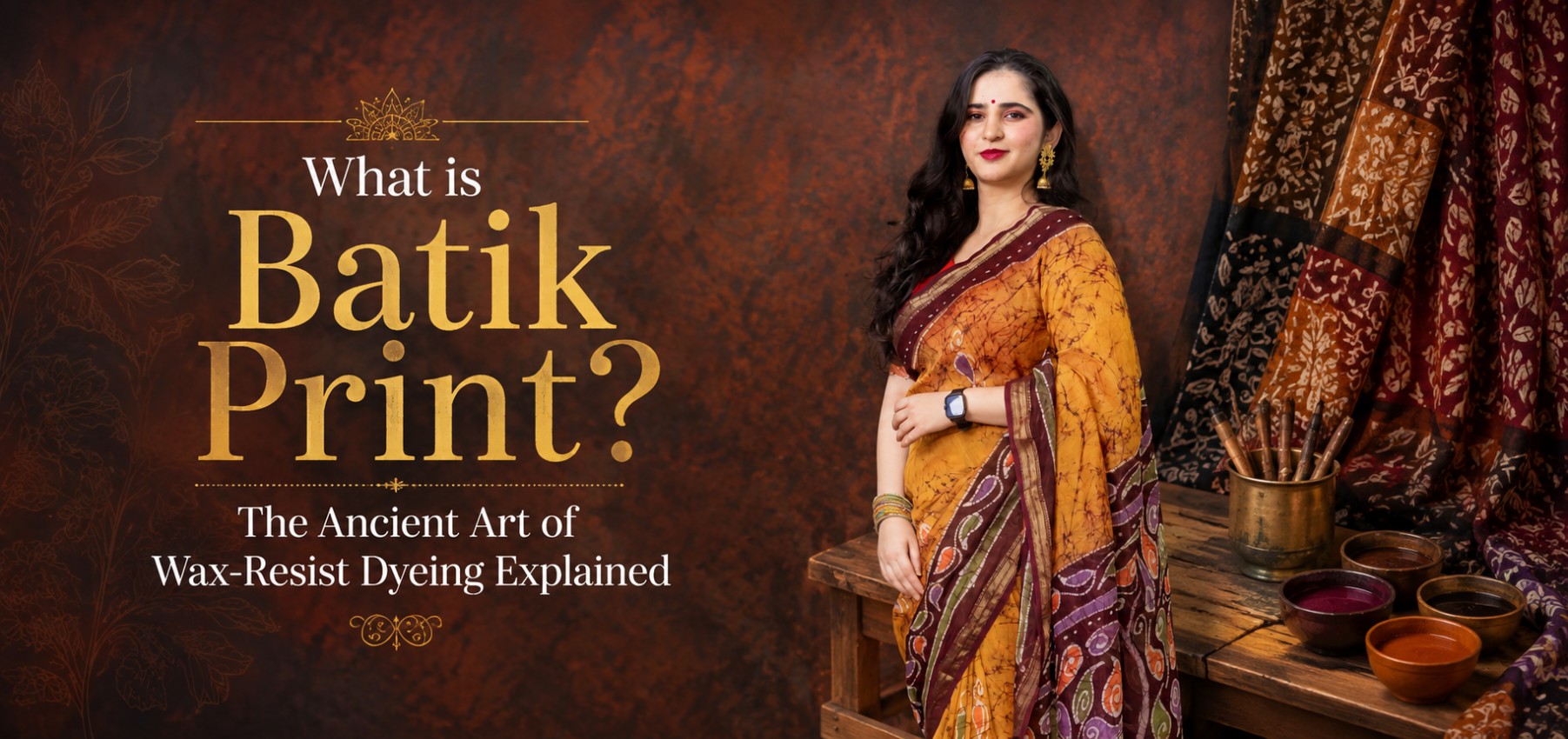
What is Batik Print? The Ancient Art of Wax-Resist Dyeing Explained
Batik is one of the oldest textile decoration methods still practised by hand today. Anyone shopping for ethnic wear online has likely come across the term, often alongside block print or ikat, without a clear sense of what sets it apart. This guide explains what batik print actually is, how it's made, where it comes from, and why it continues to hold cultural and commercial value in India's textile market.
What Is Batik Print? A Quick Definition
Batik print refers to fabric decorated using a wax-resist dyeing technique, where melted wax is applied to cloth in a pattern before dyeing. The waxed areas resist the dye, preserving the original fabric colour beneath, while the exposed areas absorb colour. Once the wax is removed, a two-tone or multi-tone pattern remains. This is what is batik print in its most technical sense: a resist-dyeing craft, not a printing method in the industrial sense.
Why the Word "Print" Is Slightly Misleading
The word "print" suggests a stamp or machine process, but traditional batik involves no printing block striking the fabric directly. The pattern is drawn or stamped with wax, and the colour is created through a dyeing reaction, not ink transfer. Many textile historians actually classify batik as a dyeing craft rather than a printing craft, even though the retail world commonly calls it "batik print" for search and shopping convenience.
The Origins of Batik: From Java to the World
Batik's most documented history traces to the island of Java in Indonesia, where the craft was refined over centuries and eventually recognised by UNESCO in 2009 as an Intangible Cultural Heritage of Humanity. Javanese batik used a tool called a "canting," a small copper-spouted pen used to draw wax freehand onto cloth, allowing intricate, curving motifs that stamped methods could not replicate.
Trade routes across the Indian Ocean carried both raw cotton and finished textiles between India and Southeast Asia for centuries, and resist-dyeing knowledge moved in both directions. India, in particular, already had its own long-standing resist-dye traditions — bandhani tie-dye in Gujarat and Rajasthan, and kalamkari wax-and-mordant work in Andhra Pradesh — which shared technical DNA with Javanese batik even before formal trade in batik textiles picked up.
How Batik Print Is Made: The Step-by-Step Process
Understanding the process makes it easier to spot genuine handmade batik versus a machine imitation. The traditional method follows a defined sequence:
- Fabric preparation: Cotton or silk is washed and starched to remove natural oils so the wax adheres evenly.
- Wax application: Melted wax, typically a blend of beeswax and paraffin, is applied using a canting pen for fine lines or a copper stamp called a "cap" for repeated motifs.
- First dye bath: The fabric is dipped in the lightest colour first. The waxed sections resist this dye and stay uncoloured.
- Repeat waxing and dyeing: Additional wax is applied over areas meant to stay in the current colour, and the fabric is dipped in progressively darker dyes. This can repeat several times for multi-coloured designs.
- Wax removal: The fabric is boiled or scraped to melt away all the wax, revealing the finished layered pattern.
- Finishing: The cloth is washed, dried, and sometimes ironed between paper to smooth any remaining wax residue.
A single detailed batik piece can take anywhere from a few days to several weeks, depending on the number of colours and the intricacy of the motifs — a timeline that machine-printed "batik-style" fabric skips entirely.
Batik Print in India Today
Batik took firm root in India through centres in West Bengal, Gujarat, Madhya Pradesh, and parts of Rajasthan, where artisans adapted the wax-resist method to Indian motifs — paisleys, florals, and geometric borders — and to Indian garment formats. This is where indian batik sarees emerged as a distinct category, combining Javanese resist-dyeing technique with regional Indian design sensibility.
Cotton has historically been the preferred base fabric for Indian batik work because it takes both wax and natural dye evenly, which is why batik cotton sarees remain the most widely produced and purchased batik textile in the country. Silk batik exists too, but it requires more careful wax temperature control since silk is more heat-sensitive than cotton.
Batik vs. Block Print vs. Tie-Dye: How to Tell Them Apart
These three resist and surface-design techniques are frequently confused. A quick comparison:
- Batik: Wax is applied to fabric before dyeing; pattern comes from wax resisting colour.
- Block print: A carved wooden block is dipped in dye or pigment and stamped directly onto fabric; colour is added on top of the cloth rather than resisted.
- Tie-dye / bandhani: Sections of fabric are tied tightly with thread before dyeing, so the tied portions resist colour instead of wax.
All three are handcraft-driven and can appear on the same saree collection, but only batik uses melted wax as the resist medium, which is the detail that answers what is batik print most precisely when comparing it to other Indian textile crafts.
Why Genuine Batik Print Sarees Cost More
Handmade batik pricing reflects labour, not markup for its own sake. A saree with three or four dye layers has effectively been dyed, waxed, and boiled multiple times over, each round requiring an artisan's judgment on wax placement and dye timing. Machine-printed imitations replicate the visual pattern in a single pass, which is faster but does not carry the layered colour depth or the slight, deliberate irregularities that mark genuine wax-resist work.
Buyers shopping for batik print sarees online can check for a few authenticity markers: fine crackle lines where wax cracked during dyeing, slightly uneven colour edges, and a faint wax scent on unwashed pieces. These are signs of hand-applied wax, not manufacturing flaws.
Caring for Batik Fabric
Because natural dyes and wax residues are involved, batik textiles need gentler handling than standard printed cotton:
- Hand wash in cold water for the first three to four washes to prevent colour bleeding.
- Avoid direct sunlight for extended drying, as prolonged UV exposure fades natural dyes faster than synthetic ones.
- Iron on the reverse side at a medium setting to protect the dye layer.
- Store folded in a cotton or muslin cloth rather than plastic, which can trap moisture.
Styling Batik Print Across Ethnic Wear
Batik's versatility comes from its earthy, layered colour palette, which pairs well with minimal jewellery and solid-colour blouses. A batik print cotton saree works for daytime festive occasions, office ethnic days, and casual family functions, since cotton batik is breathable and holds up well in Indian climates. For a lighter, more versatile option, a batik print dupatta can be paired over kurtas or plain sarees to introduce the pattern without committing to a full batik outfit.
For those who prefer sourcing directly from artisan-led platforms rather than large fast-fashion retailers, browsing handmade sarees online from verified handloom sellers is the more reliable route to authentic wax-resist work, since these platforms typically disclose the region, artisan cluster, and dyeing method used.
Expert Insight: What Artisans Look For Before Waxing
Experienced batik artisans test wax temperature on a scrap fabric before starting a full saree, since wax that's too hot seeps beyond the intended lines and wax that's too cool doesn't penetrate the weave fully. This single quality-control step, passed down through generations of practice rather than written manuals, is often the difference between a crisp motif and a blurred one — a detail rarely visible to buyers but central to how skilled the craft actually is.
Frequently Asked Questions
What is batik print used for?
Batik print is used to decorate cotton and silk textiles for sarees, dupattas, kurtas, and home furnishings. The wax-resist technique creates layered, earthy patterns that are common in Indian and Southeast Asian ethnic wear.
Is batik print handmade or machine-made?
Traditional batik is entirely handmade, using wax applied with a canting pen or copper stamp before dyeing. Machine-made "batik-style" prints exist and mimic the look, but they skip the wax-resist dyeing process and are generally priced lower.
Where did batik print originate?
Batik is most strongly associated with Java, Indonesia, where it was recognised by UNESCO in 2009 as an Intangible Cultural Heritage of Humanity. India developed parallel resist-dyeing traditions and later adapted batik techniques into regional handloom centres.
How can I tell if a batik saree is genuine?
Genuine batik shows fine crackle lines from wax cracking during dyeing, slightly uneven colour edges, and layered tones from multiple dye baths. A perfectly uniform, single-tone pattern usually indicates a machine print rather than hand-waxed dyeing.
Is batik print suitable for everyday wear?
Cotton batik is breathable and durable, making it suitable for daily and office wear in most Indian climates. Silk batik is generally reserved for festive or formal occasions due to its finer, more delicate finish.
In Summary
Batik print is a wax-resist dyeing craft, not a machine printing process, built on wax application, sequential dyeing, and wax removal. It traces back to Javanese textile tradition and has been adapted across Indian handloom centres into cotton and silk sarees, dupattas, and fabrics. Genuine batik carries visible signs of hand craftsmanship — crackle lines, uneven edges, and layered colour — that distinguish it from imitation prints, making it a textile worth recognising for its technique as much as its pattern.
-

Which Saree Should I Wear? Easy Choices for Weddings, Office, Festivals & Everyday
September 17th, 2026 -
 August 25th, 2026
 -
What to Wear for Ganesh Chaturthi: Saree Colours and Styling Guide
August 24th, 2026 -
 August 24th, 2026