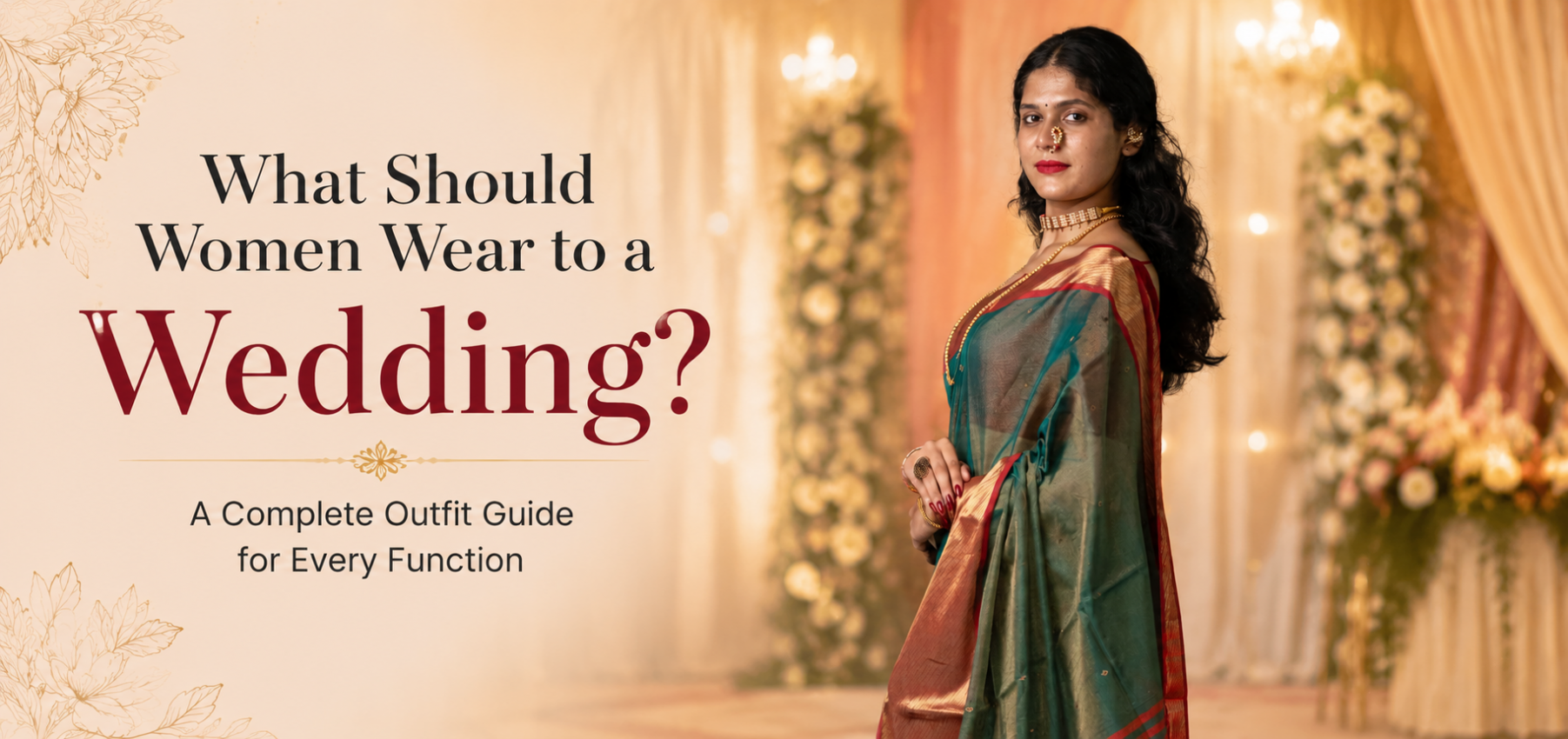
What Should Women Wear to a Wedding? A Complete Outfit Guide for Every Function
An Indian wedding is rarely a single event. It is a string of functions spread across two to five days, and each one carries its own dress code, colour logic, and comfort demands. Getting dressed for a haldi is a different exercise from choosing wedding reception outfits for ladies, and treating every function the same way is the most common styling mistake guests make. This guide walks through what to wear at each stage of the celebration, why certain fabrics work better than others, and how to build an outfit that holds up through a long day of standing, dancing, and photographs.
What should women wear to an Indian wedding? The safest approach is to match fabric weight and colour intensity to the function: light cottons or block prints for daytime rituals like haldi, richer silks or georgettes for sangeet and reception, and structured sarees or lehengas for the main ceremony. Comfort and movement matter as much as embellishment.
Understanding the Wedding Function Calendar
Most Indian weddings run across three to five distinct functions, and each has an unwritten dress code shaped by the setting, time of day, and ritual involved. Knowing this sequence before you shop prevents both over-dressing and under-dressing.
- Haldi — a daytime, turmeric-based ritual, usually outdoors or in a courtyard setting
- Mehendi — an afternoon or evening event centred on henna application and music
- Sangeet — an evening function with performances, dancing, and a livelier dress code
- Wedding Ceremony — the primary ritual, typically the most traditional and formal in dress expectations
- Reception — an evening or night event, the most photograph-heavy and often the most glamorous of the functions
What to Wear for Haldi: Light Fabrics, Bright Colours
Haldi calls for breathable, stain-forgiving fabrics in yellow, marigold, or citrus tones, since turmeric paste is applied directly on skin and clothing. Structured or heavily embellished outfits are impractical here.
Cotton and block-printed fabrics are the standard choice for this function because they wash easily and drape without needing heavy styling. A cotton or mulmul saree in a sunny yellow, or a set of batik print sarees online, works well for guests who want colour without the weight of silk. Batik's wax-resist dyeing technique produces organic, hand-drawn patterns that read as festive but not overdressed, which suits an outdoor daytime ritual.
Avoid pastels and whites at haldi — turmeric stains are difficult to fully remove, and pale fabrics show them permanently.
What to Wear for Mehendi: Prints and Playful Colour
Mehendi outfits sit between the casualness of haldi and the formality of the sangeet. Guests generally choose prints, mirror work, or tie-dye patterns in greens, oranges, and pinks, since the function itself is themed around henna and colour.
A hand-block-printed saree or a printed Anarkali suit both work here. For guests who prefer sarees with a distinctive, story-driven print, indian batik sarees offer a middle ground — patterned enough to feel occasion-appropriate, light enough to sit comfortably through an afternoon of henna application and photographs.
What to Wear for Sangeet: Fabrics That Move
Sangeet is a performance-and-dance evening, so the outfit needs to move freely. Flared lehengas, pre-draped sarees, or Indo-western separates in georgette, chiffon, or crepe are the most practical choices.
Silk sarees with a soft drape, rather than stiff or heavily starched ones, work better if there is any chance of joining the dance floor. A chanderi tissue saree is a good compromise: it has enough sheen and body to look festive under evening lighting, but the fabric is light enough — Chanderi is traditionally woven with a mix of cotton, silk, and zari to keep it airy — to allow movement without wilting.
What to Wear for the Wedding Ceremony: Traditional and Structured
The main ceremony is usually the most ritual-bound function, and outfits here lean traditional — a Banarasi, Kanjeevaram, or Maheshwari silk saree, or a heavily worked lehenga, depending on the community and regional customs.
For guests who want a saree rooted in centuries-old weaving practice rather than a printed alternative, a pure maheshwari silk saree is a fitting choice. Maheshwari weaving originated in Madhya Pradesh in the 18th century and is known for its distinctive reversible border and a silk-cotton blend that gives the saree structure without excess weight — practical for a ceremony that can run several hours.
Jewel tones — maroon, bottle green, royal blue, deep gold — tend to photograph well against most ceremony backdrops and are a safer choice than pastels for guests seeking a more formal presence.
Wedding Reception Outfits for Ladies: What Actually Works
Reception outfits for ladies typically call for more shimmer, richer colours, and a more polished silhouette than earlier functions, since the event is evening-based and heavily photographed. Sequinned sarees, structured lehengas, and statement blouses are the most common choices.
Because receptions are lit for photography — often with warm, low lighting — fabrics with a natural sheen (silk, tissue, or metallic-thread weaves) tend to photograph better than flat matte cottons. A well-fitted blouse also matters more here than at daytime functions, since reception outfits are usually the most tailored of the wedding wardrobe.
Guests who want something contemporary rather than strictly traditional are increasingly choosing modern sarees for wedding functions — pre-stitched drapes, dhoti-style sarees, or fusion cuts that retain the saree's identity while simplifying the draping process for a long evening event. This shift reflects a broader move among younger wedding guests toward outfits that photograph well but require less pre-event preparation time.
Comparing Outfits Across Wedding Functions
The table below breaks down fabric weight, colour palette, and drape style typically expected at each function — useful as a quick reference while planning a wedding wardrobe.
- Haldi: Cotton or mulmul, yellow/marigold tones, loose drape, minimal embellishment
- Mehendi: Block print or tie-dye, green/orange/pink tones, moderate embellishment
- Sangeet: Georgette, chiffon, or Chanderi tissue, jewel or metallic tones, free-moving drape
- Wedding Ceremony: Silk (Maheshwari, Kanjeevaram, Banarasi), deep jewel tones, structured drape
- Reception: Sequinned or tissue silk, metallic or rich jewel tones, tailored and photograph-ready
What to Wear as a Guest for Haldi Ceremony Sarees Specifically
Guests are sometimes unsure whether to match the couple's colour theme at haldi or choose independently. As a rule, guests should avoid wearing white, black, or the exact shade the bride has chosen, and instead pick from the broader yellow-orange-green spectrum.
Among the most searched options for this function are Sarees For Haldi Ceremony guests specifically — typically lightweight cottons or linen-blends in sunny hues that hold up to turmeric application and outdoor heat without requiring careful ironing or heavy accessorising.
Fabric Choice: Why It Matters More Than Embellishment
Fabric weight, not embroidery volume, is usually the deciding factor in whether an outfit feels comfortable across a multi-hour function. Heavier zari and stone work photograph well but can become uncomfortable if worn through both a ceremony and a reception on the same day.
Handwoven fabrics — Maheshwari silk-cotton blends, Chanderi tissue, and Batik cotton — are generally lighter than machine-embellished synthetic alternatives, since the weight comes from thread density rather than applied ornamentation. This is a practical, not just aesthetic, reason many wedding guests in India are moving back toward handloom sarees for long wedding days.
A Note on Colour Etiquette
White and black are traditionally avoided at Indian weddings, particularly at the main ceremony, as they carry mourning associations in several Indian communities. Red and its close shades are usually reserved for the bride and are best avoided by guests, especially at North Indian weddings.
Beyond these two rules, colour choice is largely flexible, and jewel tones, pastels, and prints are all acceptable across most functions except haldi, where brights are expected, and mourning-associated shades, which are avoided throughout.
Frequently Asked Questions
What should I wear to an Indian wedding as a guest?
Match the fabric and formality to the specific function — light cottons for haldi, prints for mehendi, flowy silks for sangeet, and structured silk sarees or lehengas for the ceremony and reception. Avoid white, black, and shades close to the bride's chosen colour.
What are good wedding reception outfits for ladies?
Sequinned or tissue-silk sarees, structured lehengas, and fitted blouses in jewel or metallic tones work well for receptions, since the event is evening-lit and heavily photographed. A well-tailored blouse matters more here than at daytime functions.
Is it okay to wear a saree to a haldi ceremony?
Yes, a lightweight cotton, mulmul, or block-print saree in yellow or marigold tones is one of the most practical choices for haldi, since these fabrics wash easily and don't hold turmeric stains the way pastel or synthetic fabrics do.
What colour should be avoided at an Indian wedding?
White and black are generally avoided, particularly at the main ceremony, due to their mourning associations in many Indian communities. Red is traditionally reserved for the bride and is best avoided by guests.
What is the difference between a Maheshwari and a Chanderi saree?
Maheshwari sarees originated in Madhya Pradesh and are known for a distinctive reversible border woven in a silk-cotton blend. Chanderi sarees, also from Madhya Pradesh, use a sheerer silk-cotton-zari mix and are known for their translucent texture and light drape, making them popular for evening functions like sangeet.
Can I wear a printed saree to a wedding reception?
Printed sarees are more common at daytime functions like haldi or mehendi. For a reception, a saree with sheen — tissue, silk, or a subtly metallic weave — tends to suit the evening lighting and formality better than a flat printed fabric.
In short: Indian wedding dressing works best when the outfit is matched to the function rather than chosen once for the entire event. Light cottons and Batik prints suit daytime rituals like haldi and mehendi, flowing silks and Chanderi tissue suit the sangeet, and structured Maheshwari or Kanjeevaram silks suit the ceremony. For wedding reception outfits for ladies, sheen, tailoring, and richer jewel or metallic tones matter most, since the event is the most photographed of the entire wedding calendar.
-
Which Saree Should I Wear? Easy Choices for Weddings, Office, Festivals & Everyday
September 17th, 2026 -
 August 25th, 2026
 -
What to Wear for Ganesh Chaturthi: Saree Colours and Styling Guide
August 24th, 2026 -
 August 24th, 2026