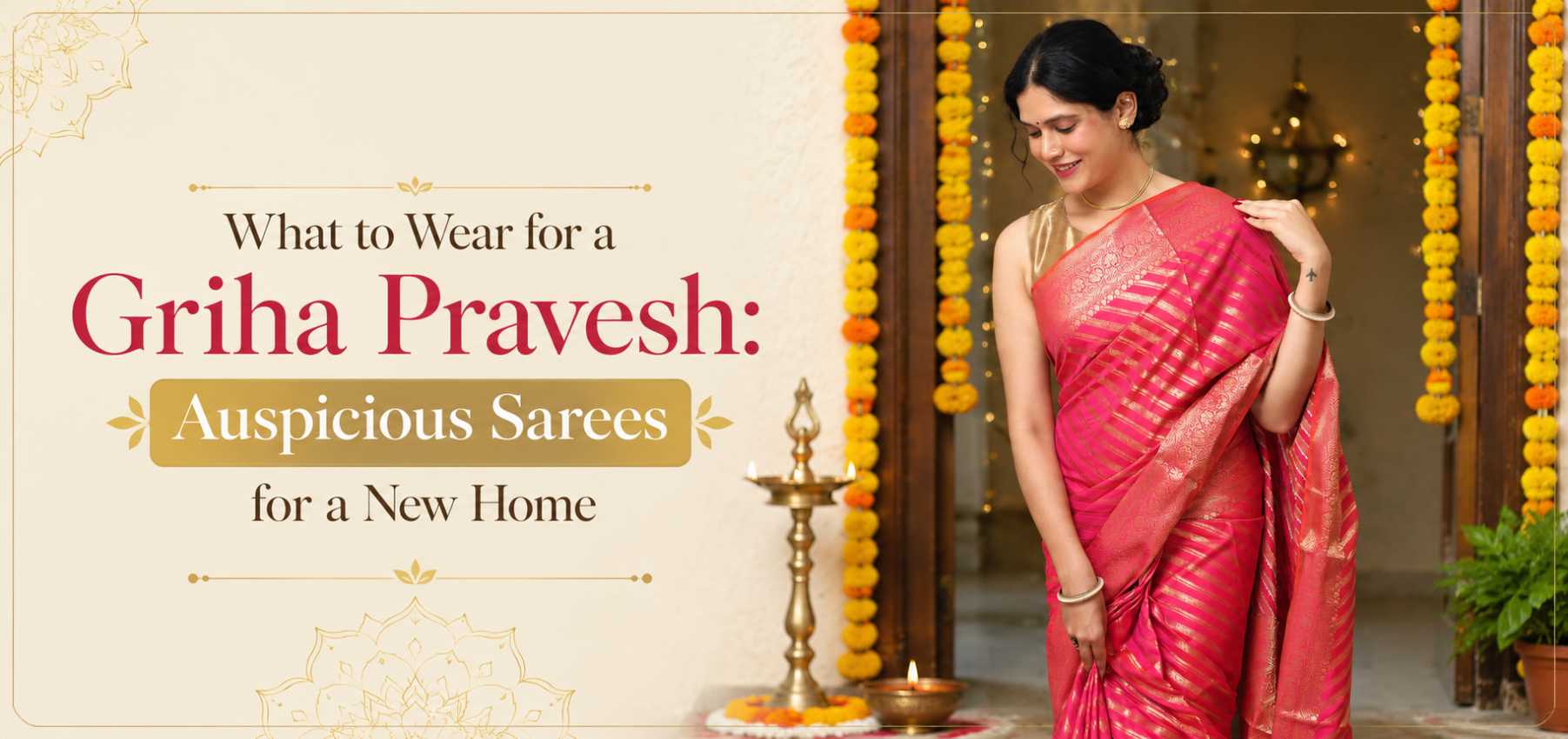
What to Wear for a Griha Pravesh: Auspicious Sarees for a New Home
Moving into a new house in India is rarely just a logistical event. It is marked by rituals, family gatherings, and a dress code that carries as much meaning as the puja itself. A griha pravesh saree is not chosen the way an everyday outfit is — it is chosen for what it represents: new beginnings, prosperity, and respect for tradition.
A griha pravesh saree is a traditional Indian drape worn during the housewarming ceremony, typically in auspicious colours such as red, yellow, or green, made from natural fabrics like silk or cotton. The choice reflects regional customs, the time of day the ceremony is performed, and the family's personal traditions, but certain fabrics and shades are consistently favoured across Indian households.
Why the Right Saree Matters for Griha Pravesh
Griha pravesh, literally "entering the house," is one of sixteen traditional Hindu samskaras marking a significant life transition. What is worn during this ritual is believed to set the tone for the home's energy, which is why families lean toward fabrics and colours considered auspicious rather than purely fashionable.
Silk has held a central place in Indian rituals for centuries because of its natural sheen, durability, and association with purity in Vedic texts. Cotton, particularly handwoven varieties, is chosen in warmer regions for comfort without compromising on ceremonial value. Both fabric families remain the backbone of griha pravesh dressing today.
Auspicious Colours for a Griha Pravesh Saree
Colour carries as much ritual weight as fabric in Indian housewarming traditions. Red, yellow, green, and maroon are the four shades most commonly worn, each tied to a distinct symbolic meaning rooted in Indian custom.
- Red: Associated with marital prosperity and is considered the most auspicious colour for Hindu ceremonies, including griha pravesh.
- Yellow: Linked to Guru (Jupiter) in Vedic astrology and worn to invite knowledge, wisdom, and good fortune into a new home.
- Green: Symbolises growth, fertility, and new beginnings — fitting for the start of life in a new house.
- Maroon or Deep Wine: A modern favourite for those who want ceremonial depth without the brightness of traditional red.
Black and predominantly white sarees are typically avoided for griha pravesh, as both are traditionally associated with mourning in most Indian communities rather than celebration.
Best Fabrics for a Housewarming Ceremony Saree
Fabric choice for griha pravesh usually comes down to three factors: regional climate, family tradition, and how long the ceremony runs. In North and Central India, silk and silk-cotton blends dominate; in coastal regions, lighter cottons are preferred for comfort during longer rituals.
Maheshwari Silk
Woven in Maheshwar, Madhya Pradesh, since the 18th century under the patronage of Queen Ahilyabai Holkar, Maheshwari silk is known for its distinctive reversible border and lightweight drape. Its blend of silk and cotton makes it practical for ceremonies that involve standing for extended periods, without sacrificing the sheen expected of festive wear. Those exploring maheshwari silk sarees online will find the fabric particularly suited to daytime griha pravesh functions held in warmer months.
Chanderi Tissue
Originating in Chanderi, Madhya Pradesh, this fabric is woven with a fine silk-cotton-zari blend that gives it a signature translucent glow. A chanderi tissue saree works well for griha pravesh ceremonies that transition into an evening gathering, since the fabric photographs beautifully under both daylight and indoor lighting.
Tissue Silk
Tissue silk gets its shimmer from a metallic zari thread woven through the fabric, giving it a subtle glow rather than heavy embellishment. Families looking at tissue silk sarees online often choose it for griha pravesh because it photographs well for ritual documentation while remaining lighter than heavily embroidered silks.
Prints and Weaves That Suit the Occasion
Beyond solid ceremonial colours, several hand-worked prints and weaves are gaining popularity for griha pravesh functions, particularly among families who want tradition without a purely conventional look.
Batik and Hand-Painted Options
Batik is a resist-dyeing technique using wax and natural dyes, practised in India for generations and associated with slow, artisan-led production. Indian batik sarees offer an earthy, handcrafted alternative to zari-heavy silks for families who prefer understated ceremonial wear.
Similarly, an organza hand painted saree combines a lightweight sheer base with hand-applied motifs, often floral or symbolic, making it suitable for daytime griha pravesh ceremonies where a heavier silk might feel excessive.
How to Choose Based on Time of Day and Season
The right griha pravesh saree also depends on when the ceremony is scheduled. Morning muhurats, which are the most common for housewarming rituals, generally call for lighter fabrics, while evening functions allow for richer textures.
- Morning ceremony, summer: Choose Maheshwari silk or cotton-silk blends in yellow or light red for breathability.
- Morning ceremony, winter: Pure silk or tissue silk in maroon or deep red retains warmth without added layers.
- Evening ceremony, any season: Chanderi tissue or zari-woven silk catches indoor and diya lighting well for photographs.
- Multi-day celebrations: Rotate between two to three sarees — one ritual-focused piece for the puja and a lighter option for guest hosting.
Styling a Griha Pravesh Saree Correctly
Traditional draping matters as much as fabric selection for most families performing griha pravesh. A few practical guidelines are worth keeping in mind.
- Cover the head with the pallu during the actual puja, in line with regional and family custom.
- Pair silk sarees with temple or antique-finish jewellery rather than contemporary statement pieces, to stay consistent with the ceremonial tone.
- Choose a blouse in a complementary rather than identical shade, which is the more traditional pairing for ritual wear.
- Opt for comfortable footwear, since griha pravesh rituals can involve standing, sitting on the floor, and moving between rooms of the house.
The Case for Handwoven and Handmade Sarees
Handloom sarees carry a practical advantage for rituals beyond symbolism: natural fibres like cotton and silk breathe better through long ceremonies than synthetic blends, and hand-dyed fabrics tend to hold colour more evenly over years of reuse for future family functions. Choosing from Handmade Sarees Online also means the saree carries a longer story — most handwoven pieces take between three days and three weeks to complete on a traditional loom, depending on the intricacy of the border and pallu work.
This is also where slight irregularities in weave or motif placement come in — a small, deliberate mark of hand craftsmanship rather than a flaw, distinguishing handloom work from mill-made alternatives.
Common Mistakes to Avoid
A few missteps show up repeatedly when families select a saree for griha pravesh in a hurry:
- Choosing a saree purely for trend value without checking whether the colour aligns with family or regional custom.
- Overlooking fabric weight relative to the season and length of the ceremony.
- Ignoring blouse fit until the last minute, which affects comfort during a multi-hour ritual.
- Selecting synthetic zari over real metallic thread, which tends to tarnish and lose shine faster.
Quick Summary
A griha pravesh saree is best chosen in red, yellow, green, or maroon, in a natural fabric such as Maheshwari silk, Chanderi tissue, or tissue silk, matched to the season and time of the ceremony. Handwoven options add both ritual authenticity and practical comfort for long housewarming functions. Ultimately, the right choice balances regional tradition, fabric comfort, and the specific timing of the puja being performed.
Frequently Asked Questions
What colour saree is best for griha pravesh?
Red, yellow, green, and maroon are considered the most auspicious colours for griha pravesh in Indian tradition. Red is associated with prosperity, yellow with wisdom and good fortune, and green with new beginnings. Black and predominantly white sarees are generally avoided for this ceremony.
Can I wear silk for griha pravesh in summer?
Yes, but lighter silk-cotton blends such as Maheshwari or Chanderi tissue are more practical than heavy pure silk in summer. These fabrics offer the ceremonial sheen expected for the ritual while remaining breathable through a long puja.
Is it necessary to wear a new saree for griha pravesh?
Wearing a new saree is common practice but not a strict requirement in most traditions. What matters more, according to most family customs, is that the colour and fabric align with auspicious choices for the ceremony.
What is the difference between Chanderi and Maheshwari sarees?
Chanderi sarees are woven with a silk-cotton-zari blend known for a translucent, glossy finish, originating in Chanderi, Madhya Pradesh. Maheshwari sarees, from Maheshwar, feature a distinctive reversible border and a slightly heavier, matte drape, with weaving traditions dating back to the 18th century.
How do I choose a saree for an evening griha pravesh function?
For evening ceremonies, richer fabrics like tissue silk or zari-woven Chanderi work well because they reflect indoor and diya lighting attractively. Deeper shades such as maroon or wine also photograph better than lighter colours in artificial light.
-
Which Saree Should I Wear? Easy Choices for Weddings, Office, Festivals & Everyday
September 17th, 2026 -
 August 25th, 2026
 -
What to Wear for Ganesh Chaturthi: Saree Colours and Styling Guide
August 24th, 2026 -
 August 24th, 2026