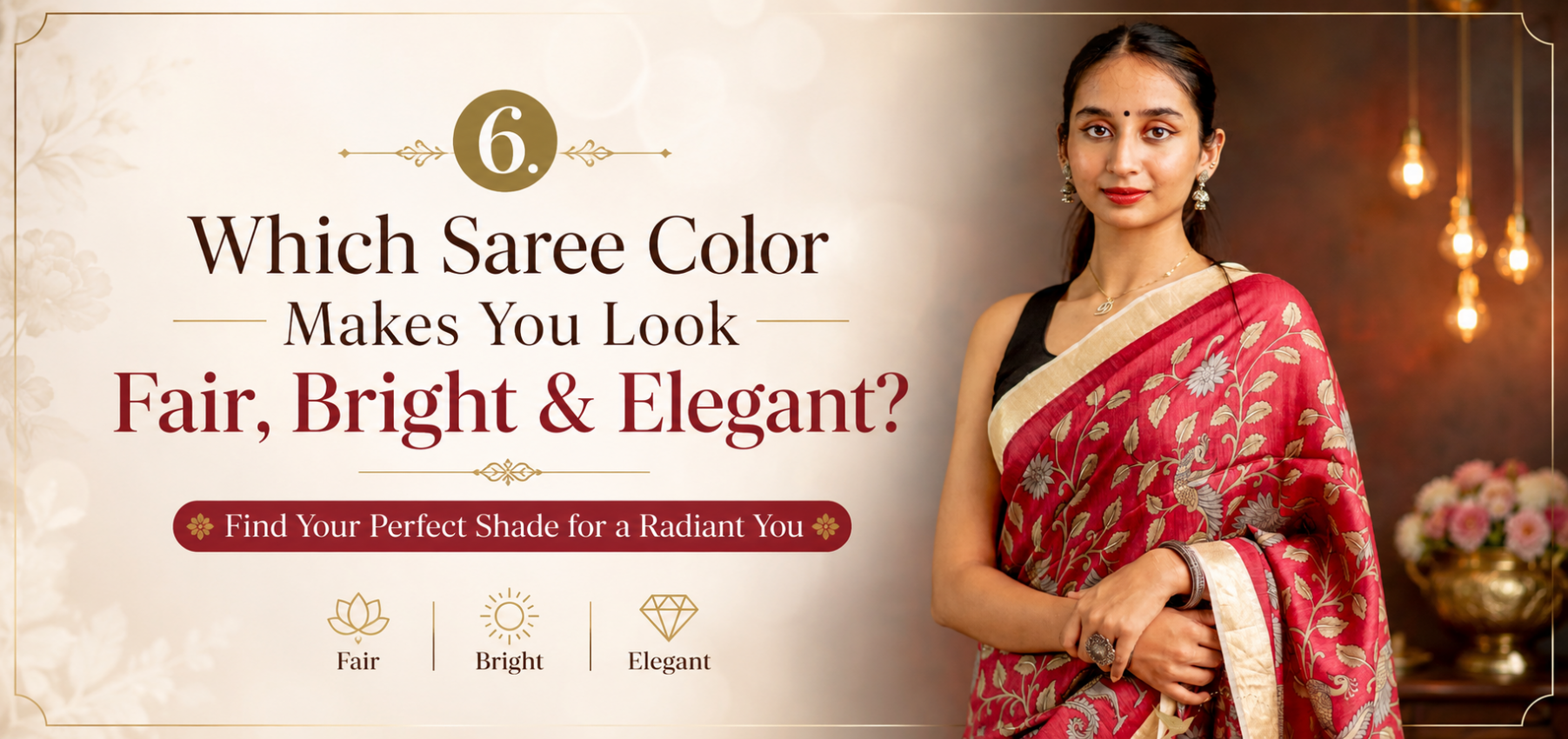
Which Saree Color Makes You Look Fair, Bright & Elegant?
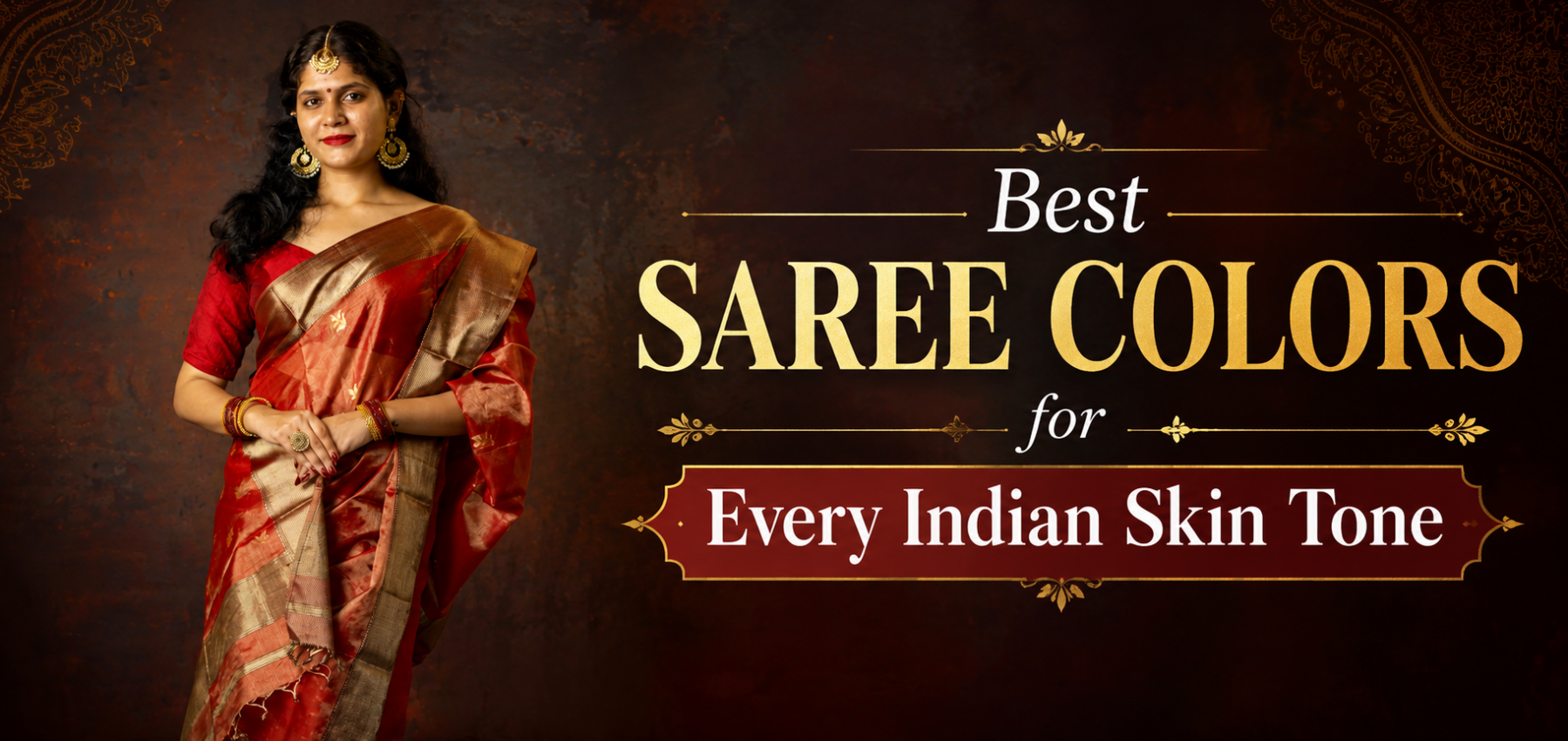
Choosing what to wear for a wedding, festival, or family function often comes down to one question: which color will actually suit me? Most women don't realise that the right shade can visibly brighten the complexion, while the wrong one can make even a beautifully embroidered outfit fall flat in photographs. That's exactly why so many women search for the best saree colour before a big occasion — the color you pick affects how fair, radiant, and put-together you look far more than the embellishment or price tag does.
This guide breaks down how to choose a saree shade based on your skin undertone, the occasions each color works best for, and a few fabric pairings that make any shade look richer and more elegant.
How Saree Color Affects Your Complexion and Overall Glow
Color theory isn't just for interior design — it applies directly to how a fabric reflects light onto your face. Certain shades bounce warm, flattering light upward, giving the skin a brighter, more even-toned appearance, while others can wash you out or create an unflattering contrast. This is why two women with different skin tones can wear the exact same saree and get completely different results. The goal isn't to find one universally "best" color, but to understand which shades work with your undertone rather than against it.
Understanding Your Skin Undertone Before Choosing a Saree Color
Before picking a shade, it helps to identify whether your undertone is warm, cool, or neutral. A quick way to check is by looking at the veins on your wrist in natural light — greenish veins usually indicate a warm undertone, while bluish or purplish veins suggest a cool undertone. If it's hard to tell, you likely have a neutral undertone, which means most colors will suit you.
Warm Undertones
If your skin has warm, golden, or yellowish undertones, you'll generally look radiant in earthy and warm-toned sarees — think mustard, rust, olive green, coral, and warm reds. These shades complement the natural warmth in your complexion rather than competing with it.
Cool Undertones
Cool undertones — often paired with pink or bluish undertones in the skin — tend to look striking in jewel tones like emerald green, royal blue, magenta, and true reds. Pastels such as lavender and icy blue also work beautifully for cool undertones.
Neutral Undertones
If you have a neutral undertone, you're in luck, since both warm and cool shades tend to look balanced on you. This gives far more flexibility when experimenting with trending colors each season.
Best Saree Shades for Fair Skin Tones
Fair skin tends to look elegant in deeper, richer shades that create a beautiful contrast rather than blending into the complexion. Deep maroon, wine, navy blue, emerald green, and classic black-and-gold combinations tend to look particularly striking. Pastels also work well for daytime events, but very light or washed-out shades like pale beige can sometimes make fair skin look flat, so it's worth balancing a light saree with a slightly bolder blouse or border.
Best Saree Shades for Wheatish and Medium Skin Tones
Wheatish or medium skin tones have the most flexibility when it comes to color choice. Jewel tones such as teal, magenta, mustard, and coral tend to bring out a natural glow, while earthy tones like terracotta and olive add warmth without overpowering the complexion. This skin tone also carries bright colors exceptionally well, making it easier to experiment with bolder festive shades.
Best Saree Shades for Dark and Deep Skin Tones
Deep skin tones look luminous in bright, saturated colors that create a beautiful contrast against the complexion. Shades like fuchsia, cobalt blue, bright yellow, and deep orange tend to make the skin glow rather than fade into the background. Metallic tones — gold, copper, and bronze — also work exceptionally well, adding richness without looking dull.
Fabrics and Textures That Enhance Your Chosen Color
The fabric you choose can amplify or soften the impact of a color, so it's worth thinking about texture alongside shade.
Silks for a Rich, Luminous Finish
Silk fabrics naturally catch and reflect light, which is why colors often look deeper and more luxurious on silk compared to cotton. A chanderi silk saree with zari border is a great example — the subtle sheen of Chanderi silk combined with a zari border adds brightness to the fabric, making even simple shades look festive and elevated. Similarly, a pure maheshwari silk saree carries color beautifully thanks to its fine weave, giving even muted tones a soft, elegant glow rather than looking dull.
Prints and Textures for a Softer, Earthy Look
If you prefer a more relaxed, artisanal aesthetic over a glossy finish, hand-printed fabrics are worth considering. indian batik sarees, known for their wax-resist dyeing technique, naturally create rich, layered colors that look striking without needing heavy embellishment. A batik print cotton saree is particularly flattering for warmer months, offering breathable comfort along with deep, earthy tones that suit most skin undertones.
Where to Explore More Options
If you're still deciding between silk and cotton, browsing a curated collection can make the choice easier. Many women exploring maheshwarisSilk sarees online find it helpful to compare shades side by side before finalising a color for a specific event, since screen lighting can sometimes shift how a shade actually looks in person.
Color Combinations That Add Brightness and Elegance
Pairing a saree with a contrasting blouse or border can instantly elevate the overall look. A deep-colored saree with a bright contrasting blouse — like a maroon saree with a mustard blouse — creates visual interest without overwhelming the outfit. Similarly, a pastel saree paired with a slightly darker, embroidered blouse adds definition and keeps the look from appearing too flat or monochrome.
Occasion-Wise Saree Color Guide
For daytime events like haldi ceremonies or brunches, lighter shades such as yellow, mint, and coral tend to photograph well in natural light. For evening functions like sangeet or receptions, richer jewel tones — emerald, wine, or royal blue — create a more dramatic, festive effect under indoor lighting. For traditional pujas or religious occasions, classic reds, yellows, and maroons remain the most culturally appropriate and auspicious choices across most Indian households.
Common Mistakes to Avoid When Choosing a Saree Color
Many women pick a color simply because it's trending, without considering how it interacts with their skin tone or the occasion's lighting. Another common mistake is choosing a saree color that closely matches the venue's decor or backdrop, which can make you blend into photographs rather than stand out. It also helps to try the saree in natural daylight before the event, since artificial lighting in stores can significantly alter how a shade actually appears.
Final Thoughts
There's no single best saree colour that works for everyone — the right shade depends on your undertone, the occasion, and even the fabric you choose. Once you understand whether warm, cool, or jewel tones suit you best, choosing a saree becomes far less overwhelming and far more instinctive. If you're looking for pieces that carry color beautifully while supporting traditional Indian craftsmanship, exploring handcrafted sarees online is a good place to start, especially if you want a shade that looks as rich in person as it does in photographs.
-
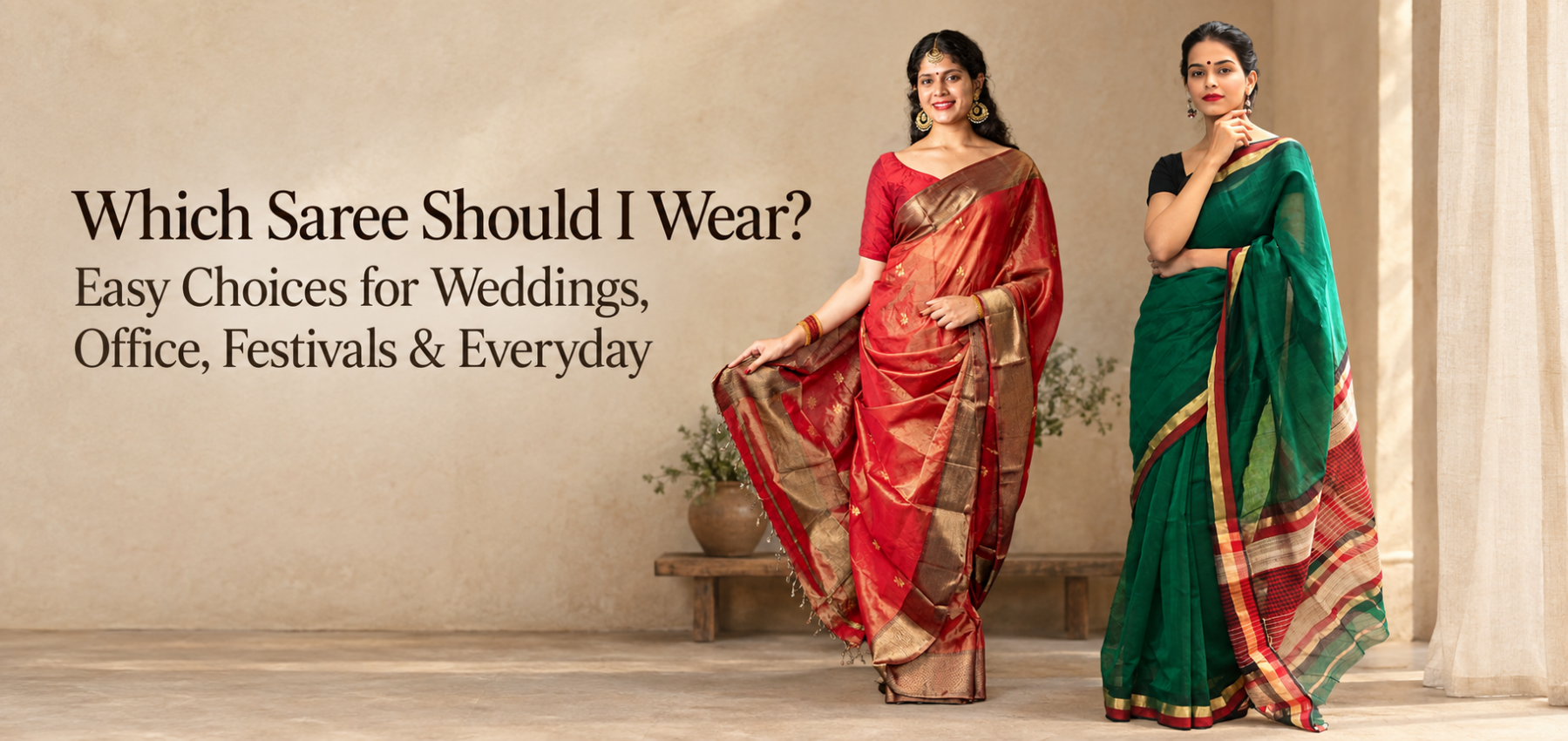
Which Saree Should I Wear? Easy Choices for Weddings, Office, Festivals & Everyday
September 17th, 2026 -
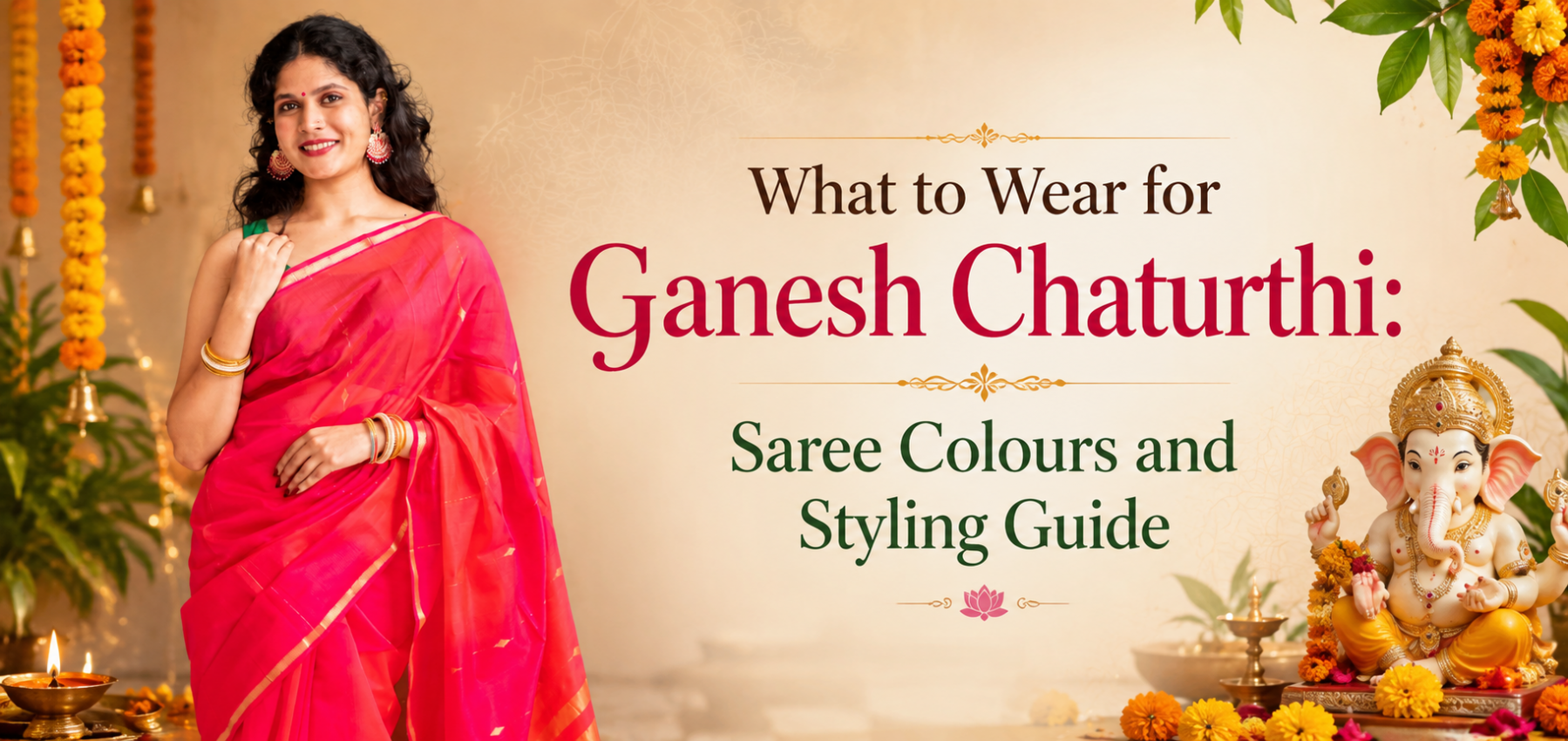
What to Wear for Ganesh Chaturthi: Saree Colours and Styling Guide
August 24th, 2026 -
 August 24th, 2026
 -
 August 19th, 2026