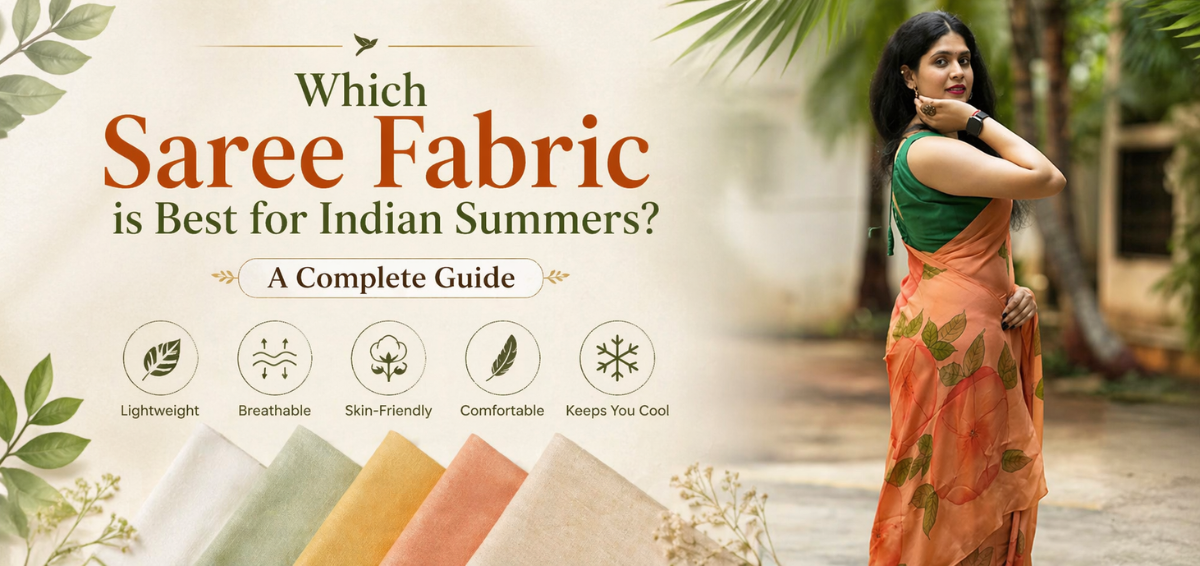
Which Saree Fabric is Best for Indian Summers? A Complete Guide
Indian summers are known for their intense heat, humidity, and long days, making fabric selection one of the most important decisions when choosing ethnic wear. A saree, being both traditional and versatile, can either feel breathable and comfortable or heavy and exhausting depending on the fabric you choose. This guide explores how to select the Best Saree Fabric for Indian Summers while balancing comfort, style, and practicality.
With rising awareness around sustainable fashion and handcrafted textiles, modern consumers are now leaning towards fabrics that are not just stylish but also breathable, eco-friendly, and suitable for long wear. In this blog, we will break down the best fabrics, styling tips, and expert insights to help you make an informed choice.
Why Choosing the Right Fabric Matters in Summer
During Indian summers, temperatures can easily rise above 40°C in many regions. Wearing heavy or synthetic fabrics can lead to discomfort, sweating, and even skin irritation. Choosing the right saree fabric ensures:
- Better air circulation
- Moisture absorption
- Reduced skin irritation
- Lightweight drape and ease of movement
The key is to select fabrics that are breathable, soft on the skin, and capable of handling humidity. This is why understanding fabric types is essential when selecting the Best Saree Fabric for Indian Summers.
Top Saree Fabrics Ideal for Hot Weather
Cotton – The Ultimate Summer Staple
Cotton is undoubtedly the most preferred fabric during summer. Known for its breathability and sweat-absorbing properties, cotton sarees keep the body cool even during peak heat.
A Batik Print Cotton Saree is a great example of combining comfort with artistic appeal. These sarees not only provide ventilation but also offer unique handcrafted designs that reflect Indian textile traditions.
Why choose cotton:
- Excellent airflow
- Absorbs moisture efficiently
- Soft and skin-friendly
- Perfect for daily wear and office use
Linen – Lightweight and Elegant
Linen sarees are gaining popularity for their crisp texture and luxurious feel. They are slightly more structured than cotton but equally breathable.
Linen is ideal for formal occasions, office wear, and casual outings. It dries quickly and does not cling to the body, making it a practical choice for humid climates.
Chanderi – Sheer and Graceful
Chanderi sarees are known for their lightweight texture and subtle sheen. They are made using a blend of silk and cotton, offering the best of both worlds.
This fabric is perfect for festive occasions during summer when you want to look elegant without compromising comfort.
Maheshwari – Traditional Yet Breathable
Maheshwari sarees are a fine blend of silk and cotton, making them breathable yet slightly rich in texture. A Pure Maheshwari Silk Saree is ideal for women who prefer a traditional look with summer comfort.
These sarees are lightweight, easy to drape, and perfect for both day and evening events.
Mulmul (Muslin) – Soft and Feather-Light
Mulmul is one of the softest fabrics available. It feels almost weightless and is perfect for extremely hot weather.
Its delicate texture makes it ideal for casual wear, home gatherings, and relaxed outings.
Handwoven Tissue – Light with a Festive Touch
A Handwoven Tissue Saree offers a subtle shimmer while still being relatively lightweight. Unlike heavy silk sarees, tissue sarees are airy and suitable for summer weddings and festive occasions.
Fabrics to Avoid in Indian Summers
While selecting the right fabric is important, knowing what to avoid is equally crucial. Certain materials trap heat and can cause discomfort.
- Heavy silk sarees
- Polyester and synthetic blends
- Velvet or thick embroidered fabrics
- Georgette with heavy lining
These fabrics restrict airflow and increase sweating, making them unsuitable for hot climates.
How to Choose the Right Saree Based on Occasion
Daily Wear: For everyday use, opt for breathable and low-maintenance fabrics like cotton or linen. You can explore Handcrafted Sarees Online that offer comfort along with unique designs.
Office Wear: Choose lightweight sarees with minimal prints. Linen and Maheshwari fabrics work well as they maintain structure while keeping you cool.
Festive Wear: For festive occasions, go for Chanderi or tissue sarees. They provide elegance without the heaviness of traditional silk.
Casual Outings: Printed cotton sarees, especially Batik Print Sarees Online, are perfect for casual wear. They are stylish, breathable, and easy to manage.
Key Factors to Consider Before Buying Summer Sarees
Breathability:
The fabric should allow air to pass through easily to keep the body cool.
Weight: Lightweight sarees are easier to carry and more comfortable for long hours.
Moisture Absorption: Fabrics like cotton absorb sweat and prevent discomfort.
Ease of Maintenance: Choose fabrics that are easy to wash and maintain, especially for daily use.
Sustainability: Eco-friendly fabrics are not only better for the environment but also safer for your skin. Many Handmade Sarees Online are crafted using natural dyes and traditional techniques.
Styling Tips for Summer Sarees
- Opt for light colors like pastel shades and whites
- Pair with sleeveless or cotton blouses
- Use minimal accessories to avoid discomfort
- Choose breathable petticoats
- Keep makeup light and natural
These styling tips enhance comfort while maintaining elegance during hot weather.
Why Handcrafted Fabrics Are Ideal for Summer
Handcrafted sarees are often made using natural fibers and traditional weaving techniques, making them more breathable than machine-made fabrics. They also support artisan communities and promote sustainable fashion.
Unlike mass-produced fabrics, handcrafted sarees allow better airflow and are designed with attention to detail, ensuring both comfort and durability.
Common Mistakes to Avoid While Buying Summer Sarees
- Choosing heavy fabrics for daytime events
- Ignoring fabric composition
- Buying synthetic blends for daily wear
- Overlooking comfort in favor of style
Avoiding these mistakes ensures you select sarees that are both stylish and practical.
Future Trends in Summer Saree Fabrics
The Indian fashion industry is witnessing a shift towards sustainable and breathable fabrics. Consumers are now prioritizing comfort, ethical production, and timeless designs.
Trends include:
- Organic cotton sarees
- Natural dye fabrics
- Minimalist handwoven designs
- Fusion of traditional and modern styles
These trends indicate a growing preference for thoughtful and conscious fashion choices.
Conclusion
Choosing the right saree fabric for summer is essential for comfort, style, and practicality. Whether it’s cotton for daily wear, linen for office use, or Chanderi for festive occasions, each fabric serves a unique purpose.
The Best Saree Fabric for Indian Summers is one that balances breathability, lightweight feel, and aesthetic appeal. By understanding fabric types and making informed choices, you can stay comfortable and stylish even during the hottest months.
Investing in high-quality, handcrafted sarees not only enhances your wardrobe but also supports sustainable fashion and traditional craftsmanship.
Frequently Asked Questions (FAQs)
1. Which fabric is most comfortable for Indian summers?
Cotton is considered the most comfortable fabric due to its breathability and moisture absorption properties.
2. Can silk sarees be worn in summer?
Lightweight silk blends like Maheshwari or Chanderi can be worn, but heavy silk sarees should be avoided.
3. Are handwoven sarees better for hot weather?
Yes, handwoven sarees are usually made from natural fibers, making them more breathable and suitable for summer.
4. What colors are best for summer sarees?
Light colors such as white, pastel shades, and soft hues reflect heat and keep you cool.
5. How do I maintain summer sarees?
Wash them with mild detergent, avoid direct sunlight while drying, and store them in a cool, dry place.
-
Which Saree Should I Wear? Easy Choices for Weddings, Office, Festivals & Everyday
September 17th, 2026 -
 August 25th, 2026
 -
What to Wear for Ganesh Chaturthi: Saree Colours and Styling Guide
August 24th, 2026 -
 August 24th, 2026