Which Saree Should I Buy? A Complete Buying Guide for Every Occasion in India
Working out which saree should I buy for a wedding, a workday, or a festival can feel overwhelming with so many weaves on the market. The answer depends on three things — the occasion you are dressing for, the fabric that suits your comfort and climate, and the craftsmanship behind the weave. This guide breaks down each of these factors so you can shop with clarity instead of guesswork.
What Makes a Saree "Right" for You?
A saree is considered right for you when its fabric weight, drape, and craftsmanship match the occasion, the season, and your personal comfort. A lightweight cotton or Chanderi suits daytime and office wear, while a silk or tissue weave suits weddings and festive evenings. Getting this match right is the foundation of every good saree purchase.
Which Saree Should I Buy for Weddings and Festive Occasions?
For weddings, festivals, and formal celebrations, richly woven silks and tissue sarees are the traditional choice in India. These fabrics carry weight, sheen, and zari work that photograph well and hold their structure through hours of wear.
A pure maheshwari silk saree is a strong option for functions like sangeet, reception, or a family puja. It is woven with a silk-cotton blend on pit looms in Maheshwar, Madhya Pradesh, and carries a reversible border known locally as Bugdi — a feature that lets the wearer style the pallu from either side. For heavier wedding-day silks, tissue weaves with zari borders are the more traditional pick, since the metallic thread adds visible richness under both daylight and event lighting.
Brides and close family members often prefer sarees with a longer pallu and heavier borders, while guests attending daytime functions like haldi or mehendi tend to choose lighter tissue or Chanderi silk drapes that stay comfortable through extended outdoor rituals.
Best Saree Options for Office Wear and Daily Use
Cotton and Chanderi sarees are the most practical choice for office wear and everyday use because they are breathable, easy to maintain, and drape well without added weight. A cotton saree in a solid shade or subtle print reads as polished without appearing overly festive in a workplace setting.
For those who want something with more visual character, Batik print sarees online have become a popular middle ground. The wax-resist dyeing technique produces one-of-a-kind patterns on breathable cotton, making these sarees suitable for both a Monday client meeting and a weekend outing, without requiring a change of wardrobe philosophy.
Choosing a Saree by Fabric: A Quick Comparison
Fabric is the single biggest factor in comfort and occasion-fit. Here is how the major handloom categories compare:
- Pure Silk (Maheshwari, Tissue): Best for weddings and festive events; lightweight yet rich in appearance; ideal for 4–8 hour wear.
- Cotton: Best for office wear, daily errands, and summer; highly breathable; requires minimal upkeep.
- Chanderi Silk-Cotton: Best for semi-formal events and receptions; sheer, feather-light texture with a soft sheen.
- Batik Cotton: Best for casual outings and fusion styling; hand-dyed patterns with a distinct, artisanal look.
- Tussar Silk: Best for those who prefer earthy tones and natural texture over high sheen; breathable despite being silk.
Maheshwari silk sarees online are often recommended as a starting point for shoppers new to handloom silk, since they offer the richness of silk without the heaviness associated with heavier Banarasi or Kanjivaram weaves.
Which Saree Suits Which Body Type?
The right saree can be adjusted to flatter most body types through drape style and print placement rather than a rigid fabric rule.
- Petite frames: Sarees with smaller prints and a narrower border create a lengthening effect; avoid oversized motifs.
- Fuller figures: Vertical patterns and unstitched pallus that fall in soft pleats tend to be more flattering than heavily embellished, stiff borders.
- Tall frames: Bold borders and contrasting pallu colours work well, since height carries heavier detailing gracefully.
Choosing the Right Saree for Each Season
Season plays a direct role in fabric choice, since comfort in Indian climates depends on breathability as much as appearance.
In peak summer, cotton and lightweight Chanderi are the most practical choices, as both fabrics absorb moisture and allow airflow. During winter, silk and tissue sarees pair naturally with the season, since their density retains a little warmth while still looking festive for year-end celebrations and weddings, which cluster heavily between November and February in India.
How to Identify an Authentic Handwoven Saree
This is where craftsmanship experience matters. A genuine handwoven saree carries small, deliberate irregularities — slight variations in border width, minor tension differences in the weave, and a texture that feels different from machine-loomed fabric within the first touch. Zari work on authentic pieces sits slightly raised rather than printed flat.
Artisans working with traditional pit looms, such as those producing Maheshwari and Chanderi weaves, typically take one to three days to complete a single saree, depending on the complexity of the border and pallu design. This is why handwoven pieces are priced differently from power-loom alternatives — the cost reflects hours of skilled labour, not just raw material.
Step-by-Step: How to Decide Which Saree to Buy
- Identify the occasion: Wedding, festival, office, or casual outing.
- Match the fabric to the setting: Silk for formal events, cotton for daily wear.
- Consider the season and duration of wear: Breathable fabrics for long or hot-weather events.
- Check the weave and border details: Look for slight irregularities that confirm handcrafting.
- Pick complementary accessories: A dupatta or stole in a coordinating weave completes the look for pre-draped or Indo-western styling.
For those pairing a saree-adjacent look with separates, a chanderi silk dupatta adds the same handloom character to kurta sets and fusion outfits, while a handwoven dupatta in a heavier weave works well layered over festive ensembles.
A Word on Batik and Block-Printed Sarees
Batik sarees deserve a separate mention because they follow a dyeing process rather than a weaving one. Indian batik sarees are made by applying hot wax to fabric with a canting tool or wooden block, dyeing the cloth, and repeating the process in layers so each colour resists the next. Because the wax cracks and settles differently each time, no two batik sarees are ever fully identical — a detail worth knowing if you want a piece with genuine one-of-a-kind character rather than a repeated print run.
Caring for Your Saree After Purchase
Hand-wash silk and Chanderi sarees in cold water with a mild detergent, and avoid wringing the fabric. Dry flat in shade rather than direct sunlight, which can fade natural dyes over time. Store sarees wrapped in soft muslin cloth instead of plastic covers, since plastic traps moisture and can damage both silk fibres and hand-block prints over extended storage.
Frequently Asked Questions
What is the best saree to buy for a first-time handloom purchase?
A Maheshwari silk saree is a practical first purchase because it is lightweight, versatile across festive and semi-formal events, and easier to maintain than heavier silks like Kanjivaram or Banarasi.
Is cotton or silk better for daily wear in India?
Cotton is better for daily wear because it is breathable, absorbs moisture, and withstands frequent washing. Silk is better reserved for occasional or festive wear, where its structure and sheen matter more than everyday practicality.
How can I tell if a saree is genuinely handwoven?
Genuine handwoven sarees show slight irregularities in the border, a texture that feels distinct from machine-loomed fabric, and zari work that sits slightly raised. Uniform, perfectly repeated patterns usually indicate power-loom production instead.
What saree should I wear to an Indian wedding as a guest?
Guests typically wear tissue silk or Chanderi sarees with moderate zari work, reserving the heaviest embellished silks for the bride and close family. Lighter fabrics also make sense for daytime functions like haldi or mehendi.
How many sarees does a beginner ethnic wardrobe actually need?
A practical starting wardrobe includes one cotton saree for daily or office wear, one Chanderi or Maheshwari silk for semi-formal events, and one tissue or heavier silk saree for weddings and festive occasions — three pieces that cover most Indian social calendars.
In Short
Deciding which saree to buy comes down to matching fabric weight to occasion, season to comfort, and weave authenticity to long-term value. Cotton and batik sarees suit daily and casual wear, Chanderi and Maheshwari silks bridge semi-formal and festive events, and richer tissue silks are reserved for weddings. Checking for handwoven irregularities in the border and zari work remains the most reliable way to confirm you are buying an authentic, artisan-made piece rather than a machine-loomed imitation.
-
Which Saree Should I Wear? Easy Choices for Weddings, Office, Festivals & Everyday
September 17th, 2026 -
 August 25th, 2026
 -
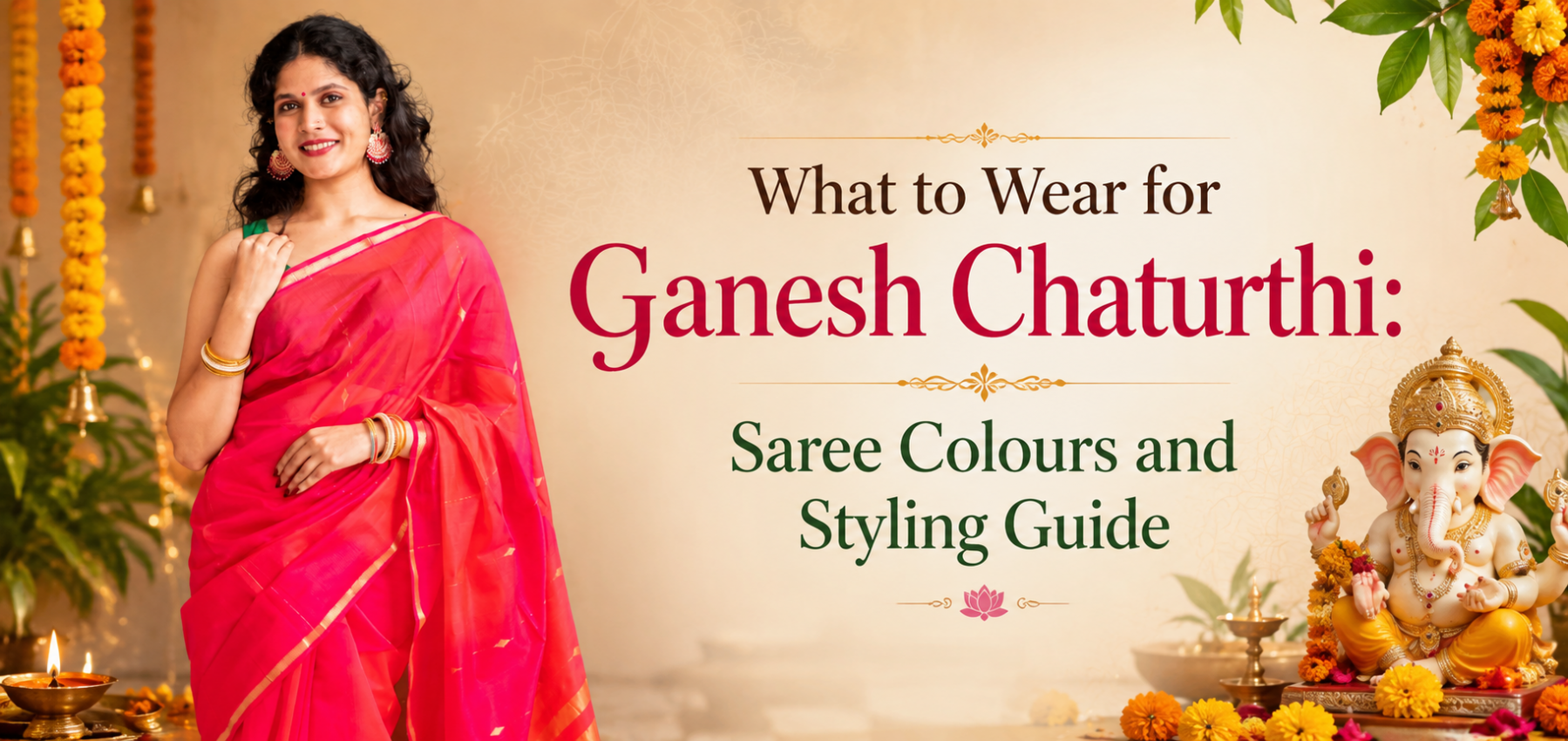
What to Wear for Ganesh Chaturthi: Saree Colours and Styling Guide
August 24th, 2026 -
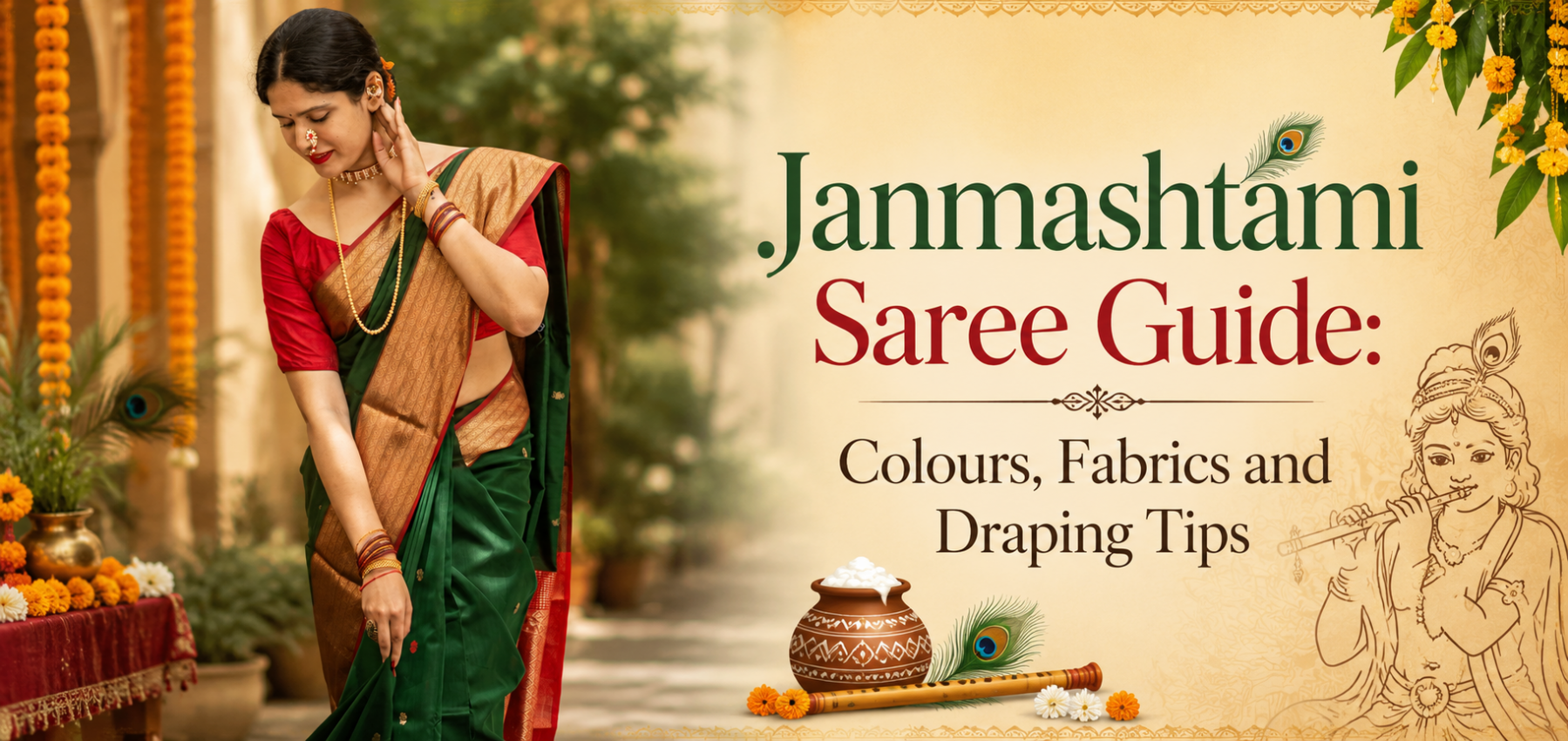 August 24th, 2026