Why Buying Sarees Online Is Smarter: Benefits, Tips & What to Look For in India
Has the Way India Shops for Sarees Really Changed?
For generations, buying a saree was a deeply physical ritual. You visited the shop, touched the fabric between your fingers, watched the light catch the zari, negotiated over tea, and carried the purchase home wrapped in brown paper. That experience was beautiful — and it still is, where it exists.
But it was also limiting. A shopper in Baraut might never encounter a genuine Maheshwari weave unless she travelled to Madhya Pradesh. A woman in Pune might spend an entire weekend searching for an authentic block-printed cotton saree only available in Rajasthan. And a buyer looking for heritage craftsmanship was often at the mercy of middlemen who marked up prices significantly while the original artisan received very little.
Online shopping has dismantled these boundaries. Today, weavers from Maheshwar, block printers from Bagru, and tissue weavers from Varanasi can connect directly with buyers across every corner of India — and increasingly, the world. The result is a richer, fairer, and far more transparent ecosystem for anyone who loves a beautiful saree.
The Real Benefits of Choosing to Buy Sarees Online in India
Let us be honest about what online shopping actually offers a saree buyer — not just convenience, but genuine advantages that physical retail struggles to match.
Access to Every Regional Weave
From Maheshwari and Chanderi in Madhya Pradesh to Tant in West Bengal and Paithani in Maharashtra — you can explore India's entire textile map from one screen, without booking a single train ticket.
Closer to the Artisan
Specialist online stores work directly with weavers, meaning your purchase supports an artisan family and eliminates exploitative middlemen from the supply chain. Your money reaches the hands that actually created the piece.
Transparent Product Information
Good online stores describe weave type, yarn composition, wash care, drape length, and blouse piece details — far more than most physical stores ever offer. You go in informed, not guessing.
Easy Price Comparison
You can compare similar weaves across multiple trusted sellers in minutes — without leaving your home or feeling pressured into an impulsive purchase by an eager salesperson.
Gifting Made Thoughtful
Premium handcrafted sarees make deeply meaningful gifts. Many online stores offer gift-ready packaging and can ship directly to the recipient anywhere in India — no courier trips required on your end.
Supporting Sustainable Fashion
Authentic handcrafted sarees are made using natural fibres and dyes, produced slowly and ethically — a meaningful alternative to fast fashion's significant environmental toll.
What Kind of Sarees Are Best to Buy Online?
Not all sarees translate equally well to the online shopping experience. The best sarees to buy online are those with distinct weaving styles, clear visual identity, and well-documented craftsmanship, making them easier to verify through product descriptions, images, and videos. When chosen wisely, online platforms can offer access to some of India’s finest textile traditions with complete confidence.
Why the Imperfection in Handcrafted Sarees Is Actually a Feature
One of the most important things to understand when you explore handmade sarees online is that slight irregularities in weave, minor variations in colour saturation, or subtle asymmetries in border patterns are not quality defects — they are proof of human hands at work. A machine-woven saree is perfectly uniform. A handwoven one carries the rhythm of a loom worked by a person.
This is why heritage textile brands celebrate these nuances rather than apologise for them. When you see a product description that says "minor weave variations are characteristic of handloom craftsmanship," that is the brand being honest — and it is a very good sign.
Smart Tips for Shopping Sarees Online Without Regret
The online saree market, like any marketplace, has its share of misleading listings. Here are practical, experience-backed tips that will help you shop with confidence every single time.
1. Always read the full product description, not just the title.
The title may say "silk saree" but the description reveals whether it is pure silk, art silk (synthetic), or a silk-cotton blend. These distinctions matter enormously for price, durability, and care.
2. Zoom into product images and look at the texture.
Good online saree stores provide multiple high-resolution photographs from different angles — border close-ups, pallu detail, and full drape shots. If the images are blurry or only show one angle, proceed with caution.
3. Watch video content wherever available.
Fabric drape, sheen, and colour accuracy are difficult to convey through still images. A short video of the saree in natural light tells you far more about how it will actually look when worn.
4. Check the return and exchange policy before purchasing.
Reputable stores offer at least a 7-day return window. Understand the conditions — whether the tag must be intact, whether exchanges are free, and which situations qualify for a refund versus store credit.
5. Verify the wash care instructions.
Maheshwari and Chanderi sarees typically require dry cleaning or gentle hand wash. Cotton batik prints can usually be washed at home with cold water. Mismanaging wash care is one of the most common reasons shoppers feel disappointed with a saree after purchase.
6. Trust brands that tell you where and by whom the saree was made.
Authentic artisan-to-consumer brands will share the weaving cluster, the artisan community, and the traditional technique used. This level of transparency reflects genuine accountability.
7. Pay attention to blouse piece information.
Not every saree comes with a running blouse piece. Some include 0.8 metres, some include nothing. Check this detail before you order, especially if you have already planned the blouse design.
8. Read verified customer reviews, especially those with photographs.
Customer-uploaded images show how the saree actually looks in real-life lighting — often more honestly than the product photograph itself.
Red Flags to Watch Out for When Shopping Sarees Online
The online market has made authentic sarees accessible — but it has also made it easier for low-quality or misrepresented products to reach buyers. Here are the warning signs that should make you pause before clicking "Buy Now."
- Price that seems far too low for the claimed fabric — a genuine Maheshwari silk saree cannot cost ₹499.
- Heavily edited or filtered product images with no close-up detail shots of the weave or pallu.
- Vague descriptions like "silk-type fabric" or "similar to handloom" — these are euphemisms for synthetic substitutes.
- No return or exchange policy mentioned — or one buried in fine print with excessive exclusions.
- No artisan or origin information for sarees claiming to be handcrafted or regional weaves.
Understanding the Craft Behind Different Types of Handcrafted Sarees
India's saree tradition is not one story — it is hundreds of them, each rooted in a specific geography, community, and weaving culture. When you explore these traditions online, you are not just shopping. You are engaging with living heritage.
The Legacy of Maheshwari Weaving
Originating from the town of Maheshwar on the banks of the Narmada river in Madhya Pradesh, the Pure Maheshwari Silk Saree is one of India's most elegant handloom traditions. Queen Ahilyabai Holkar is credited with patronising this weave in the 18th century, and its distinctive feature — a reversible border — remains its hallmark. The fabric uses a cotton warp with a silk weft, giving it a lustrous finish while remaining breathable enough for everyday wear.
The Art of Batik Printing on Fabric
Batik is an ancient resist-dyeing technique in which hot wax is applied to fabric in patterns before dyeing — the waxed areas resist the dye, creating designs of striking depth and unpredictability. Authentic Batik Print Sarees Online will show the characteristic soft edges and slight colour bleeding that distinguish hand-applied wax from machine-printed imitations. No two genuine batik sarees are ever identical — each one carries the exact moment the wax was applied.
The Shimmer of Handwoven Tissue
A Handwoven Tissue Saree is woven with zari or metallic threads interlaced through a base of silk or cotton, creating a translucent, luminous drape that catches light magnificently. These sarees are especially beloved for weddings and festive occasions. When buying tissue sarees online, look for close-up photographs in natural light and descriptions of the zari quality — pure zari versus imitation zari makes a significant difference in both appearance and longevity.
"The mark of a truly authentic handcrafted saree is not perfection — it is the unmistakable presence of a human hand. Each thread placed by a weaver carries intent, history, and skill that no machine can replicate."
How to Choose the Right Saree for Every Occasion
For Weddings and Grand Celebrations
Opt for richer weaves — tissue sarees with zari, heavy silk sarees, or deeply embellished Chanderi drapes. A handwoven tissue saree in red, ivory, or deep green makes an unforgettable bridal or guest ensemble. Prioritise blouse piece inclusion and check that the saree length is at least 6.3 metres to allow for a comfortable drape with a proper pallu.
For Festive and Pooja Occasions
Maheshwari sarees are ideal — lightweight enough for a long festive day, yet elegant enough to feel dressed up. Their reversible border gives them versatility across multiple draping styles. Choose warm tones like turmeric, deep red, peacock blue, or forest green for Diwali, Navratri, or Dussehra celebrations.
For Office and Professional Wear
Look for cotton-silk blends, linen sarees, or soft Chanderi weaves in muted, sophisticated tones. These offer the authority of a saree without the heaviness of a full silk drape. A well-chosen block print cotton saree in a structured colour can be just as impactful as any formal outfit.
For Gifting
When choosing a saree as a gift, a handmade saree online from a trusted artisan brand makes the most meaningful choice. It carries a story, not just a price tag. A Maheshwari silk or a hand-batik cotton saree, beautifully packaged, communicates thoughtfulness and cultural appreciation that no generic gift can match.
Why Maheshwari Silk Sarees Are Gaining Such Strong Online Demand
In recent years, there has been a remarkable surge in searches for Maheshwari Silk Sarees Online — and it is not difficult to understand why. These sarees sit at a unique intersection: they are lightweight enough for daily wear, visually refined enough for formal occasions, and rooted in a weaving tradition that carries genuine Geographical Indication (GI) status.
Unlike many other premium sarees, Maheshwari weaves offer year-round wearability. The cotton-silk blend keeps them breathable in the Deccan and North Indian summers, while the silk lustre makes them appropriate for any occasion that calls for elegance. For working women, frequent travellers, or anyone who values a saree that moves with their life — this is often the perfect choice.
The online space has made genuine Maheshwari sarees far more accessible to buyers outside Madhya Pradesh, reducing dependency on middlemen and allowing consumers to learn about the craft before they purchase. This knowledge-before-buying culture is one of the best things the internet has done for Indian handloom.
Caring for Your Handcrafted Saree: What Every Buyer Should Know
A handcrafted saree, properly cared for, can last decades. Unlike fast fashion pieces that fade or fray within a season, a well-maintained handloom saree deepens in character with age. Here is how to preserve yours.
1. First wash: For silk and Maheshwari sarees, the first wash should always be a dry clean or cold-water hand wash with mild, pH-neutral detergent. Never machine wash a handloom silk on the first occasion.
2. Drying: Never wring a silk or handwoven cotton saree. Gently press out excess water and dry flat in shade. Direct sunlight can fade natural dyes over time.
3. Storage: Fold along the zari or border to avoid crease damage. Wrap in muslin or soft cotton — never plastic, which traps moisture. Re-fold every few months to prevent permanent crease marks.
4. Ironing: Use a low-heat iron on the reverse side. For tissue or zari-heavy sarees, always use a pressing cloth between the iron and fabric to protect the metallic threads.
5. Natural dyes: Sarees made with natural or azo-free dyes should be washed separately for the first few rounds, as minor colour migration is natural in the breaking-in process.
Frequently Asked Questions About Buying Sarees Online in India
Is it safe to buy sarees online in India?
Yes, it is safe to buy sarees online from trusted brands that offer secure payment gateways, clear return policies, and genuine product descriptions. Always look for brands with verified customer reviews, certification details for silk sarees, and transparent fabric information. Specialist handcrafted saree stores that work directly with artisans tend to be more accountable and authentic than generic marketplaces. Look for brands with a traceable origin story for each product.
How do I identify a genuine handwoven saree online?
A genuine handwoven saree will have slight natural irregularities in weave — these are signs of authentic craftsmanship, not defects. Look for brands that describe the weaving technique, region of origin, and the type of yarn used. Maheshwari sarees, for instance, are woven in Maheshwar, Madhya Pradesh, using a specific cotton-silk blend. Trusted sellers also mention artisan details and natural dye processes. Avoid listings with overly polished images and vague descriptions like "handloom-type" or "weave-inspired."
What saree fabric is best for summer in India?
For summer, lightweight and breathable fabrics like cotton, Chanderi, linen, and soft tissue weaves work best. Maheshwari sarees — a blend of cotton and silk — are particularly popular for their ability to stay cool while still looking elegant. Batik print sarees on a cotton or Chanderi base are also an excellent option for warm days, combining comfort with artistic appeal. Avoid heavy silk sarees with dense zari during peak summer months.
What is the difference between a handmade saree and a machine-made saree?
A handmade saree is woven or crafted entirely by artisans using traditional techniques like handloom weaving, hand block printing, or hand embroidery. These pieces carry natural texture, depth, and subtle imperfections that make each one unique. Machine-made sarees are mass-produced with uniform patterns and synthetic finishes. Handmade sarees take significantly more time to produce, which is reflected in their pricing — but they are also far more durable, culturally meaningful, and environmentally sustainable.
Are handcrafted sarees worth the investment?
Absolutely. A handcrafted saree is not just a garment — it is a piece of India's textile heritage. These sarees are made using skills passed down through generations of artisan families. They are durable, made from natural fibres, and carry cultural significance that grows with time. Unlike fast fashion, a quality handcrafted saree retains its beauty and value over many years. Buying one also directly supports artisan livelihoods and ethical production practices — making it a conscious, meaningful investment in both style and substance.
-
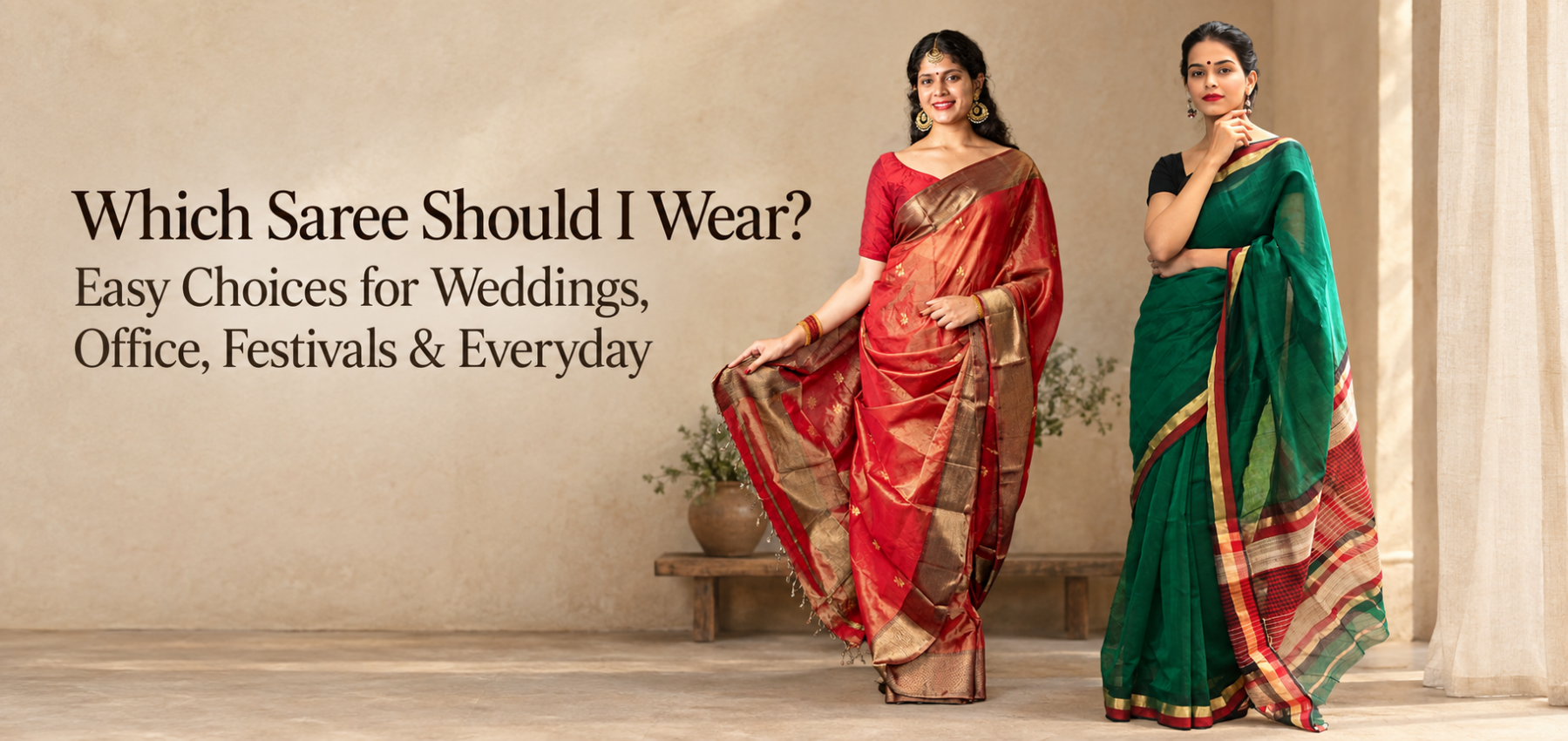
Which Saree Should I Wear? Easy Choices for Weddings, Office, Festivals & Everyday
September 17th, 2026 -
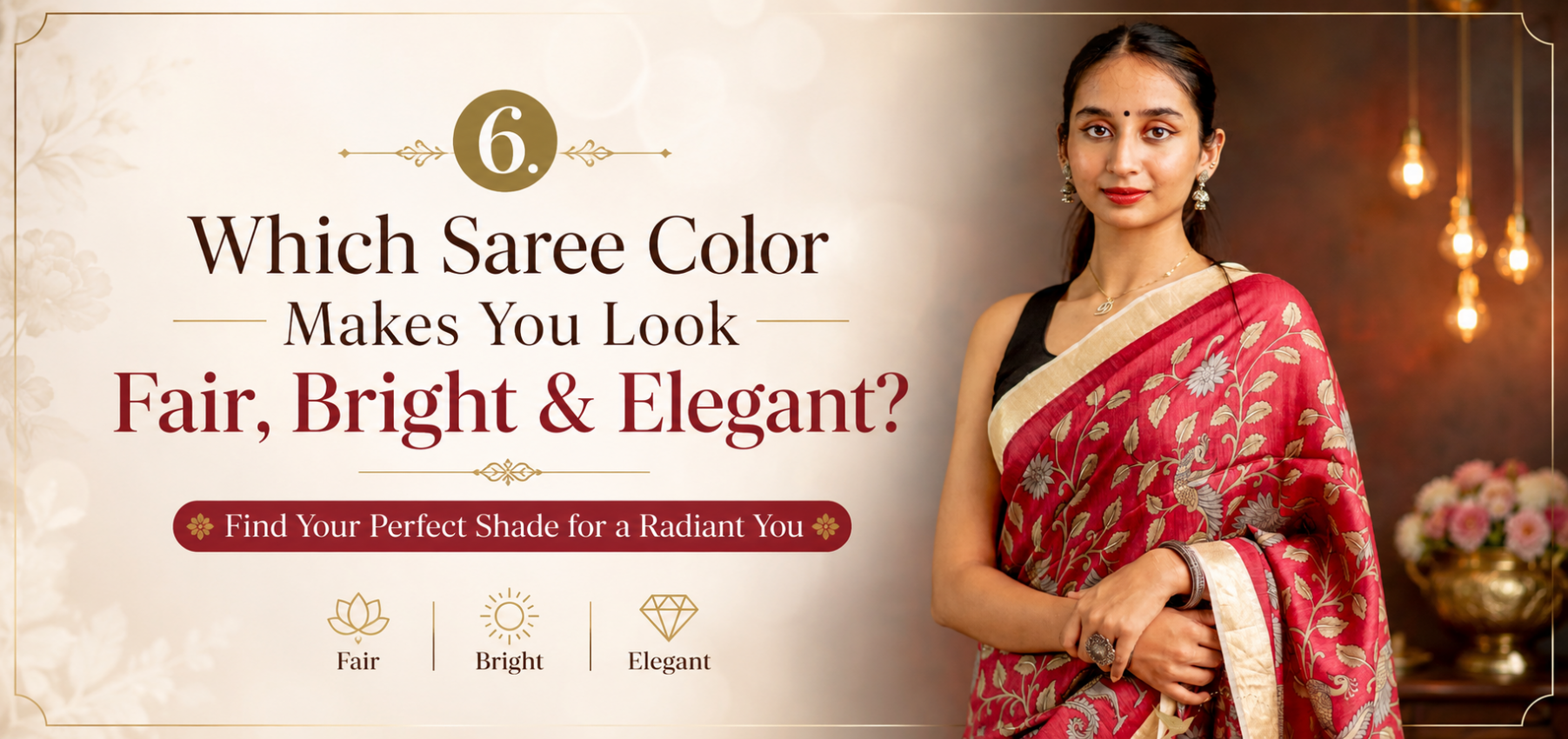 August 25th, 2026
 -
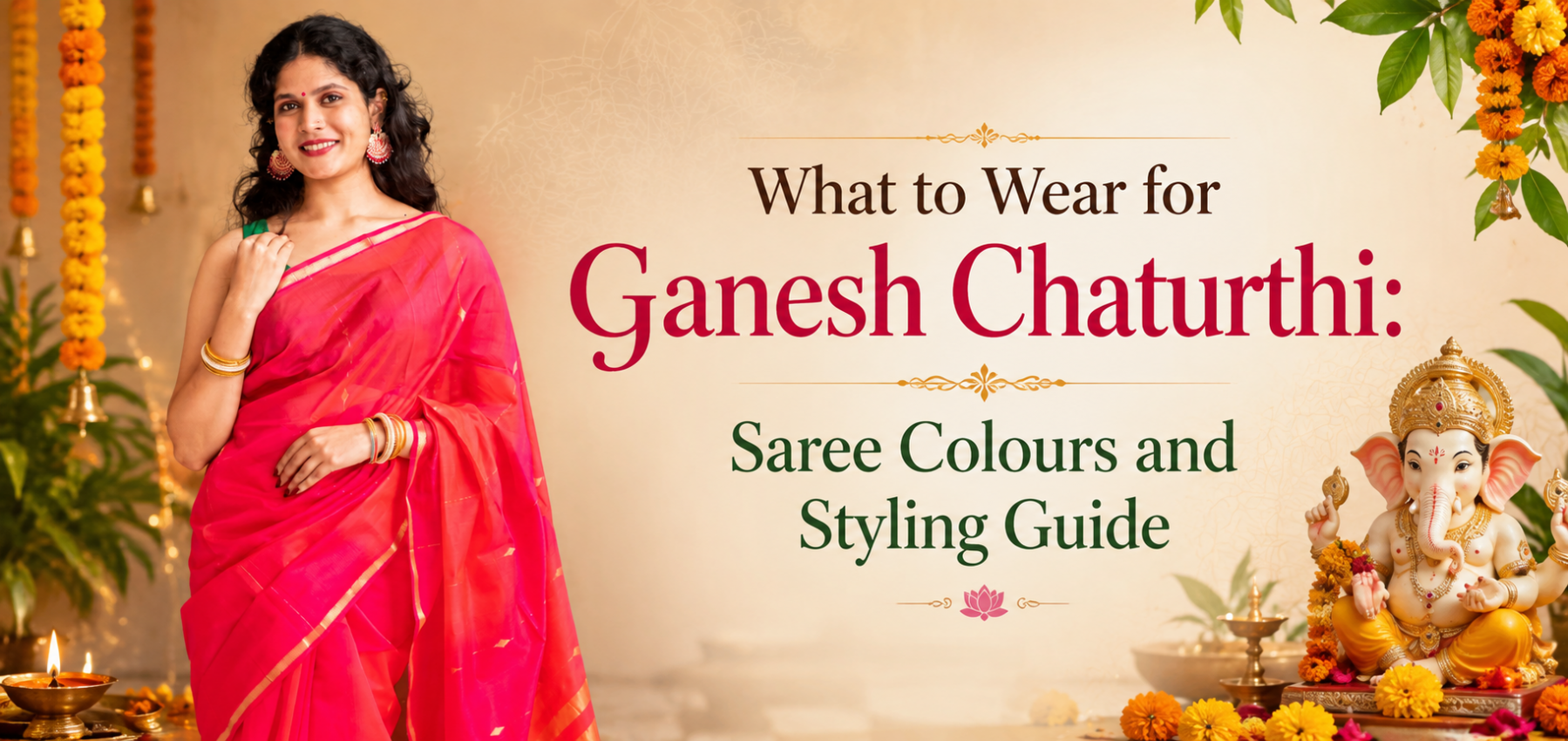
What to Wear for Ganesh Chaturthi: Saree Colours and Styling Guide
August 24th, 2026 -
 August 24th, 2026