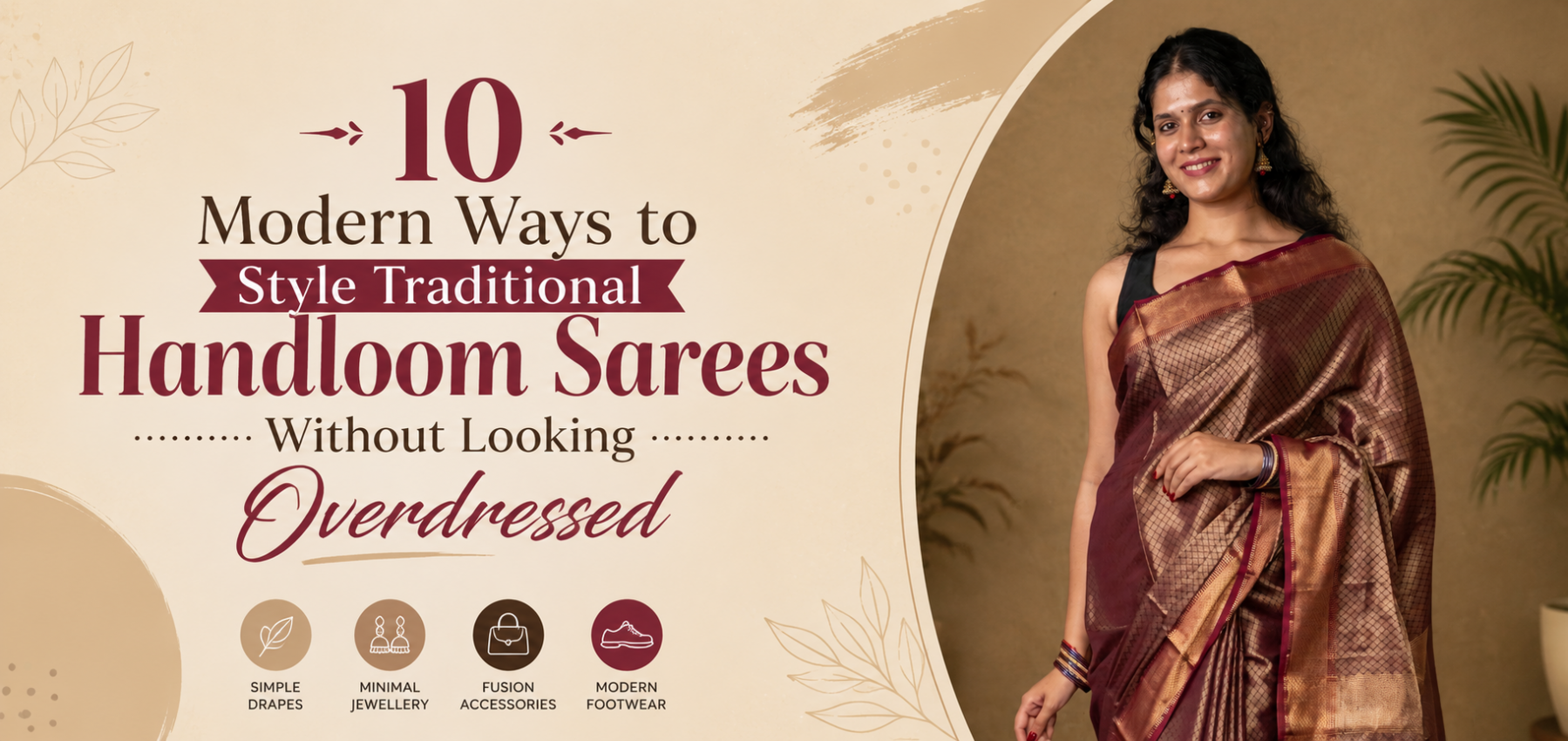
Why Chanderi and Maheshwari Sarees Are the Ultimate Sustainable Luxury
In today’s fashion landscape, sustainability is no longer a trend—it is a responsibility. Conscious consumers are increasingly seeking textiles that reflect heritage, ethical craftsmanship, and timeless elegance. Among India’s finest handwoven traditions, Chanderi and Maheshwari sarees stand out as enduring symbols of sustainable luxury. These sarees seamlessly combine artisanal skill, eco-conscious production, and understated sophistication, making them an ideal choice for women who value both style and substance.
This blog explores why Chanderi and Maheshwari sarees continue to be revered as sustainable luxury staples in Indian wardrobes and why their relevance is stronger than ever.
Understanding Sustainable Luxury in Indian Handlooms
Sustainable luxury refers to products that are crafted responsibly, emphasize quality over quantity, and preserve cultural heritage. Indian handloom sarees embody this philosophy naturally. Produced on traditional looms with minimal environmental impact, they support rural artisans while offering longevity unmatched by fast fashion.
Handwoven sarees are biodegradable, low-waste, and often made using natural fibers such as silk and cotton. The slow production process ensures careful attention to detail, making every saree unique. This is precisely why heritage weaves like Chanderi and Maheshwari are considered sustainable luxury investments rather than seasonal purchases.
The Heritage and Craft of Chanderi Sarees
Chanderi weaving originates from Madhya Pradesh and dates back several centuries. Known for its sheer texture, lightweight feel, and glossy finish, Chanderi fabric is woven using fine silk and cotton yarns. The hallmark of this weave lies in its transparency and delicate motifs inspired by nature, architecture, and traditional coin patterns.
A Chanderi Tissue Saree is especially admired for its subtle shimmer and breathable texture. The tissue weave incorporates metallic yarns, giving the saree a refined glow without being overpowering. These sarees are ideal for Indian climates and ceremonial wear, offering comfort alongside elegance.
What makes Chanderi sustainable is its reliance on manual weaving techniques passed down through generations. The production process avoids heavy machinery, reducing energy consumption and preserving artisanal livelihoods.
Why Chanderi Sarees Define Conscious Elegance
A Chanderi Pure Silk Saree represents slow fashion at its finest. Each piece is woven over several days, sometimes weeks, ensuring precision and durability. The silk used is lightweight yet strong, allowing the saree to last for decades when cared for properly.
Chanderi sarees are also versatile. They transition effortlessly from festive occasions to formal gatherings, reducing the need for excessive consumption. This adaptability aligns perfectly with sustainable fashion principles, where fewer but better-quality garments are encouraged.
Maheshwari Sarees: Royal Legacy with Ethical Roots
Maheshwari sarees originate from the historic town of Maheshwar, also in Madhya Pradesh. Introduced under the patronage of Queen Ahilyabai Holkar, these sarees were designed for royalty but crafted by skilled local weavers. Characterized by reversible borders, geometric patterns, and rich color palettes, Maheshwari sarees balance tradition with contemporary appeal.
A Pure Maheshwari Silk Saree is known for its durability, soft texture, and distinctive pallav designs. The silk-cotton blend commonly used in Maheshwari weaving ensures breathability while maintaining structure, making it suitable for year-round wear.
Maheshwari Sarees as Sustainable Luxury Essentials
Choosing Maheshwari Silk Sarees Online supports ethical fashion practices by connecting consumers directly with authentic handloom products. These sarees are woven on pit looms using age-old techniques that consume minimal electricity and generate negligible waste.
Maheshwari sarees are also deeply rooted in community-based production. Purchasing them helps sustain weaving clusters and promotes fair wages, reinforcing the social aspect of sustainability. Their timeless patterns ensure they never go out of style, encouraging long-term use rather than disposal.
Craftsmanship That Honors Tradition
The making of a Garbh Reshmi Maheshwari Saree involves meticulous attention to yarn quality and weaving precision. The silk used in these sarees is traditionally sourced and processed with minimal chemical intervention, preserving the natural sheen of the fabric.
Similarly, a Chanderi Silk Saree With Zari Border showcases refined artistry, where zari work is woven seamlessly into the fabric rather than added later. This integrated technique enhances durability and reduces material wastage, reinforcing sustainable production values.
Environmental Benefits of Handwoven Sarees
Handloom weaving is inherently eco-friendly. Unlike power looms, traditional looms rely on human skill rather than electricity, significantly lowering carbon emissions. Natural dyes and fibers further reduce environmental impact.
By choosing Handmade Sarees Online, consumers contribute to a fashion ecosystem that prioritizes environmental preservation. These sarees are biodegradable, long-lasting, and require fewer resources over their lifecycle compared to synthetic garments.
Why Conscious Buyers Prefer Chanderi and Maheshwari
Modern Indian women seek clothing that reflects their values. Sustainability, authenticity, and craftsmanship are now as important as aesthetics. A Chanderi Tissue Saree appeals to those who appreciate subtle luxury, while Maheshwari Silk Sarees Online attract buyers looking for heritage-rich designs with practical wearability.
Both saree styles offer unmatched comfort, making them suitable for extended wear during weddings, festivals, and formal events. Their lightness and breathability further enhance their appeal in India’s diverse climate.
Investment Value of Sustainable Luxury Sarees
A Pure Maheshwari Silk Saree or a Chanderi saree is not just a garment—it is an heirloom. These sarees often increase in sentimental and cultural value over time. Their durability ensures they can be passed down through generations, reducing the need for repeated purchases.
This longevity makes them cost-effective in the long run, aligning luxury with mindful consumption. Investing in handwoven sarees supports artisans while building a wardrobe rooted in heritage.
Conclusion: A Timeless Choice for Responsible Fashion
Chanderi and Maheshwari sarees exemplify everything sustainable luxury stands for—ethical craftsmanship, environmental responsibility, and timeless beauty. Rooted in centuries-old traditions, these sarees continue to adapt gracefully to modern sensibilities without compromising their essence.
By choosing handwoven sarees, Indian consumers actively participate in preserving cultural heritage while embracing conscious fashion. Whether it is the delicate elegance of Chanderi or the structured sophistication of Maheshwari, these sarees remain unparalleled symbols of sustainable luxury in India.
-
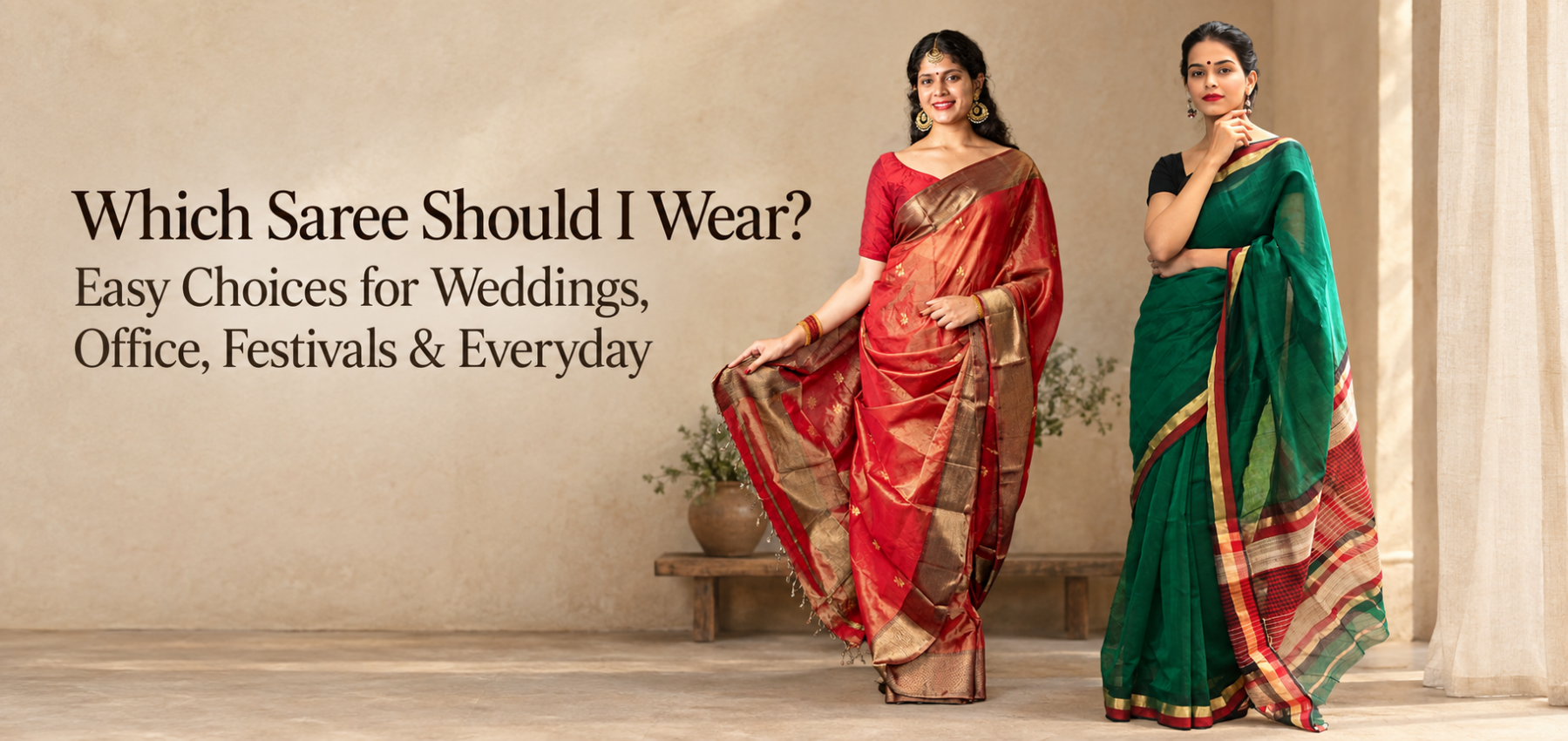
Which Saree Should I Wear? Easy Choices for Weddings, Office, Festivals & Everyday
September 17th, 2026 -
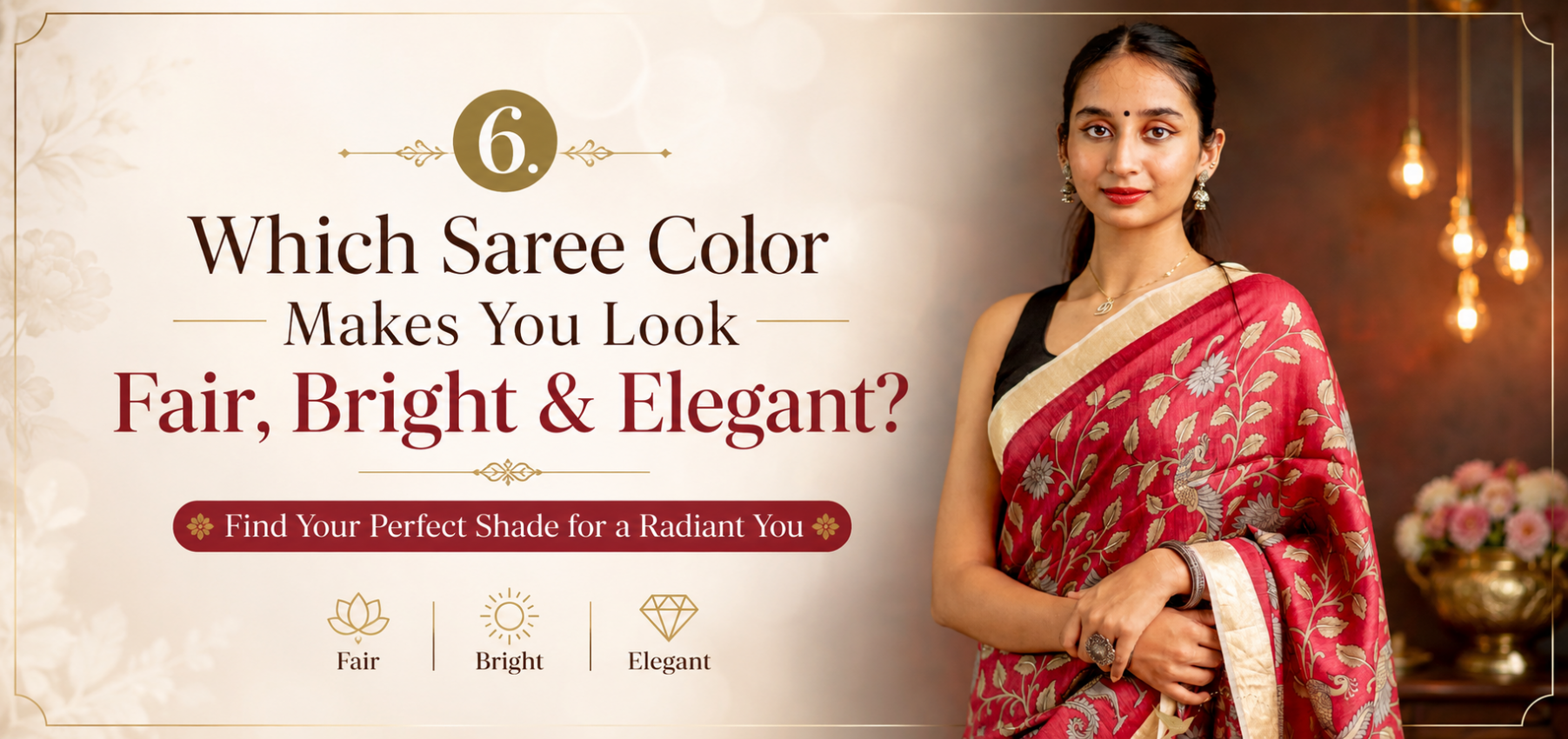 August 25th, 2026
 -
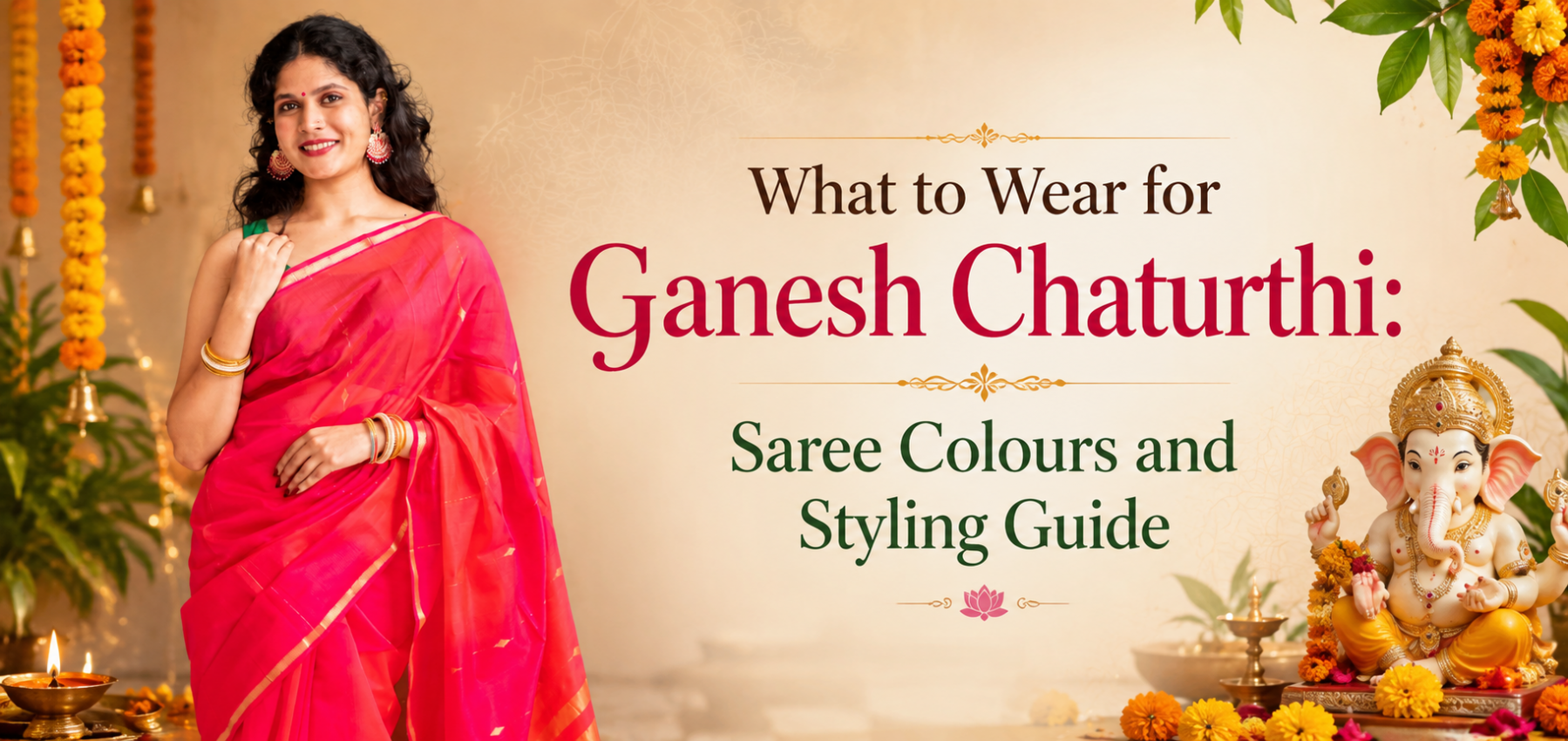
What to Wear for Ganesh Chaturthi: Saree Colours and Styling Guide
August 24th, 2026 -
 August 24th, 2026