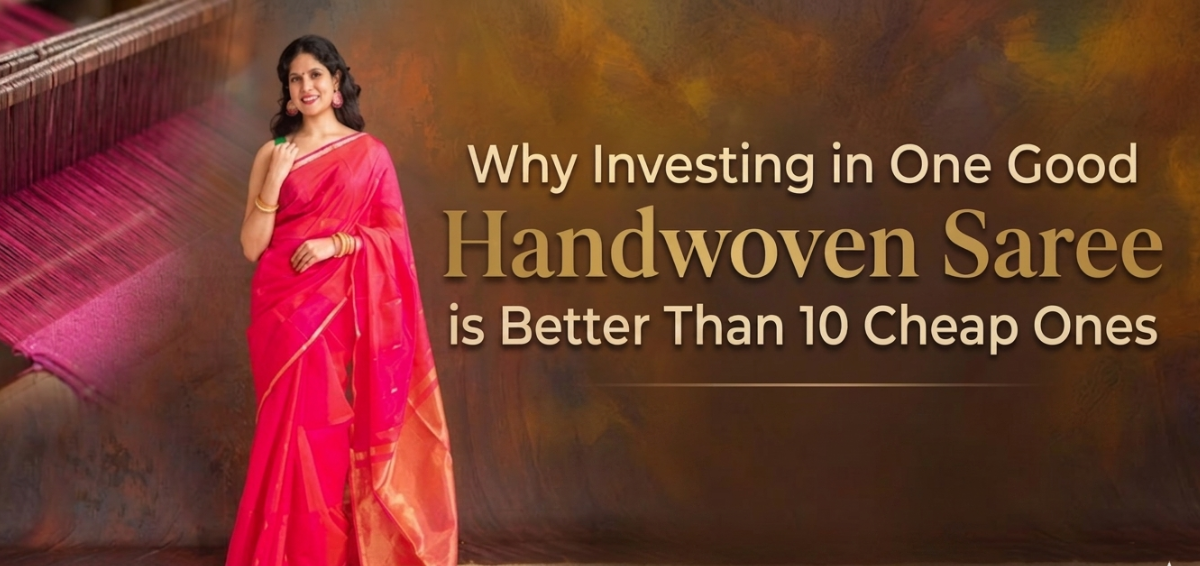
Why Investing in One Good Handwoven Saree is Better Than 10 Cheap Ones
In today’s fast-fashion era, shoppers are often tempted by low prices and frequent discounts. Buying multiple inexpensive sarees may seem like a smart decision, but over time, it rarely delivers value, durability, or satisfaction. Indian consumers are increasingly shifting toward mindful purchasing, especially when it comes to ethnic wear. Instead of filling wardrobes with low-quality pieces, many women now prefer investing in one premium-quality saree that offers longevity, elegance, and cultural authenticity. Handwoven sarees hold a special place in India’s textile heritage. They represent craftsmanship, tradition, and sustainability. Each piece is thoughtfully created by skilled artisans, making it unique and timeless. Choosing a Good Handwoven Saree is not just a purchase decision; it’s an investment in quality, sustainability, and cultural legacy. This blog explains why selecting one well-crafted handwoven saree provides far more benefits than buying multiple cheap alternatives.
The True Cost of Cheap Sarees
Cheap sarees may appear attractive due to their low prices, but they often compromise on fabric quality, weaving technique, and finishing. Most mass-produced sarees are made using synthetic fibers that lack breathability and comfort. Over time, these fabrics lose their shape, color, and appeal. Additionally, low-cost sarees frequently involve machine production, resulting in uniform designs without character. They may fade after a few washes, tear easily, or lose their fall. Eventually, consumers end up replacing them frequently, leading to higher cumulative spending. When evaluated over a longer period, buying multiple low-quality sarees becomes less economical than purchasing one premium handcrafted piece.
Longevity and Durability Matter
One of the biggest advantages of handwoven sarees is durability. Traditional weaving techniques ensure strong fabric structure and better resilience. Natural fibers like silk, cotton, or blends used in handwoven textiles are known for their long lifespan. Unlike cheap alternatives, a well-made saree can last for years, even decades, with proper care. Many Indian families pass down heirloom sarees from one generation to another. This longevity makes handcrafted textiles a wise financial decision.
Better Fabric Strength
Handloom weaving involves tighter interlacing of threads, which enhances fabric strength. This ensures that the saree maintains its texture even after multiple uses.
Color Retention
Natural dyes and high-quality threads help retain color vibrancy. Cheap synthetic dyes, on the other hand, fade quickly.
Minimal Wear and Tear
Premium craftsmanship reduces loose threads and fabric thinning, which are common issues in inexpensive sarees.
Timeless Elegance Over Trend-Based Fashion
Fast-fashion sarees often follow seasonal trends. These designs may become outdated within months. Handwoven sarees, however, are timeless. Their beauty lies in traditional motifs, subtle textures, and refined craftsmanship that never goes out of style. Whether worn at weddings, festivals, office functions, or family gatherings, handcrafted sarees always look sophisticated. Their versatility allows them to be styled in multiple ways, making them suitable for different occasions.
Comfort for Long Hours
Comfort is another factor that distinguishes premium handwoven sarees from cheaper options. Natural fabrics used in handloom weaving are breathable and skin-friendly. This makes them ideal for India’s diverse climate conditions. Many women find synthetic sarees uncomfortable during long events due to heat retention and lack of ventilation. A well-crafted handloom saree ensures ease of movement, lightweight drape, and better air circulation.
Supporting Artisan Communities
Investing in handwoven textiles directly supports artisan livelihoods. Traditional weaving communities across India depend on handloom production for their income. When consumers choose handcrafted products, they contribute to preserving heritage skills. Buying mass-produced items often benefits large-scale manufacturers, whereas handwoven sarees empower local artisans. This conscious choice promotes sustainable economic growth and keeps traditional craftsmanship alive.
Sustainability and Slow Fashion
Sustainability is becoming increasingly important in fashion. Handwoven sarees align with slow-fashion principles. They are produced in smaller quantities, often using eco-friendly materials and natural dyes. Cheap sarees usually involve synthetic fabrics derived from petrochemicals. These materials contribute to environmental pollution and textile waste. Choosing quality over quantity helps reduce consumption and supports responsible fashion practices.
Unique Craftsmanship and Individuality
No two handwoven sarees are identical. Slight variations in weave, motifs, or texture add uniqueness. These imperfections are not flaws; they are proof of human craftsmanship. Mass-produced sarees lack individuality. Owning a handcrafted piece ensures exclusivity and personal style. This uniqueness enhances confidence and creates a stronger emotional connection with the garment.
Versatility in Styling
A high-quality saree can be styled in multiple ways. It can be paired with traditional blouses, contemporary crop tops, or jackets. Accessories can transform its look from formal to festive. Instead of buying several cheap sarees for different occasions, one versatile handcrafted piece can serve multiple purposes. This flexibility increases value and reduces wardrobe clutter.
Better Investment for Special Occasions
Important events like weddings, festivals, and celebrations require elegant attire. Cheap sarees may not provide the refined look needed for such occasions. A premium handcrafted saree ensures sophistication and grace. Many buyers prefer premium handloom options for gifting purposes as well. They hold emotional and cultural significance, making them meaningful presents.
Quality Over Quantity in Wardrobe Planning
Minimalist wardrobe planning focuses on fewer, high-quality pieces. This approach reduces decision fatigue and ensures consistent style. Investing in one durable saree aligns with this concept.
A Good Handwoven Saree can become a wardrobe staple. It can be worn repeatedly without losing charm, unlike low-cost alternatives that quickly deteriorate.
Popular Handwoven Options to Consider
Traditional Silk Weaves
Silk-based handwoven sarees are ideal for festive and formal occasions. They offer richness and elegance.
Lightweight Cotton Handlooms
Cotton handwoven sarees are perfect for daily wear and summer comfort.
Blend Fabrics
Silk-cotton blends provide balance between luxury and practicality.
You can explore premium handcrafted designs through Handcrafted Sarees Online to find authentic artisan-made pieces.
How Handwoven Sarees Enhance Personal Style
Handwoven sarees bring sophistication to personal style. Their texture, subtle sheen, and handcrafted details create a refined look. They also allow experimentation with accessories and draping styles.
Traditional prints such as Batik Print Sarees Online provide artistic appeal and cultural depth.
Heirloom Value and Emotional Connection
Handwoven sarees often become heirlooms. They carry memories of special occasions and family traditions. Cheap sarees rarely hold sentimental value because of their short lifespan.
Passing down handcrafted textiles strengthens cultural continuity. This emotional aspect adds intangible value to the purchase.
Craft Variations That Add Value
Different weaving traditions across India create diverse styles. For example, a Pure Maheshwari Silk Saree combines lightweight texture with elegant borders, making it suitable for multiple occasions.
Similarly, natural fabric designs such as Batik Print Cotton Saree offer comfort and artistic flair.
For those who prefer subtle shine, a Handwoven Tissue Saree provides a graceful festive look.
Cost Per Wear: A Smart Buying Metric
Instead of focusing on upfront price, consider cost per wear. A cheap saree worn twice before damage becomes expensive in the long run. A premium handcrafted saree worn multiple times offers better value. This calculation highlights the financial advantage of investing in quality pieces.
Maintenance and Care Benefits
Handwoven sarees, when properly cared for, maintain their beauty for years. Simple storage and gentle washing methods preserve fabric strength. This reduces replacement frequency and saves money.
How to Identify a Quality Handwoven Saree
Check Fabric Texture
Handwoven fabrics usually have slight irregularities, indicating manual weaving.
Look for Natural Fibers
Cotton, silk, and blends provide durability and comfort.
Examine Borders and Motifs
Intricate detailing reflects artisan craftsmanship.
Evaluate Weight and Drape
Quality handwoven sarees fall naturally and feel balanced.
Why Conscious Shopping Matters Today
Consumers today seek meaningful purchases. Handwoven sarees offer authenticity, sustainability, and cultural connection. Choosing quality over quantity reflects mindful consumption.
Final Thoughts
Buying multiple cheap sarees may seem convenient, but it rarely delivers long-term value. Investing in one well-crafted handwoven saree ensures durability, elegance, and sustainability. It supports artisans, preserves heritage, and enhances personal style. When evaluating wardrobe choices, focus on craftsmanship, longevity, and versatility. A thoughtfully chosen handcrafted saree not only elevates fashion but also contributes to responsible consumption and cultural preservation.
Frequently Asked Questions
1. Why are handwoven sarees considered better than cheap sarees?
Handwoven sarees offer superior durability, comfort, and craftsmanship. They last longer and maintain their elegance compared to mass-produced options.
2. Are handwoven sarees suitable for daily wear?
Yes, lightweight cotton and blend handwoven sarees are comfortable for everyday use and office wear.
3. Do handwoven sarees require special care?
They require gentle washing and proper storage. With minimal care, they can last for many years.
4. Are handwoven sarees worth the higher price?
Yes, because they offer better cost per wear, longevity, and timeless appeal.
5. How do handwoven sarees support sustainability?
They use eco-friendly materials, reduce textile waste, and support artisan communities, promoting slow fashion.
-
Which Saree Should I Wear? Easy Choices for Weddings, Office, Festivals & Everyday
September 17th, 2026 -
 August 25th, 2026
 -
What to Wear for Ganesh Chaturthi: Saree Colours and Styling Guide
August 24th, 2026 -
 August 24th, 2026