7 Types of Indian Dupattas — Which One Is Actually Right for You?
A dupatta is never just a length of cloth. It is a mood, a memory, a piece of living craft. Whether it rests on your shoulders at a festival or floats behind you at a wedding, the right traditional Indian dupatta can completely transform how you carry yourself — and your outfit. But with dozens of weaves, fabrics, and regional styles available, choosing the one that truly suits you can feel overwhelming.
This guide cuts through the noise. We cover seven distinct types of dupattas — from heirloom handwoven weaves to expressive print traditions — explaining what each one is made of, who it suits, and exactly when to wear it. Whether you are buying your first handcrafted piece or adding to an existing ethnic wardrobe, the answer to which dupatta is right for you starts here.
Why the Type of Dupatta You Choose Actually Matters
India's dupatta tradition stretches back to the Vedic era, when women wore a garment called uttariya — a cloth draped over the upper body as a marker of grace and identity. Over centuries, as weaving centers developed across the subcontinent, each region gave the dupatta its own distinct character: the fine silk work of Madhya Pradesh, the intricate loom patterns of Varanasi, the bold resist-dyed traditions of Rajasthan, and the hand-painted stories of Andhra Pradesh.
Today, the traditional Indian dupatta sits at the intersection of heritage and everyday style. It is no longer only ceremonial — women in India drape it with kurtas for office wear, pair it with lehengas for weddings, and style it with fusion silhouettes for casual outings. Choosing the right type, therefore, means matching fabric weight, weave structure, design density, and drapeability to your outfit and occasion. That is what this guide helps you do.
"The right dupatta does not just complete an outfit — it tells the story of the hands that made it."
1. Maheshwari Silk Dupatta
- Fabric: Silk & Cotton Blend
- Origin: Madhya Pradesh
- Best For: Festive & Wedding Wear
- Craft Type: Handwoven
Woven on the banks of the Narmada river in Maheshwar, Madhya Pradesh, the Maheshwari silk dupatta is one of India's most beloved heritage weaves. What sets it apart is its distinctive reversible pattern — one side shows the motif in full colour, the other reveals it in a subtler, inverted form. This is not a decorative trick; it is a structural feature born from centuries of loom craft.
Maheshwari dupattas are typically woven with a silk warp and cotton weft, giving them a middle-ground drape — neither too stiff nor too fluid. The borders are usually defined with fine zari (gold or silver thread), and classic motifs include rudraksha patterns, checks (chatai), and floral butis. The palette tends toward rich jewel tones: deep wine, emerald green, royal blue, and warm saffron.
Who Should Wear It?
If you value wearable heritage over fast fashion, the Maheshwari dupatta is for you. It works beautifully with handloom kurtas and salwar sets, adds a festive note to simple cotton outfits, and holds its own at weddings without overpowering your ensemble. It is a strong choice for women who prefer subtle grandeur over heavy embellishment.
Styling Tip: Pair a deep-toned Maheshwari dupatta with a plain cotton or khadi kurta. Let the zari border do the talking — keep jewellery minimal, perhaps a single pair of silver jhumkas.
2. Chanderi Silk Dupatta
- Fabric: Sheer Silk
- Origin: Chanderi, MP
- Best For: All Occasions
- Craft Type: Lightweight Handwoven Weave
Chanderi is arguably the most versatile silk weave in India. Produced in the historic town of Chanderi in Madhya Pradesh, the Chanderi silk dupatta is celebrated for its gossamer-thin texture, translucent quality, and the way it catches light with a soft, natural sheen. The weave typically uses a combination of silk, cotton, and zari, resulting in a fabric that feels cool against the skin even in warm Indian summers.
Traditional Chanderi motifs include the iconic ashrafi (coin) buti, peacock figures, floral lattices, and geometric patterns inspired by Mughal architecture. Modern Chanderi weaves also incorporate contemporary colour combinations and broader border treatments for younger buyers.
Who Should Wear It?
Chanderi suits almost everyone — from college students who want a lightweight ethnic accent to women dressing for formal lunches, office events, or festive gatherings. Its sheer quality means it drapes without bulk, making it ideal for slim silhouettes and breathable summer outfits.
Styling Tip: An off-white or pastel Chanderi dupatta is a classic. Drape it from shoulder to wrist for a formal, structured look, or let it flow loosely for a relaxed everyday style. It pairs exceptionally well with both plain and embroidered kurtas.
3. Handwoven Cotton Dupatta
- Fabric: Pure Cotton
- Origin: Pan-India
- Best For: Daily Wear
- Craft Type: Breathable Handwoven Textile
Not all of India's textile wealth lives in silk. The handwoven dupatta in pure cotton is perhaps the most democratically Indian of all — accessible, practical, and deeply rooted in the country's handloom identity. From the khadi weaves of Gujarat and Bengal to the Ikat traditions of Odisha and Telangana, handwoven cotton dupattas span a breathtaking range of regional crafts.
What distinguishes a truly handwoven cotton dupatta from machine-made alternatives is the slight natural variation in thread density — a mark of the human hand at the loom. These dupattas are soft, breathable, and become more comfortable with every wash. They are also among the most sustainable textiles available, especially when made with natural or vegetable dyes.
Who Should Wear It?
Women who prioritise comfort, conscious fashion, or everyday ethnic style will find handwoven cotton dupattas indispensable. They work for office wear, casual outings, travel, and even light festive occasions when styled right. They are also the preferred choice for women with sensitive skin.
Styling Tip: Choose a handwoven Ikat or stripe-woven cotton dupatta in a bold contrasting colour to a solid kurta. The weave pattern carries the visual interest — no embroidery needed.
4. Batik Print Dupatta
- Craft Technique: Wax Resist Print
- Fabric: Cotton or Silk
- Best For: Casual to Semi-Formal Wear
- Craft Type: Artisanal Handcrafted Textile
Batik is a centuries-old resist-printing technique where hot wax is applied to fabric before dyeing, creating fluid, organic patterns where the wax resists the colour. The result is a characteristic "crackle" texture within the motifs — a fingerprint of the hand-craft process that no machine can authentically replicate. In India, batik work flourishes particularly in Gujarat, Madhya Pradesh, and parts of Bengal and Kerala.
A Batik print dupatta is visually expressive and earthy in character. Common motifs include abstract nature patterns, large florals, geometric repeats, and folk-art influenced designs. On cotton, the batik has a matte, understated quality; on silk, it takes on more depth and richness.
Who Should Wear It?
Batik dupattas appeal to women with an artistic, free-spirited personal style. They pair wonderfully with plain or solid outfits where the print can be the statement. They are also a popular choice for those interested in sustainable fashion because the dyeing process typically uses natural or low-impact dyes.
Styling Tip: Let a bold batik dupatta stand alone. Wear it with a plain white or ivory kurta and simple cotton pants. The print carries the entire look. Avoid pairing with heavily printed or embroidered outfits.
5. Phulkari Dupatta
- Craft Technique: Embroidered
- Origin: Punjab
- Best For: Festive & Bridal Wear
- Craft Type: Cultural Heritage Textile
Phulkari translates to "flower craft" — an embroidery tradition from Punjab where colourful silk floss thread (pat) is worked from the reverse of the fabric in a darning stitch, creating dense floral patterns on the surface. Historically, Phulkari dupattas were crafted by women in their homes for daughters' trousseaus, making each piece an intimate expression of family love and artisan skill.
The base fabric is typically khadi or coarse cotton, and the embroidery covers much of the surface in deep reds, bright yellows, oranges, and greens. A fully embroidered Phulkari dupatta where the embroidery covers the entire surface is called a Bagh (meaning garden) — a rarer and more elaborate form considered a bridal heirloom.
Who Should Wear It?
Phulkari dupattas are ideal for anyone who loves bold, saturated colour and wants a dupatta that carries genuine cultural weight. They are particularly suited for festive occasions, Punjabi celebrations, and traditional events. Brides and wedding guests in North India frequently choose Phulkari as their primary dupatta statement piece.
Styling Tip: A vibrant Phulkari dupatta is best paired with a plain salwar kameez in a single contrasting shade. Pin it over one shoulder and allow the embroidery to drape across the front for maximum visual impact.
6. Banarasi Dupatta
- Fabric: Pure Silk
- Origin: Varanasi
- Best For: Bridal & Wedding Wear
- Craft Type: Zari Weave
The Banarasi dupatta is India's most recognised symbol of textile opulence. Woven in Varanasi (Banaras), these dupattas are made on handlooms using pure mulberry silk and adorned with intricate zari (gold or silver thread) work featuring Mughal-inspired motifs — jaalis (lattices), kairi (paisley), kalga (floral sprig), and elaborate border treatments.
The weight and drape of a genuine Banarasi dupatta is unlike anything else — it carries itself with a natural authority that elevates any ensemble. The fabric is rich, slightly stiff when new (softening beautifully with use), and features a distinctive sheen that catches the light even in low-lit wedding mandaps.
Who Should Wear It?
The Banarasi dupatta is the natural choice for brides, close family members at weddings, and women attending grand formal events. It has an inherently ceremonial quality that makes it less suited for casual or everyday wear — but when the occasion calls for it, nothing else comes close.
Styling Tip: Drape a Banarasi dupatta over one shoulder and let it fall naturally rather than pinning or pleating it — the weight and structure of the fabric will hold it in place and display the zari work to full effect.
7. Chiffon & Georgette Dupatta
- Fabric: Lightweight Chiffon & Georgette
- Best For: Semi-Formal & Versatile Wear
- Season: Year-Round
- Craft Type: Soft Flowing Drape
While chiffon and georgette are distinct fabrics, they occupy a similar place in the Indian wardrobe: lightweight, flowing, and adaptable to both casual and dressy contexts. Chiffon is a finely woven sheer fabric with a smooth surface and a delicate drape. Georgette, by contrast, has a slightly crinkled texture and is less transparent, making it more forgiving in terms of body drape.
Both fabrics take embroidery, embellishment, and prints beautifully. A heavy embroidered chiffon dupatta can rival silk in terms of formality; a plain georgette dupatta in a simple block print is perfectly suited to everyday wear. Their versatility is unmatched among dupatta fabrics.
Who Should Wear It?
Chiffon and georgette dupattas are the go-to for women who want a dupatta that is easy to manage — they are light enough not to feel burdensome, soft enough not to cause discomfort, and drape generously enough to work with a wide range of outfits. Ideal for cocktail dinners, office parties, pre-wedding functions, and semi-formal events.
Styling Tip: For a contemporary look, drape a chiffon or georgette dupatta loosely around your neck like a scarf, letting both ends hang in front. This works especially well with fitted kurtas and straight-cut pants.
Quick Reference: Which Dupatta for Which Occasion?
Still unsure? Use this at-a-glance table to match the occasion with the ideal dupatta type. The right traditional Indian dupatta for any given moment is ultimately the one that feels authentic to both the event and to you.
Occasion | Best Dupatta Type | Why It Works |
Wedding (Bride) | Banarasi / Maheshwari Silk | Rich drape, zari work, ceremonial weight |
Wedding (Guest) | Chanderi Silk / Phulkari | Festive without overshadowing the bride |
Office / Formal | Chanderi / Handwoven Cotton | Structured, breathable, professional |
Casual / Daily | Handwoven Cotton / Georgette | Comfortable, easy to manage, versatile |
Festival / Puja | Maheshwari Silk / Phulkari | Traditional, colourful, culturally resonant |
Semi-Formal Event | Chiffon / Batik Print | Lightweight elegance with visual interest |
Indo-Western Styling | Batik Print / Chanderi | Light enough to layer over western silhouettes |
How to Choose the Right Dupatta: Key Factors to Consider
Beyond the occasion, three practical factors should guide your choice. First is the season: for Indian summers, prioritise Chanderi, handwoven cotton, and batik prints — all breathable and lightweight. In cooler months, Maheshwari silk and Banarasi offer natural warmth without the bulk of wool.
Second is your outfit's embellishment level. A heavily embroidered or printed kurta or lehenga calls for a simpler, more restrained dupatta — perhaps a plain Chanderi or solid georgette. A simple, minimal outfit can carry a bolder dupatta, like a Phulkari or a rich Maheshwari silk with zari borders.
Third is the question of craft and origin. Handwoven and handcrafted dupattas — whether Maheshwari silk, Chanderi, or handwoven cotton — carry living artisan traditions. When you invest in one, you are not just buying a dupatta; you are supporting a weaver, a community, and a piece of India's irreplaceable textile heritage. The slight irregularities in a handwoven piece are not flaws — they are signatures of the human hand.
At Threads Tale, every dupatta in the collection is sourced from artisan weavers across India, crafted using traditional techniques and mindful production practices. The belief here is simple: real textile heritage deserves to be worn, not archived.
Frequently Asked Questions
Which dupatta fabric is best for summer in India?
Cotton, Chanderi silk, and chiffon dupattas are the best choices for Indian summers. They are lightweight, breathable, and allow air circulation, keeping you comfortable during hot and humid weather while still looking elegant. Chanderi is especially popular because it is both cool to wear and sophisticated enough for semi-formal occasions.
What type of dupatta is best for a wedding?
For brides, Maheshwari silk and Banarasi dupattas are the most popular choices thanks to their rich texture, lustrous sheen, and intricate zari weaving. For wedding guests, Chanderi silk and Phulkari offer festive elegance without competing with the bridal look. The key is matching the weight and richness of the dupatta to the weight and embellishment of your outfit.
How do I identify a genuine handwoven dupatta?
A genuine handwoven dupatta will have slight natural irregularities in the weave — small variations in thread density or border alignment that no machine can replicate. The texture will feel more organic and pliable than machine-made fabric. Many authentic handwoven dupattas, particularly Maheshwari and Chanderi weaves, carry a Geographical Indication (GI) tag or an artisan certification label. When in doubt, buy directly from verified handloom sources.
Can I wear a dupatta with Western outfits?
Absolutely. Lightweight dupattas in batik prints, Chanderi silk, or chiffon pair beautifully with denim, palazzos, and fusion tops. The most popular indo-western styling technique is draping the dupatta loosely over one shoulder or wearing it as a neck scarf. Batik and Chanderi work particularly well here because their lighter weight does not overwhelm casual silhouettes.
What is the difference between Maheshwari and Chanderi silk dupattas?
Maheshwari silk dupattas originate from Maheshwar in Madhya Pradesh and are known for their reversible weave, slightly heavier body, and defined zari borders with a subtle sheen. Chanderi silk dupattas, from Chanderi in Madhya Pradesh, are lighter, more translucent, and feature delicate motifs like the ashrafi (coin) buti on a gossamer-thin base. Maheshwari feels more substantial on the body; Chanderi floats. Both are authentically handwoven and carry GI protection.
-
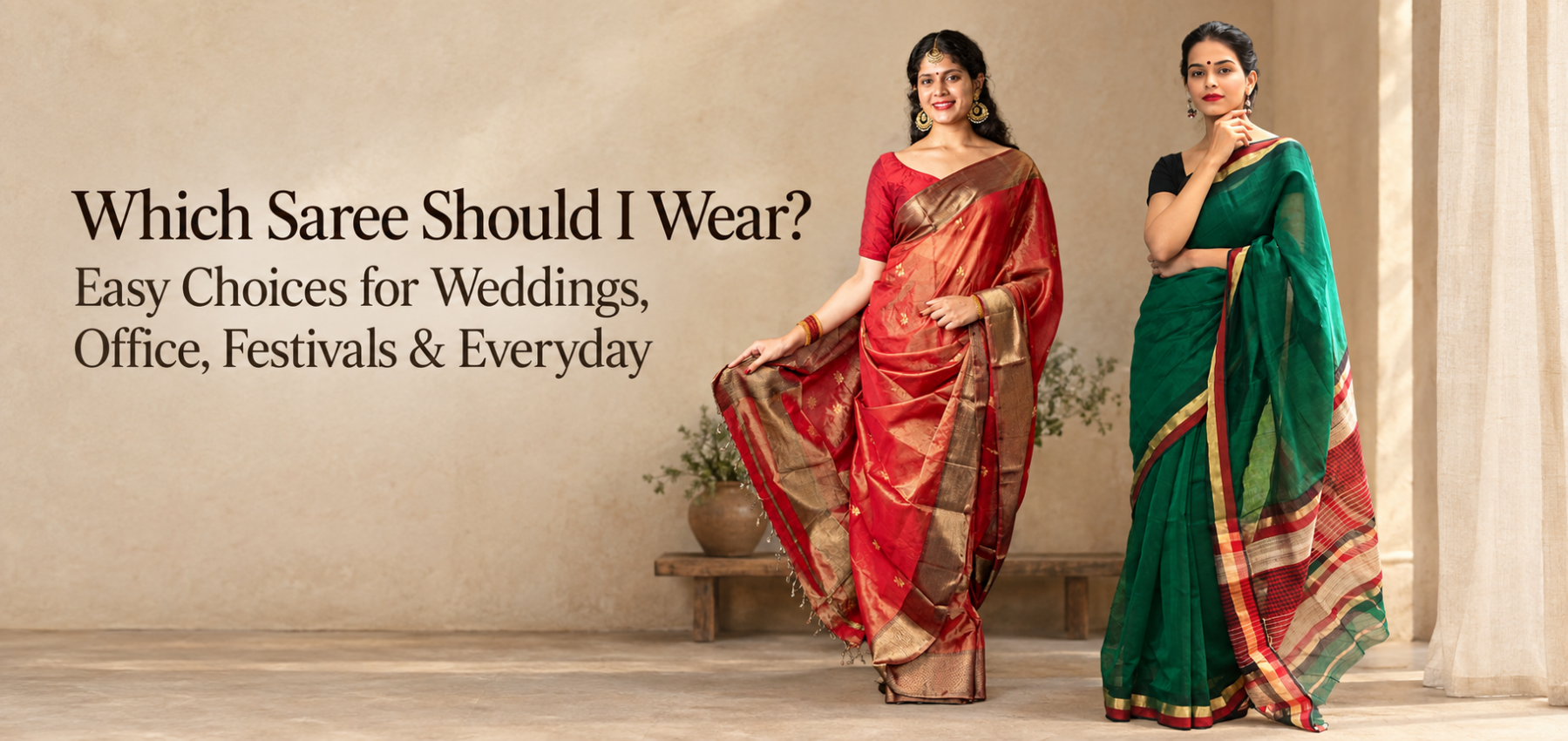
Which Saree Should I Wear? Easy Choices for Weddings, Office, Festivals & Everyday
September 17th, 2026 -
 August 25th, 2026
 -
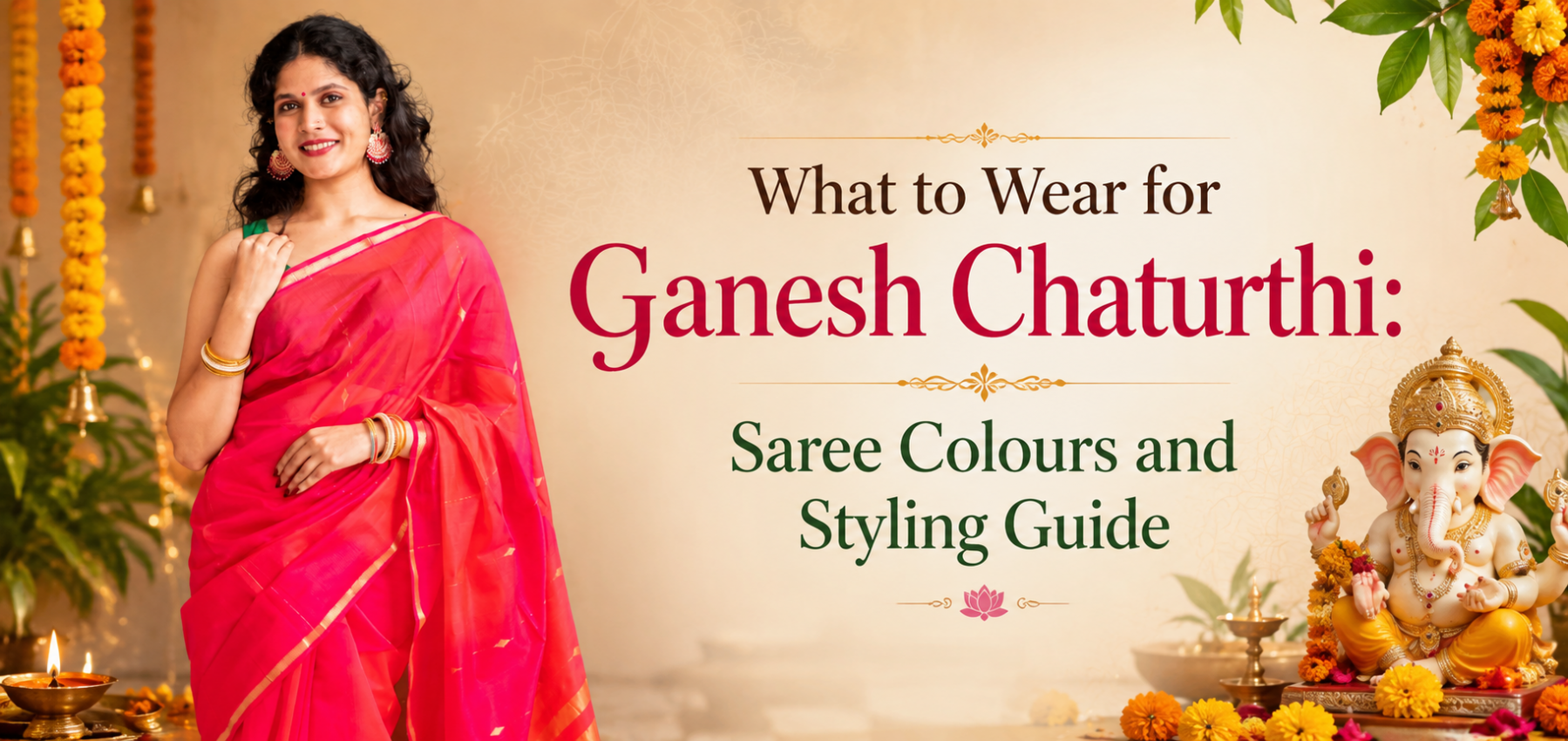
What to Wear for Ganesh Chaturthi: Saree Colours and Styling Guide
August 24th, 2026 -
 August 24th, 2026