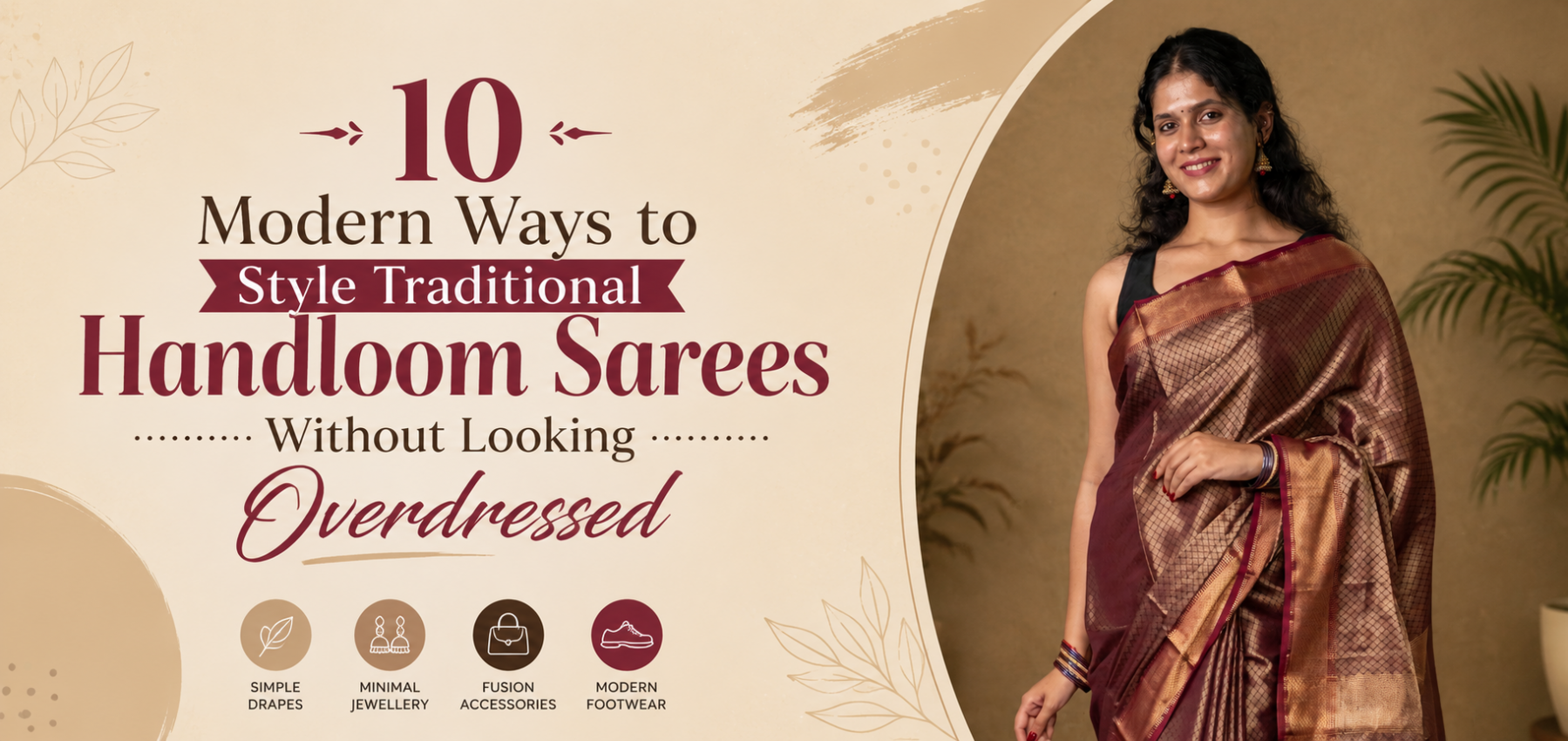
Saree Buying Mistakes You Should Avoid
For the modern Indian woman, a saree is not merely six yards of fabric; it is a canvas of cultural identity and a testament to artisanal skill. Whether you are searching for a bridal masterpiece or a minimalist office staple, the selection process can be overwhelming. In an era of digital saturation and fast-fashion replicas, many shoppers unknowingly fall into traps that result in poor-quality purchases. Understanding the Saree Buying Mistakes You Should Avoid is the first step toward building a sustainable, heritage-rich wardrobe that stands the test of time.
At Thread's Tale, we believe that every purchase should be a mindful investment in craftsmanship. From misjudging fabric purity to ignoring the environmental footprint of production, these errors often stem from a lack of technical knowledge. This guide aims to bridge that gap, providing an in-depth analysis of what to look for—and what to steer clear of—when acquiring your next handloom treasure.
1. The Authenticity Trap: Confusing Powerloom with Handloom
The most frequent error in the current market is failing to distinguish between machine-made powerloom sarees and authentic hand-woven textiles. While powerlooms offer uniformity and lower prices, they lack the soul and structural integrity of a manual weave. If you are browsing for Handcrafted Sarees Online, look for slight irregularities in the weave; these are not flaws, but the "fingerprints" of the artisan.
For instance, a Pure Maheshwari Silk Saree is defined by its unique reversible border and the fine blend of silk and cotton. Powerloom imitations often use synthetic fibers that lack the natural thermal-regulating properties of genuine silk. Always check for certifications like the "Handloom Mark" to ensure your investment supports traditional weaving communities rather than mass-manufacturing units.
2. Prioritizing Aesthetics Over Fabric Breathability
A common Saree Buying Mistakes You Should Avoid is choosing a saree based solely on its visual appeal in a photograph without considering the climate. India’s diverse weather demands fabrics that breathe. Synthetic georgettes and polyesters might look "glamorous" in studio lighting but can be incredibly uncomfortable in the humid Indian summer.
For day-to-day elegance or warm-weather events, Batik Cotton Sarees are an exceptional choice. The wax-resist dyeing process used in Batik allows the natural cotton fibers to remain airy and light. When you choose a Batik Print Cotton Saree, you are opting for a garment that offers skin-friendly comfort while showcasing a sophisticated, artisanal aesthetic that machine prints simply cannot replicate.
3. Ignoring the Drape-ability for Your Body Silhouette
Every fabric has a unique "fall." A frequent mistake is buying a stiff, heavily starched saree when you desire a fluid, body-hugging silhouette. Stiff silks like raw silk or heavy organza add volume to the frame, which may not be the goal for everyone. Conversely, fabrics with a graceful fall, such as Maheshwari Silk Sarees Online, provide a slender appearance that drapes effortlessly over the shoulders.
When selecting your drape, consider the weight. A saree that is too heavy can become a burden during long ceremonies, while one that is too light might not hold pleats securely. Aim for medium-weight fabrics that offer a balance of structure and movement.
4. Misunderstanding the Value of Slow Fashion vs. Trends
The allure of "trending" designs often leads to impulsive purchases of sarees that lose their relevance within a single season. True style lies in timelessness. One of the Saree Buying Mistakes You Should Avoid is neglecting heritage crafts in favor of viral, mass-produced patterns. Heritage techniques like Batik have remained fashionable for centuries because of their organic beauty.
Investing in Batik Print Sarees Online ensures your wardrobe remains classic. These pieces are not just clothes; they are examples of slow fashion that celebrate the human touch. Choosing sustainable, ethically produced sarees from brands that empower artisans is a conscious decision that benefits both your personal style and the planet.
5. Falling for Unrealistic Online Discounts
We often see "Pure Silk" sarees listed at suspiciously low prices on various platforms. It is crucial to remember that the labor-intensive process of hand-weaving and the cost of raw mulberry silk have a baseline price. If a Pure Maheshwari Silk Saree is being sold at the price of a polyester blend, it is a red flag. Cheap replicas often use "tested zari" (which tarnishes quickly) or plastic-based fibers. High-quality handloom is an investment; while the upfront cost is higher, the durability and resale/heirloom value far exceed that of a cheap imitation.
6. Neglecting Occasion Suitability and Lighting
A saree that looks ethereal in a candlelit evening reception might look washed out in bright afternoon sunlight. When shopping, consider where you will wear the garment. Rich jewel tones and metallic zari work are perfect for evening festivities. However, for a brunch or a professional setting, muted tones and earthy prints—like those found in a Batik Print Cotton Saree—provide an understated sophistication that is more appropriate.
7. Overlooking Post-Purchase Care Requirements
Buying the saree is only half the journey; maintaining it is the other. Many shoppers fail to ask about wash-care instructions. Hand-woven textiles often require "Dry Clean Only" to preserve the natural oils in the silk or the vibrancy of natural dyes. Storing a silk saree in plastic covers is another common error; instead, use breathable muslin bags to prevent the fibers from becoming brittle.
The Thread's Tale Checklist for Smart Shopping
- Check the Weave: Look for the natural irregularities of the human hand.
- Verify the Fiber: Ensure the cotton or silk is 100% pure for maximum comfort.
- Assess the Zari: Real zari has a subtle, warm glow; imitation zari is often overly reflective and "brassy."
- Sustainability: Ask if the piece was ethically produced and if it supports local artisans.
- Versatility: Can this saree be styled in multiple ways for different occasions?
Conclusion: Building a Mindful Collection
By keeping these Saree Buying Mistakes You Should Avoid in mind, you shift from being a passive consumer to a conscious curator of Indian heritage. At Thread's Tale, we are committed to providing transparency and authenticity in every weave we offer. Whether it is the rhythmic patterns of Batik or the royal elegance of Maheshwari silk, your saree should be a reflection of your values as much as your taste.
Frequently Asked Questions (FAQs)
1. How can I distinguish between a handloom and powerloom saree online?
Check the reverse side of the saree. In a handloom saree, you will see small thread knots and a slightly uneven finish where the weaver changed threads. Powerloom sarees are perfectly smooth and uniform on both sides. Also, look for the "Handloom Mark" certification provided by reputable sellers.
2. Why are pure silk sarees more expensive than synthetic ones?
Pure silk is a natural protein fiber that takes months to harvest and weave manually. The process involves skilled labor, whereas synthetic silk is mass-produced in factories using chemicals. A pure silk saree is also more durable and stays breathable in all seasons.
3. What makes Batik print sarees unique?
Batik is a manual art involving wax application and multiple dyeing stages. Because the wax "crackles" during the process, no two Batik sarees are ever identical. This individuality makes them a staple for those who appreciate unique, handcrafted fashion.
4. Are Maheshwari sarees suitable for professional wear?
Absolutely. Maheshwari sarees are known for their lightweight nature and sophisticated geometric borders. They provide a polished, elegant look that is comfortable for long hours in an office environment, making them a top choice for professional Indian women.
5. How do I know if the zari in my saree is real?
Real zari is made of silver thread coated with gold. It has a soft, elegant luster and does not turn black quickly. You can check the core of the thread—real zari usually has a silk or cotton core, while fake zari often has a polyester core.
-
Which Saree Should I Wear? Easy Choices for Weddings, Office, Festivals & Everyday
September 17th, 2026 -
 August 25th, 2026
 -
What to Wear for Ganesh Chaturthi: Saree Colours and Styling Guide
August 24th, 2026 -
 August 24th, 2026