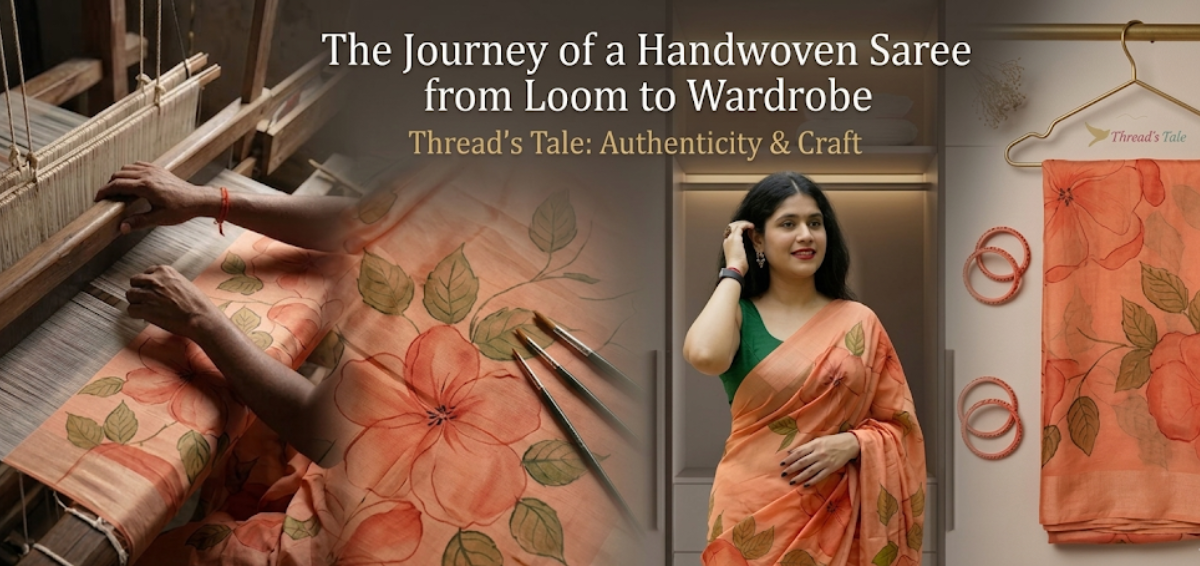
The Journey of a Handwoven Saree from Loom to Wardrobe
India’s handloom tradition represents centuries of craftsmanship, storytelling, and cultural identity. Behind every handwoven saree lies a remarkable process that involves skilled artisans, traditional techniques, and sustainable practices. Understanding the Journey of a Handwoven Saree helps buyers appreciate the time, dedication, and heritage woven into every thread. From selecting raw yarn to the final drape in your wardrobe, the process is detailed, artistic, and deeply rooted in Indian textile culture.
In today’s fast-fashion world, handcrafted sarees stand apart for their authenticity and human touch. Each piece carries the signature of the artisan, subtle variations, and a story that machine-made garments cannot replicate. This blog explores the complete lifecycle of a handwoven saree, offering insights into craftsmanship, sustainability, and the cultural significance of handloom weaving in India.
The Origin of Handwoven Sarees in Indian Textile Heritage
India is home to diverse weaving clusters, each known for its unique fabric, motifs, and techniques. From the looms of Madhya Pradesh to the weaving traditions of Maharashtra, handloom sarees reflect regional craftsmanship and heritage. Artisans often inherit weaving skills through generations, preserving traditional methods that remain unchanged for centuries.
The weaving journey begins in artisan communities where handlooms are not just tools but part of daily life. Families collaborate, with each member contributing to processes such as yarn preparation, dyeing, or weaving. This collective effort ensures that every saree is carefully crafted rather than mass-produced.
Step 1: Sourcing Natural Fibers and Raw Materials
The first stage in the creation of a handwoven saree involves selecting quality raw materials. Depending on the design, artisans may choose cotton, silk, or blended yarns. Natural fibers are preferred for their breathability, durability, and eco-friendly nature.
Many weaving clusters emphasize sustainability by using responsibly sourced fibers. Cotton is often hand-spun, while silk threads are carefully processed to retain their sheen. This step determines the texture, fall, and overall comfort of the final saree.
Importance of Quality Yarn Selection
The choice of yarn influences the final look of the saree. Finer yarn creates lightweight fabrics ideal for daily wear, while thicker yarn produces textured, festive pieces. Artisans evaluate thread strength, dye absorption, and weaving compatibility before beginning the process.
Step 2: Dyeing – Adding Life to Threads
Once the yarn is selected, it undergoes dyeing. Traditional artisans often use natural dyes derived from plants, minerals, and herbs. These eco-conscious methods not only reduce environmental impact but also produce subtle, elegant shades.
Yarn dyeing requires precision. Threads are dipped, washed, and dried multiple times to achieve uniform color. The drying process usually takes place in open spaces, allowing sunlight to naturally set the dye. This stage adds character and uniqueness to each saree.
Step 3: Preparing the Loom for Weaving
Setting up the loom is one of the most time-consuming stages. Artisans arrange warp threads carefully, ensuring uniform tension and alignment. This process can take several hours or even days, depending on the complexity of the design.
The loom setup determines the structure of the saree, including borders, motifs, and pallu design. Traditional wooden looms are still widely used, allowing weavers to maintain control over each thread.
Traditional Handloom Techniques
Different regions use distinct weaving methods. Some involve intricate border patterns, while others focus on lightweight textures. These techniques require manual coordination, rhythm, and years of experience to master.
Step 4: The Art of Hand Weaving
The weaving stage brings the saree to life. The artisan interlaces warp and weft threads using foot pedals and hand movements. Each inch is carefully woven, making the process slow yet precise.
A simple saree may take a few days, while complex designs can take weeks. The artisan’s expertise ensures that patterns align perfectly and the fabric remains consistent. This dedication is what defines handcrafted textiles.
Step 5: Designing Motifs and Borders
Handwoven sarees often feature traditional motifs inspired by nature, architecture, and cultural symbols. These patterns are manually inserted during weaving, requiring focus and skill. Unlike printed designs, handwoven motifs are integrated into the fabric itself.
Borders and pallus receive special attention. They often showcase contrasting colors, geometric patterns, or delicate zari work. These elements enhance the visual appeal of the saree.
Step 6: Finishing and Quality Checks
After weaving is complete, the saree undergoes finishing. Loose threads are trimmed, and the fabric is washed to soften it. Artisans inspect the saree for uniformity, ensuring that the weave is flawless.
This stage also includes ironing and folding. The finishing process enhances drape quality and prepares the saree for packaging.
From Artisan to Market – The Human Connection
Once finished, sarees move from weaving clusters to curated collections. Many brands now support direct artisan sourcing, ensuring fair wages and ethical practices. This approach preserves craftsmanship and strengthens rural livelihoods.
Consumers today increasingly prefer Handcrafted Sarees Online because they offer transparency, authenticity, and convenience. Online platforms help connect buyers directly with traditional artisans.
Journey of a Handwoven Saree into Modern Fashion
The Journey of a Handwoven Saree does not end with weaving. Modern styling has transformed how handloom sarees are worn. They are now paired with contemporary blouses, belts, and fusion accessories. This blend of heritage and modern aesthetics makes handwoven sarees versatile for various occasions.
From office wear to festive celebrations, handcrafted sarees adapt easily to different styles. Their breathable fabrics make them comfortable for Indian weather, further enhancing their appeal.
Sustainability and Slow Fashion Benefits
Handwoven sarees align with slow fashion values. Unlike mass production, handloom weaving uses minimal electricity and produces less waste. Natural dyes and organic fibers reduce environmental impact.
Choosing handcrafted sarees supports sustainable fashion and artisan livelihoods. Each purchase contributes to preserving traditional weaving techniques.
Regional Variations in Handwoven Sarees
India’s diversity is reflected in its handloom textiles. Different regions offer unique textures and weaving styles. Some sarees are lightweight for everyday use, while others feature rich designs for special occasions.
Elegant Traditional Weaves
A Pure Maheshwari Silk Saree is known for its lightweight texture and elegant borders. These sarees combine silk and cotton threads, offering both comfort and sophistication.
Contemporary Handwoven Options
Modern buyers also prefer Batik Cotton Sarees for their artistic prints and breathable fabric. These sarees blend handcrafted dyeing techniques with comfortable cotton material.
The Role of Design Innovation
Designers are experimenting with new color palettes, minimal motifs, and contemporary styling. These innovations attract younger audiences while maintaining traditional weaving techniques.
Artisans collaborate with designers to create unique pieces that reflect evolving fashion trends without compromising authenticity.
Handwoven Sarees for Every Occasion
Handwoven sarees suit various occasions, from daily wear to weddings. Lightweight weaves are ideal for office attire, while richer fabrics are perfect for festive celebrations.
For example, a Handwoven Tissue Saree offers subtle sheen and elegance, making it suitable for special events. Its lightweight structure ensures comfort while maintaining a luxurious look.
The Growing Popularity of Batik Techniques
Batik techniques add artistic charm to handloom sarees. Artisans create intricate patterns using wax-resist dyeing methods. This handcrafted approach ensures each saree is unique.
Buyers exploring Batik Print Sarees Online often appreciate the combination of tradition and artistic expression. These sarees are ideal for casual and semi-formal occasions.
Why Understanding the Journey Matters
Learning about the process helps consumers value craftsmanship. Every step—from yarn selection to finishing—requires patience and expertise. This appreciation encourages mindful purchasing decisions.
The Journey of a Handwoven Saree reflects India’s textile heritage and the dedication of artisans. By choosing handwoven sarees, buyers support sustainable fashion and cultural preservation.
How to Care for Handwoven Sarees
- Store sarees in breathable cotton bags.
- Avoid direct sunlight to preserve colors.
- Dry clean silk-based handwoven sarees.
- Use mild detergent for cotton handloom fabrics.
- Refold periodically to prevent creasing.
Conclusion
From raw yarn to wardrobe, the lifecycle of a handwoven saree is a remarkable blend of artistry, tradition, and sustainability. Each saree carries the essence of skilled craftsmanship and cultural heritage. By understanding the journey, consumers can make informed choices and celebrate authentic Indian textiles. Handwoven sarees are not just garments—they are timeless pieces of art that connect generations and preserve traditions.
FAQs
1. What makes handwoven sarees different from machine-made sarees?
Handwoven sarees are crafted manually on looms, ensuring unique textures and slight variations. Machine-made sarees are mass-produced and lack the individual character of handcrafted textiles.
2. How long does it take to create a handwoven saree?
Depending on design complexity, weaving a handwoven saree can take anywhere from a few days to several weeks.
3. Are handwoven sarees sustainable?
Yes, handwoven sarees use minimal electricity, natural fibers, and eco-friendly dyeing techniques, making them sustainable.
4. Can handwoven sarees be worn daily?
Lightweight cotton handwoven sarees are ideal for daily wear due to their breathable and comfortable fabric.
5. How should I maintain my handwoven saree?
Proper storage, gentle cleaning, and avoiding direct sunlight help preserve the quality and longevity of handwoven sarees.
-
Which Saree Should I Wear? Easy Choices for Weddings, Office, Festivals & Everyday
September 17th, 2026 -
 August 25th, 2026
 -
What to Wear for Ganesh Chaturthi: Saree Colours and Styling Guide
August 24th, 2026 -
 August 24th, 2026