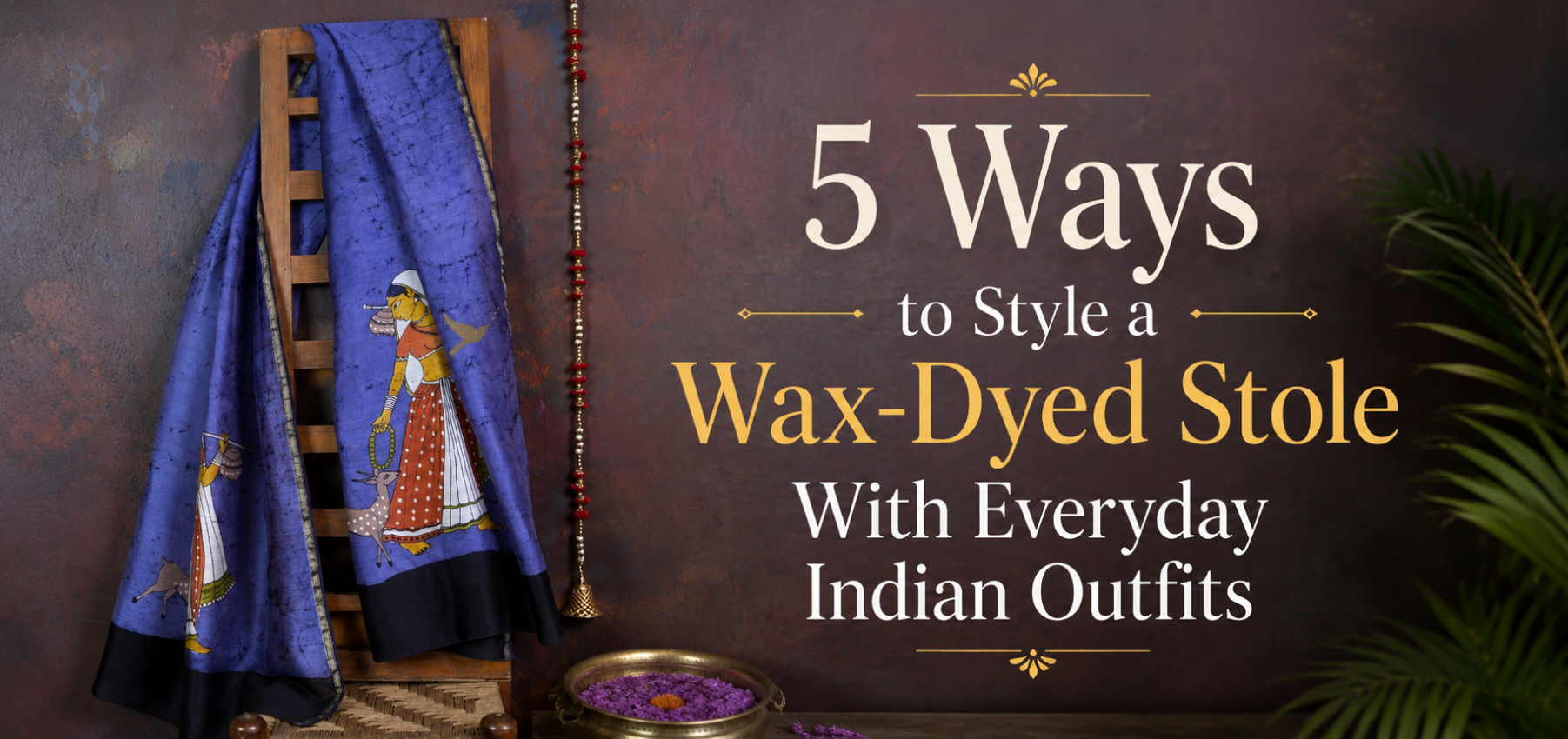
5 Ways to Style a Wax-Dyed Stole With Everyday Indian Outfits
Quick Answer: A wax-dyed stole can be styled as a dupatta over a kurta, a cape over a suit, a sash at the waist, a scarf for office wear, or a statement wrap for festive occasions — each method transforming the same piece into a completely different look.
There is something quietly extraordinary about a wax-dyed stole. Its patterns are not printed by a machine or stamped by a block — they are born from a centuries-old resist-dyeing process where molten wax is hand-applied to fabric, creating organic, unpredictable motifs that a factory simply cannot replicate. In India, this tradition lives on through the hands of skilled artisans, and the result is a textile that carries both beauty and story.
Yet many women who own a handcrafted stole find themselves unsure of how to wear it beyond draping it loosely over the shoulders. That is a style opportunity missed. A well-chosen wax-dyed stole is, in fact, one of the most versatile pieces in an Indian wardrobe — capable of dressing up a casual kurta or adding warmth and texture to a formal ensemble. This guide covers five practical, everyday ways to style one, with outfit pairings grounded in the Indian context.
What Makes a Wax-Dyed Stole Different From Other Handcrafted Drapes?
Before diving into styling, it helps to understand what sets a wax-dyed stole apart from other Indian drapes. The technique — known internationally as batik — involves applying hot wax to selected areas of fabric so that when the cloth is submerged in dye, the waxed areas resist the colour. The result is the characteristic crackle lines, fluid boundaries, and earthy tonal depth that define batik-style textiles.
This is fundamentally different from block printing (where a carved wooden block stamps colour onto fabric) or screen printing (a purely mechanical process). Each wax-dyed stole is, in the truest sense, a one-of-a-kind piece. Small inconsistencies in pattern, slight colour variations from batch to batch — these are not flaws. They are evidence of the human hand.
In India, this craft has regional interpretations. You will find wax-resist traditions in West Bengal, Odisha, Rajasthan, and across tribal textile belts. Fabrics commonly used include cotton (for breathability in India's warm climate), silk (for a richer drape and sheen), and blends like Chanderi that offer both lightness and a subtle lustre. Understanding this helps when choosing a stole and pairing it with the right outfit.
5 Fashionable Ways to Pair a Wax-Dyed Stole with Ethnic Outfits
The most natural way to use a wax-dyed stole is as a dupatta — and it works beautifully because a stole's length and width are similar to many lightweight dupattas. If you typically reach for a batik print dupatta to complete your kurta look, a wax-dyed stole in the same earthy colour palette offers an even more distinctive finish.
For a straight-cut or A-line kurta in a solid colour — particularly neutrals like off-white, mustard, terracotta, or sage green — drape the stole diagonally from the left shoulder across the body and pin it lightly at the hip with a brooch or knotted at the end. The organic wax patterns add visual interest without competing with embroidered or mirror-work kurtas.
Best Outfit Combinations
- Solid cotton or khadi kurta + churidar or palazzo + wax-dyed stole as dupatta
- White angrakha kurta + dhoti pant + earthy-toned wax-dyed stole
- Block-print kurta (complementary tones) + slim trousers + wax-dyed stole loosely pinned
Styling Tip: Match at least one colour in the stole's palette to a colour in your kurta. This creates cohesion without making the ensemble look overly coordinated.
Wear It as an Open Cape or Shrug Over a Suit
One of the most effortlessly elegant ways to style a wax-dyed stole is to wear it as an open cape draped over a churidar suit or salwar kameez. This works especially well with stoles that are wider and have a structured drape — silk-base or Chanderi-base wax-dyed stoles are particularly suited to this styling.
Simply place the stole evenly over both shoulders, letting it hang open at the front like a shrug. The stole's length — typically 180–200 cm — means it falls gracefully to the mid-thigh or knee, creating a cape-like silhouette. This style elevates an everyday printed suit into something that looks deliberate and refined without requiring any additional effort.
For those who appreciate the artistry of a chanderi silk dupatta, a Chanderi-base wax-dyed stole worn as a cape gives you the same lightweight, breathable luxury — with the added distinction of artisan wax-resist patterns.
Best Outfit Combinations
- Embroidered suit + wax-dyed silk stole as cape (for festive afternoon functions)
- Plain georgette kurta + cigarette pants + stole as cape for corporate ethnic days
- Anarkali suit without dupatta + wax-dyed stole for a modern silhouette
Styling Tip: Use a slim belt or waist chain over the stole to cinch it at the waist — this transforms it from a flowing cape into a structured layering piece and defines the silhouette.
Tie It as a Waist Sash or Belt With Ethnic Separates
This is a lesser-known but highly effective styling method, especially for those who wear ethnic separates — kurta tops with flared skirts, ikat-weave palazzos, or printed long skirts. Fold the wax-dyed stole lengthwise into a band of about 8–10 cm width, then wrap it around the waist and tie it in a loose knot or bow at the front, letting the ends hang down.
Because wax-dyed textiles tend to have a tactile, slightly stiff drape (especially on cotton), they hold this wrapped form well without going limp. The result is a beautifully textured waist accent that adds colour and pattern to an otherwise minimalist outfit.
This styling works particularly well for festive daytime events — think Navratri, Diwali get-togethers, or casual wedding functions — where you want to look dressed up without being overdressed.
Best Outfit Combinations
- Solid cotton top + flared cotton skirt + wax-dyed stole as waist sash
- Embroidered blouse + ethnic palazzo + stole tied at the waist as a statement belt
- Long kurta top + leggings + stole looped and knotted at the hip for asymmetric detail
Styling Tip: Choose a stole with a contrasting colour to your outfit when wearing it as a sash — the contrast makes it a focal point rather than blending into the background.
Use It as a Sophisticated Office Scarf With Formal Ethnic Wear
India's workplaces are increasingly embracing ethnic wear — from formal salwar suits and cotton kurtas to linen coord sets and handloom sarees. In this context, a wax-dyed stole worn as a scarf adds a quiet, confident elegance that communicates both professionalism and cultural awareness.
Fold the stole into thirds lengthwise so it is narrow enough to drape around the neck like a scarf. You can tie it in a loose knot at the throat, loop it once and let both ends fall forward, or drape it asymmetrically over one shoulder. This method works especially well with cotton or maheshwari silk dupatta-weight stoles — pieces that are fine enough to drape close to the neck without feeling bulky.
In terms of colour, opt for wax-dyed stoles with muted, sophisticated palettes for the office — deep indigos, teal and rust combinations, or ochre and brown — rather than bright festival tones. These read as refined and intentional in professional settings.
Best Outfit Combinations
- Formal linen kurta + straight trousers + wax-dyed stole as neck scarf
- Cotton handloom saree + wax-dyed stole draped over the shoulder instead of a traditional blouse pin
- Khadi coord set + stole looped around the neck for a textured, layered look
Styling Tip: Keep jewellery minimal when using the stole as a scarf — the stole itself is the statement. A pair of small gold studs or a slim watch is all you need.
Drape It as a Statement Wrap for Festive and Wedding Events
For festive occasions — wedding functions, pujas, family celebrations, or cultural events — a wax-dyed stole worn as a full-length wrap or shawl becomes the centrepiece of your look. The key here is choosing the right stole: a silk-base or blend wax-dyed stole with rich, jewel-toned hues and intricate patterns delivers the visual impact required for a festive setting.
Drape the stole over one shoulder and across the front of the body, tucking one end lightly into the waist of your lehenga, saree petticoat, or churidar. Let the other end fall loosely or pin it with an antique brooch for a more formal arrangement. This draping style works beautifully over a heavily embroidered blouse-and-lehenga combination, where the stole adds a layer of heritage to an already rich ensemble.
You can also pair a handwoven dupatta with an ethnic suit for the base and layer the wax-dyed stole on top as a second drape — a styling technique popular at festive gatherings where layering textiles creates depth and visual richness.
Best Outfit Combinations
- Embroidered lehenga + wax-dyed silk stole draped over one shoulder for sangeet or mehndi
- Heavy silk saree + wax-dyed stole over the pallu shoulder for a layered traditional look
- Anarkali gown + wax-dyed stole as a formal shawl for winter wedding functions
Styling Tip: Anchor the stole at the waist with a statement piece — a kamarband, a wide embroidered belt, or a decorative pin — to prevent it from slipping while you move through a long event.
Choosing the Right Wax-Dyed Stole for Each Styling Method
Not all wax-dyed stoles are the same. The fabric base, weight, and size determine which styling methods will work best. Here is a quick reference guide:
Fabric Base | Best For | Ideal Occasion |
Cotton wax-dyed stole | Waist sash, dupatta draping, scarf | Daily wear, office, casual gatherings |
Daily wear, office, casual gatherings | Cape, festive wrap, statement shoulder drape | Weddings, festivals, formal events |
Chanderi-base stole | Cape, dupatta, scarf | All-occasion — breathable yet refined |
Cotton-silk blend stole | All five styling methods | Versatile — casual to semi-formal |
How to Care for Your Handcrafted Stole at Home
A wax-dyed stole is an investment in artisan craft, and it deserves proper care. Here are the key guidelines for maintaining one at home in India's varied climate conditions:
A Final Word on Dressing With Intention
The stole is one of India's most underrated wardrobe pieces. It travels easily, stores flat, suits every body type, and adapts to every occasion — from a busy workday to a wedding celebration. When that stole is handcrafted by an artisan using a centuries-old wax-resist technique, it becomes something more: a quiet act of cultural participation and a daily reminder that beautiful things take time and skill to make.
The five styling methods covered here are starting points. Once you begin experimenting with a wax-dyed stole, you will likely discover combinations unique to your wardrobe and personal aesthetic. That is, after all, the point of handcrafted textiles — they are made by individuals, and they are best enjoyed by individuals who bring their own creativity to how they are worn.
Frequently Asked Questions About Styling and Caring for a Wax-Dyed Stole
What is a wax-dyed stole and how is it different from a regular stole?
A wax-dyed stole is crafted using a resist-dyeing technique where hot wax is applied to fabric before dyeing, creating unique patterns that cannot be replicated by machines. Unlike printed stoles, each wax-dyed stole carries organic, one-of-a-kind motifs — a hallmark of authentic Indian artisan craftsmanship. The process is the same ancient method behind batik textiles, practised across parts of West Bengal, Odisha, and Rajasthan.
Can a wax-dyed stole be worn with western outfits too?
Absolutely. A wax-dyed stole pairs beautifully with denim jeans and a solid-colour top, a linen shirt dress, or even a white tee. Drape it loosely over one shoulder or tie it loosely around the neck for a relaxed, bohemian look. The earthy tones and organic patterns of wax-dyed textiles complement western silhouettes just as effortlessly as Indian ethnic wear.
How should I wash and care for a wax-dyed stole at home?
Always hand wash a wax-dyed stole in cold water using a mild, pH-neutral detergent. Avoid wringing or machine washing, as this can loosen wax bonds and fade the dye. Dry it in shade — never under direct sunlight — to preserve the depth of colour. Iron on a low setting from the reverse side to protect the surface patterns.
Which fabric is best for a wax-dyed stole — cotton, silk, or Chanderi?
Each fabric offers a different feel and serves a different purpose. Cotton wax-dyed stoles are breathable and ideal for daily use, especially in India's warm climate. Silk versions carry a rich sheen and feel more festive. A Chanderi-base wax-dyed stole combines lightness with a subtle lustre, making it versatile for both everyday draping and special occasions. For a general-purpose piece, a cotton-silk blend gives you the best of both worlds.
Where can I buy authentic handcrafted wax-dyed stoles online in India?
Thread's Tale offers a curated collection of handcrafted stoles made by skilled Indian artisans using traditional dyeing and weaving techniques. Each piece is ethically produced, sustainably sourced, and unique — a wearable expression of India's textile heritage, available with free shipping and secure payment options.
-
Which Saree Should I Wear? Easy Choices for Weddings, Office, Festivals & Everyday
September 17th, 2026 -
 August 25th, 2026
 -
What to Wear for Ganesh Chaturthi: Saree Colours and Styling Guide
August 24th, 2026 -
 August 24th, 2026