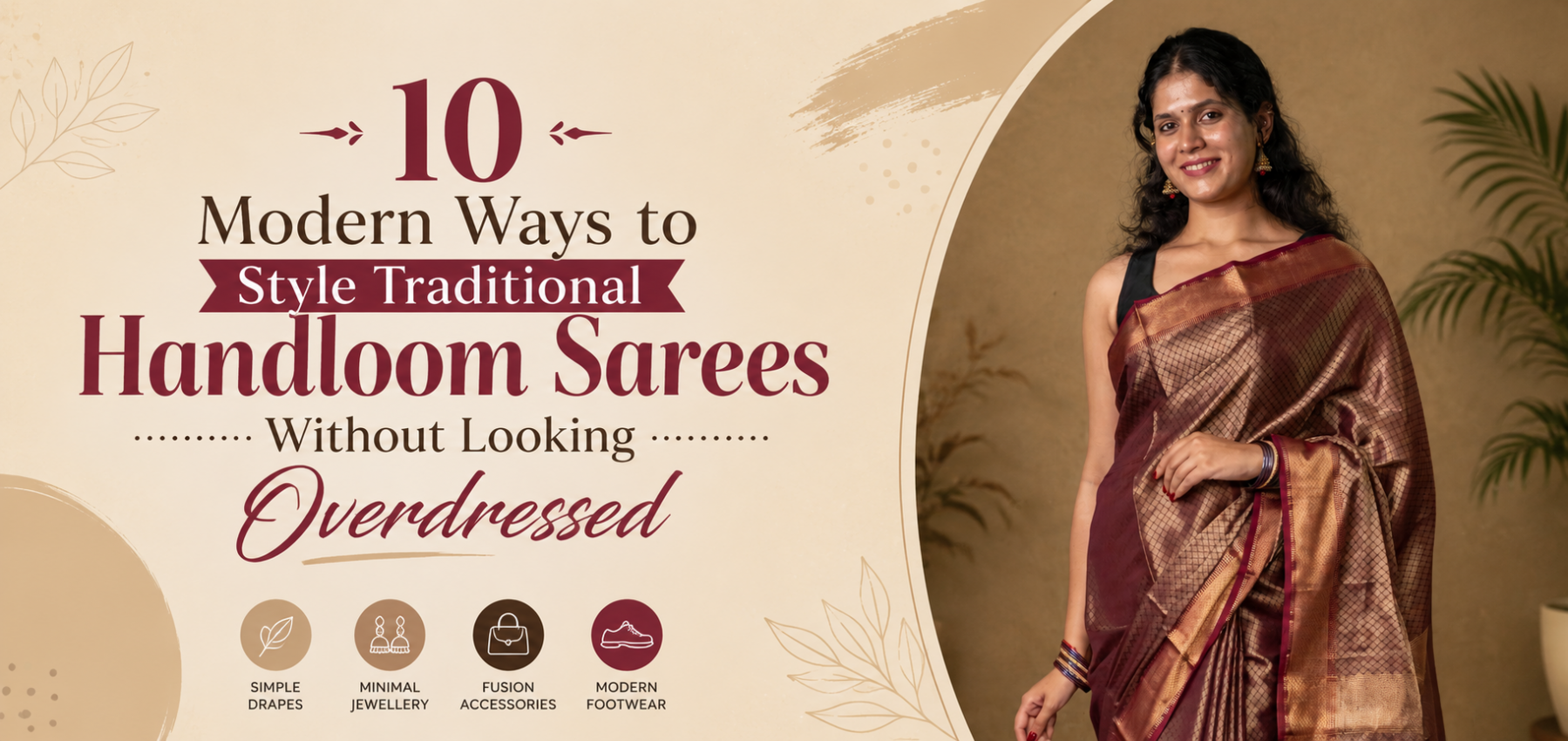
A Woman's Guide to Building a Versatile Saree Wardrobe
For most Indian women, a saree collection grows slowly and unevenly — a wedding gift here, a festival purchase there, an impulse buy that looked stunning in the store but never quite found an occasion at home. Years later, the cupboard is full, yet getting dressed still feels difficult. A genuinely versatile saree wardrobe is not about owning more sarees; it is about owning the right mix of weaves and weights that can carry a woman from a Monday morning meeting to a Saturday wedding without a single gap in her closet. This guide breaks that idea down practically, fabric by fabric and occasion by occasion, so the next saree added to the collection actually earns its place.
What Makes a Saree Collection Truly Functional
A saree wardrobe earns the word "functional" when every piece in it has a clear purpose, rather than existing as a one-time impulse buy. Functionality has less to do with how many sarees are folded away in a cupboard and far more to do with how well those sarees match the actual rhythm of a woman's week, month and festive calendar.
Fabric Diversity Matters More Than Fabric Quantity
Owning twenty silk sarees offers little help on a Tuesday morning when what is needed is something light and breathable for a full day at a desk. A functional collection spans several weights at once — crisp cotton for daytime, mid-weight tissue or silk-cotton blends for semi-formal evenings, and richer silk weaves reserved for celebrations. Variety in fabric, not volume in number, is what creates real versatility.
Reading Personal Lifestyle Before Adding Anything New
Before the next saree is added to a collection, it helps to glance honestly at the calendar ahead — how many office days call for ethnic wear, how many family functions are likely this year, how many weddings are already on the cards. Shopping against that real calendar, rather than against a passing trend or a sale notification, naturally builds a wardrobe with far fewer unused pieces.
The Fabric Edit Every Saree Collection Should Start With
Once lifestyle and occasions are mapped out, the easiest way to begin is by anchoring the wardrobe around three fabric categories that together cover almost every situation an Indian woman dresses for.
Breathable Cotton and Batik Weaves for Daily Wear
Hand block and wax-resist techniques used to create batik cotton sarees give each drape a one-of-a-kind pattern while keeping the fabric light enough to wear comfortably through a full working day. Anyone exploring this category for the first time will find that browsing batik print sarees online makes it far easier to compare prints, colourways and weights side by side before settling on the pieces that suit a daily rotation best.
Tissue and Silk Weaves for Festive Days
A handwoven tissue saree brings a soft metallic sheen and an almost weightless drape, which is exactly why it photographs beautifully for festive gatherings without leaving the wearer exhausted by the end of a long evening. This is the category to lean on for Diwali, Karva Chauth, or any celebration that calls for a little extra shimmer without sacrificing comfort.
Chanderi and Zari Borders for the In-Between Occasions
Not every event is purely casual or purely festive, and that is precisely where a chanderi silk saree with zari border earns its place. It is dressy enough for a cocktail evening or a reception, yet light enough that it never feels like a costume. Keeping at least one such saree in rotation closes the gap between everyday cottons and heavier bridal silks.
Mapping Sarees to the Occasions on Your Calendar
A practical way to test whether a wardrobe is genuinely versatile is to walk through a typical year and check whether every type of event already has a saree waiting for it.
Office and Daytime Events
A well-chosen formal saree for office wear should be easy to drape quickly, comfortable across long meetings, and forgiving of a full day of sitting, walking and travelling. Muted colours, minimal embellishment and breathable handloom cotton tend to work hardest here.
Weddings and Festive Functions
Wedding season calls for a slightly different wardrobe logic, since the same outfit is often worn across multiple events in a single week. Building a small edit of modern sarees for wedding functions — think haldi, sangeet and reception — means there is always something appropriate without last-minute shopping under pressure.
Family Gatherings and Everyday Pujas
For smaller, more frequent occasions such as a family puja or a relative's visit, lighter silks and simple cottons strike the right balance — festive enough to feel appropriate, yet relaxed enough not to feel overdressed.
How Many Sarees Are Actually Enough
A Practical Starting Number
Most women do not need an overflowing cupboard to feel prepared. Six to eight thoughtfully chosen sarees — spanning cotton, tissue, Chanderi and silk — usually cover an entire season of office days, festive functions and weddings without repeating the same look twice in front of the same people.
Why Quality Outlasts Quantity
Handloom sarees, when cared for correctly, can comfortably last a decade or more, which makes them a stronger long-term investment than a larger number of mass-produced pieces bought purely for novelty. A smaller, well-chosen saree collection ends up costing less per wear over time, while also supporting the weavers who craft each piece by hand.
Styling Tricks That Multiply What You Already Own
One Saree, Three Looks Through Blouse and Drape Changes
The same saree can move between a formal office event, a casual lunch and a festive evening simply by changing the blouse or adjusting the drape style — a tucked-in pallu for work, a fuller traditional drape for a celebration.
Quick Tip
Keep one plain, well-tailored blouse and one heavily embellished blouse on hand. Pairing either one with the same saree instantly changes how formal or festive the outfit feels.
Accessorising Up or Down for Different Settings
Minimal gold studs and a sleek bun keep a saree office-appropriate, while statement jhumkas, a bindi and loose waves can transform the very same drape into an evening-ready look within minutes.
Caring for Handloom Sarees So They Last for Years
Storage Habits That Protect the Fabric
Handloom textiles, particularly silk and tissue weaves, respond poorly to plastic covers and prolonged sunlight, both of which weaken fibres and fade natural dyes over time.
Fold, Wrap and Rotate
Wrap each saree in soft muslin or cotton cloth rather than plastic, store it away from direct sunlight, and refold it along slightly different lines every few months to prevent permanent creasing along the same fold.
Washing and Maintenance Basics
Silk and tissue sarees generally need professional dry cleaning, while cotton and batik weaves can usually be hand washed gently at home in cold water.
A Simple At-Home Care Routine
Hand wash cotton sarees in cold water with a mild detergent, avoid wringing the fabric, dry it flat in the shade, and iron on a low setting while the fabric is still slightly damp for the best finish.
Building Your Saree Wardrobe Step by Step
Step One: Audit What Already Exists
Lay out every saree currently owned and sort them by fabric weight and occasion, rather than by colour. This usually reveals which categories are already well covered and which are missing entirely.
Step Two: Identify the Real Gaps
Most wardrobes lean heavily toward either very casual or very festive pieces, with almost nothing in between for semi-formal events. That middle ground is usually the first gap worth filling.
Step Three: Buy One Fabric Category at a Time
Rather than buying several sarees at once in a single shopping trip, adding one new fabric category every few months keeps the wardrobe balanced and prevents unnecessary duplication.
Step Four: Reassess Once a Year
Lifestyles change — a new job, a wedding season, a shift in climate after relocating — and revisiting the wardrobe once a year keeps it aligned with how life actually looks now, not how it looked when the last saree was bought.
Wearing the Wardrobe You Build
Building a versatile saree wardrobe is less about a single big shopping trip and more about a slow, deliberate process of filling real gaps with pieces that genuinely earn their place in the cupboard. Each handwoven fabric, from cotton and batik to tissue, Chanderi and silk, plays its own role across a woman's calendar — and once that balance is in place, getting dressed stops being a daily struggle and starts feeling like second nature.
Frequently Asked Questions
How many sarees do I need to build a versatile wardrobe?
Six to eight sarees spread across cotton, tissue, Chanderi and silk are usually enough to cover office days, festive functions and weddings without repeating the same look twice in a season.
Which saree fabric is best for everyday office wear?
Cotton and batik weaves work best for daily office wear because they are breathable, low-maintenance and drape comfortably through a long working day without needing constant adjustment.
What is the difference between a handwoven saree and a printed saree?
A handwoven saree is created on a handloom by a weaver, with the pattern built directly into the weave of the fabric, while a printed saree has a design applied on top of an already-finished cloth, typically by machine.
Can one saree be styled differently for multiple occasions?
Yes. Changing the blouse, the draping style or the accessories on the same saree can shift it from an office-appropriate look to a festive evening outfit without any new purchase.
How should handloom sarees be stored to make them last longer?
Handloom sarees last longer when folded along soft lines, wrapped in muslin or cotton cloth instead of plastic, kept away from direct sunlight, and refolded every few months to avoid permanent creasing.
-
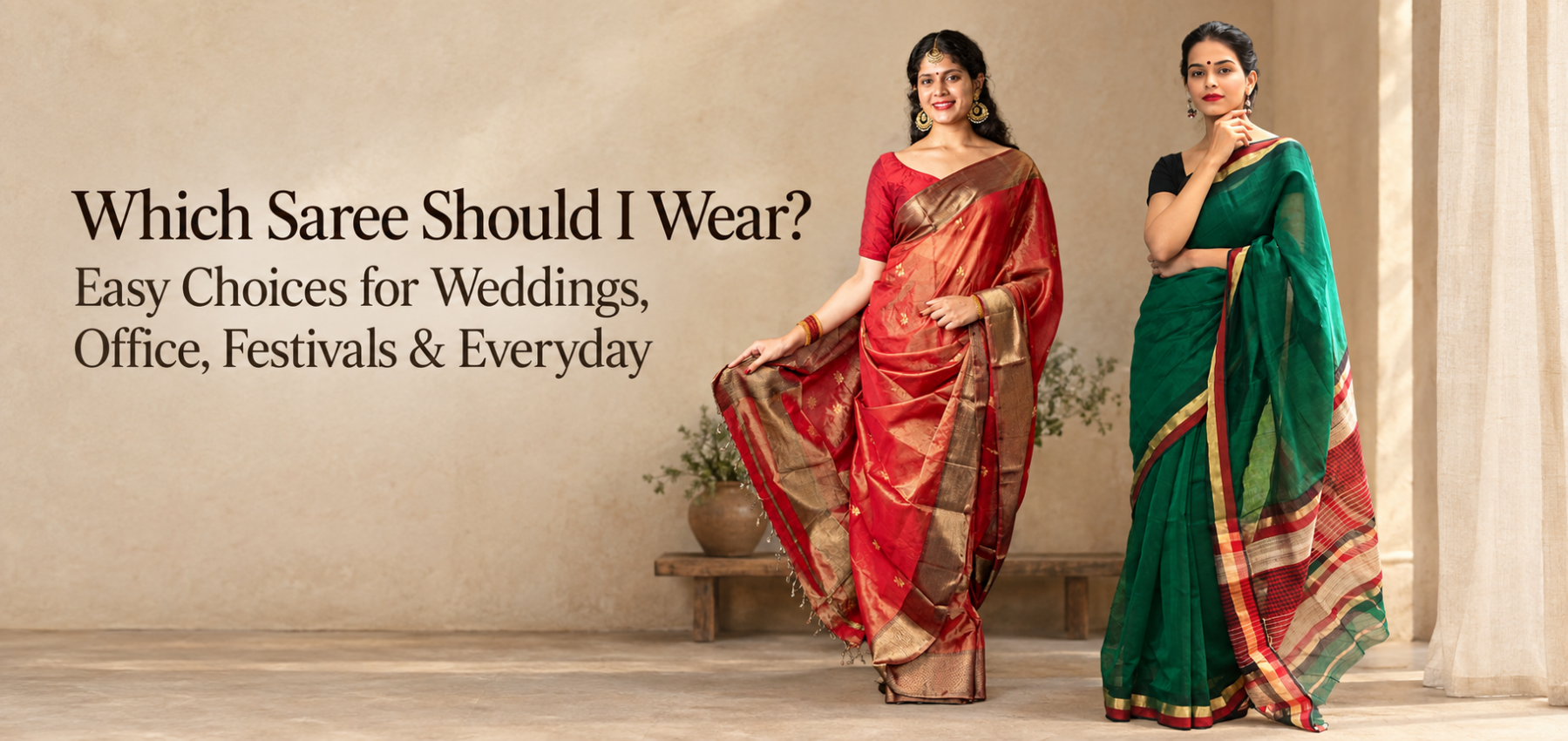
Which Saree Should I Wear? Easy Choices for Weddings, Office, Festivals & Everyday
September 17th, 2026 -
 August 25th, 2026
 -
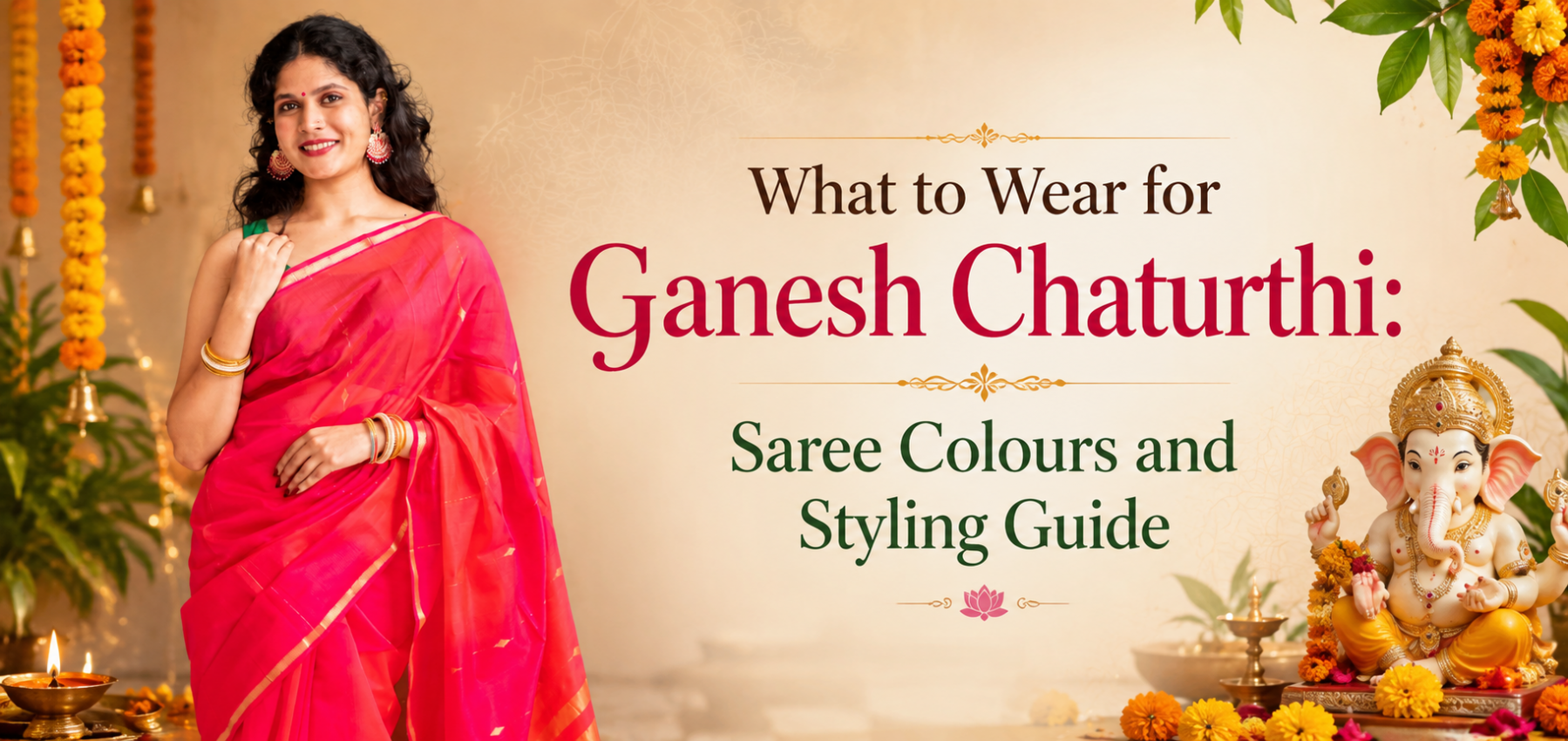
What to Wear for Ganesh Chaturthi: Saree Colours and Styling Guide
August 24th, 2026 -
 August 24th, 2026