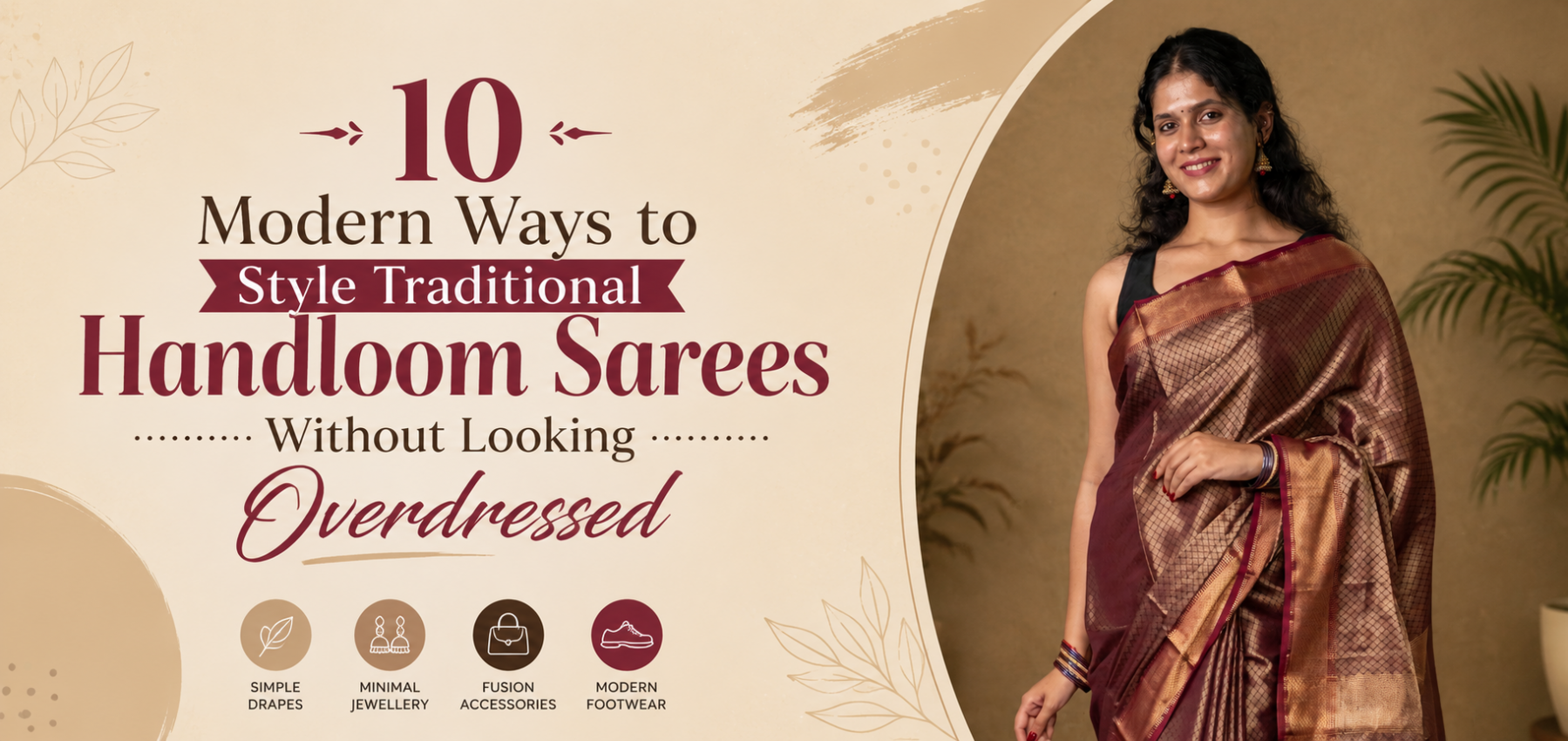
India's 10 Most Iconic Handloom Weaves — Ranked by Occasion, Comfort & Investment Value
India's handloom tradition is not just a craft — it is a living archive. Passed down across generations of weavers in small towns and heritage clusters, each weave carries a distinct identity shaped by geography, community, and centuries of refinement. But with so many regional weaves to choose from, deciding which one to wear — or invest in — can feel overwhelming.
This guide ranks India's ten most iconic handloom weaves across three practical dimensions: the occasions they suit best, how comfortable they are to wear through India's varied seasons, and their long-term value as textile investments. Whether you are dressing for a corporate meeting, a wedding mandap, or a casual festival afternoon, this breakdown will help you choose wisely — and wear with intention.
1. Banarasi Silk — The Gold Standard of Indian Weaving
Best For: Weddings, grand celebrations, gifting
Comfort Level: Moderate — heavier drape, best suited to cooler months
Investment Value: ★★★★★
Woven in Varanasi, Uttar Pradesh, Banarasi silk is among the most recognisable weaves in the world. Its defining feature is intricate zari (gold or silver thread) work — typically depicting floral jaal patterns, Mughal-inspired motifs, or paisley buta designs. A genuine Banarasi can take anywhere from 15 days to six months to complete, depending on complexity.
As an investment, few sarees rival a pure Banarasi. It carries a Geographical Indication (GI) tag, retains value across decades, and is routinely passed from mother to daughter as an heirloom. If you are seeking premium handloom sarees that double as long-term assets, Banarasi silk deserves the top of your list.
2. Kanjeevaram Silk — South India's Temple Weave
Best For: Weddings, religious ceremonies, engagement functions
Comfort Level: Moderate — substantial weight requires practice in draping
Investment Value: ★★★★★
Woven in Kanchipuram, Tamil Nadu, Kanjeevaram silk (also spelled Kanjivaram) is distinguished by its bold contrast borders, rich solid-colour bodies, and temple-inspired motifs woven in pure mulberry silk. The warp and weft of the border are interlocked, not stitched — a technique that makes the fabric extraordinarily durable.
Kanjeevaram sarees are the ceremonial backbone of South Indian weddings and remain one of the safest textile investments in the country. Their durability and cultural prestige mean they rarely depreciate in perceived or monetary value.
3. Maheshwari Silk — The Everyday Luxury from Madhya Pradesh
Best For: Office wear, light festive events, casual outings, gifting
Comfort Level: ★★★★★ — exceptionally light and breathable
Investment Value: ★★★★☆
Woven on the banks of the Narmada river in Maheshwar, Madhya Pradesh, maheshwari silk sarees online have emerged as a favourite among urban Indian women who want handloom elegance without the heaviness of a Banarasi or Kanjeevaram. The weave alternates between silk and cotton in the warp and weft, producing a fabric that is soft, reversible, and remarkably easy to care for.
Its signature five-stripe border and distinctive pallu design make it instantly identifiable. For working women who wear sarees regularly, a Maheshwari silk offers daily luxury at a practical weight — it drapes effortlessly, breathes well, and looks polished in both professional and festive settings.
4. Chanderi Silk — Sheer Elegance from the Heart of India
Best For: Festive mornings, puja occasions, summer gatherings
Comfort Level: ★★★★★ — gossamer light, ideal for warm weather
Investment Value: ★★★★☆
Chanderi, a small town in Madhya Pradesh, produces one of India's most ethereal handloom fabrics. Chanderi sarees are woven using a combination of silk and cotton (or pure silk), resulting in a semi-transparent, almost floating texture. The fabric is characterised by its characteristic small bootis (woven motifs), delicate zari borders, and an unmistakable sheen that catches light beautifully.
Chanderi sarees are the go-to choice for warm Indian mornings, festive brunches, and summer celebrations where heavier silks would feel suffocating. They are also increasingly popular as bridal trousseau additions — worn at mehendi and haldi functions where lightness and beauty both matter.
5. Batik Print Cotton — Where Craft Meets Casual Chic
Best For: Casual outings, college wear, light festivals, travel
Comfort Level: ★★★★★ — pure cotton, breathes exceptionally in Indian heat
Investment Value: ★★★☆☆
While not a loom-woven textile in the traditional sense, batik print cotton saree designs are a significant part of India's handcraft heritage. The batik technique — using wax-resist dyeing on cotton fabric — produces bold, organic patterns with a characteristic crackle effect that no digital print can replicate.
Indian batik sarees are increasingly sought after by younger women who want sarees that feel relaxed, washable, and expressive. They work beautifully for daytime events, travel, and creative workplaces — and their affordability makes them highly accessible entry points into handcrafted ethnic wear.
Discover the full range of indian batik sarees to explore how this craft tradition translates into contemporary draping styles.
6. Tissue Silk — The Weave That Glows
Best For: Weddings, receptions, evening events, festive photography
Comfort Level: ★★★☆☆ — beautiful but requires careful handling
Investment Value: ★★★★☆
Tissue fabric is woven using a combination of silk and metallic (gold or silver) threads, producing a sheer, luminous fabric that seems to glow from within. The result is a handwoven tissue saree that is visually spectacular — ideal for evening celebrations and wedding functions where the play of light on fabric creates a natural grandeur.
Tissue sarees are particularly beloved in North and Central India for their ability to look rich without the dense weight of a full Banarasi or Kanjeevaram. They photograph brilliantly, drape with a flowing quality, and pair well with minimal jewellery — letting the fabric do the talking.
7. Pochampally Ikat — Geometry Woven Before Dyeing
Best For: Festive occasions, cultural events, everyday elegance
Comfort Level: ★★★★☆ — comfortable, medium weight
Investment Value: ★★★★☆
Pochampally Ikat, woven in Bhoodan Pochampally village in Telangana, holds the distinction of being a UNESCO Geographical Indication craft. What makes ikat extraordinary is its dyeing method — the yarn is resist-dyed in precise patterns before weaving begins, so the final motif only becomes visible once the fabric comes off the loom. This is a deeply skilled process that demands mathematical precision from the weaver.
Pochampally sarees typically feature bold geometric patterns in vibrant colour combinations. They work well for festive occasions, art-forward cultural events, and everyday office wear when styled with contemporary blouses. Their GI status and growing international recognition make them a sound collector's choice.
8. Sambalpuri Silk — Odisha's Pride
Best For: Cultural events, regional festivals, formal gatherings
Comfort Level: ★★★★☆ — smooth, medium-weight drape
Investment Value: ★★★★☆
Woven in the Sambalpur region of Odisha, Sambalpuri sarees are defined by their single-ikat or double-ikat weave, featuring traditional motifs like shankha (conch), chakra (wheel), phula (flower), and deer. Like Pochampally, the patterns are created through yarn dyeing before weaving — but Sambalpuri weaves carry a distinctly Odishan visual vocabulary.
Sambalpuri silk sarees have strong emotional resonance for women from Odisha and Eastern India but have gained pan-India appreciation in recent years. They represent a meaningful balance of cultural specificity and broad aesthetic appeal — and are considered among India's great premium handloom sarees by textile connoisseurs.
9. Paithani — Maharashtra's Silk Heirloom
Best For: Maharashtrian weddings, festivals like Gudi Padwa, cultural events
Comfort Level: ★★★☆☆ — heavier silk, best in cooler weather
Investment Value: ★★★★★
Woven in Paithan, Maharashtra, Paithani sarees are among the oldest documented weaves in India — referenced in texts dating back over 2,000 years. Their defining characteristics are a rich silk body, a distinctive peacock-and-flower pallu woven in gold zari, and a contrast border that shifts colour depending on the viewing angle (a technique called "changeable" or "shot" weaving).
A pure Paithani saree can take 12 to 24 months to complete and represents one of the finest examples of Indian handloom artistry. As a wedding gift or heirloom investment, it is second to none in Maharashtra — and increasingly valued across India as a collector's piece.
10. Kantha Embroidered Saree — Bengal's Running Stitch Story
Best For: Casual ethnic wear, gifting, cultural celebrations, contemporary styling
Comfort Level: ★★★★☆ — typically on cotton or muslin base, soft and drape-friendly
Investment Value: ★★★☆☆
Kantha is not a weave in the traditional sense — it is an embroidery tradition from West Bengal and Bangladesh, in which artisans use a simple running stitch to create elaborate pictorial narratives on fabric. Kantha sarees typically feature motifs drawn from nature, mythology, and daily village life, stitched in vibrant thread colours on an unbleached or solid-coloured cotton base.
What elevates Kantha sarees is the hours of hand-stitching each piece demands — a single saree can represent 30 to 120 hours of artisan labour. This makes every piece genuinely unique. You can explore handcrafted sarees online to find pieces in this and other techniques, where each product carries the unmistakable mark of a skilled human hand.
How to Choose the Right Handloom Weave for Your Needs
Choosing by Occasion
For weddings and grand ceremonies, Banarasi silk, Kanjeevaram, or Paithani are the most appropriate choices — they command visual presence and carry deep cultural significance. For festive events in warmer months, Chanderi or Maheshwari silk offer the same elegance at a fraction of the weight. For daily or professional wear, Maheshwari cotton-silk and batik cotton sarees are the most practical options.
Choosing by Climate and Comfort
India's heat demands breathable textiles for most of the year. Chanderi, Maheshwari, and cotton-base batik sarees are all excellent choices for the summer months — they allow airflow and do not feel oppressive in humidity. Banarasi, Kanjeevaram, and Paithani silks are better reserved for the October-to-February window when cooler temperatures make heavier drapes more comfortable.
Choosing by Investment Potential
If you are buying a saree to wear once, almost any weave will serve you. But if you are building a wardrobe with lasting value — or buying a gift that will be treasured — prioritise GI-tagged weaves: Banarasi, Kanjeevaram, Pochampally, and Paithani. These carry certification and cultural provenance that protect their long-term worth. A Pure Maheshwari Silk Saree also holds strong sentimental and practical value over time, particularly as the craft continues to gain recognition beyond Madhya Pradesh.
Why Handloom Is More Than a Fashion Choice
Every handloom saree you purchase is a vote for the artisan who made it. India has over 35 lakh handloom weavers, many of whom operate in rural clusters where the loom is the family's primary livelihood. When a weave like Maheshwari or Chanderi gains popularity, it directly sustains entire communities that have preserved their craft through famines, mechanisation, and economic upheaval.
Wearing handloom is also an ecological choice. These fabrics are produced with low energy consumption, minimal synthetic input, and — at their best — natural dyes derived from plants and minerals. In an era of fast fashion's mounting environmental cost, handloom sarees represent a more conscious, sustainable way to dress.
Choosing to buy from platforms that work directly with artisan clusters adds another layer of accountability. At Threads Tale, every piece on the platform is made to preserve this artisan connection — with a commitment to authenticity that extends from the loom to your doorstep.
Quick Reference: India's Top 10 Handloom Weaves at a Glance
Handloom Style (Weave) | Weaving Hub (Origin) | Ideal Moment (Best Occasion) | Breathability (Comfort) | Collector's Score (Investment Value) |
Banarasi Silk | Varanasi, UP | Weddings, Gifts | Low | ★★★★★ |
Kanjeevaram Silk | Kanchipuram, TN | Weddings, Ceremonies | Low | ★★★★★ |
Maheshwari Silk | Maheshwar, MP | Office, Casual Festive | Very High | ★★★★☆ |
Chanderi Silk | Chanderi, MP | Summer Festivals, Puja | Very High | ★★★★☆ |
Batik Cotton | Pan-India | Casual, Travel, College | Very High | ★★★☆☆ |
Tissue Silk | UP / MP | Evening Events, Weddings | Moderate | ★★★★☆ |
Pochampally Ikat | Telangana | Cultural Events, Office | High | ★★★★☆ |
Sambalpuri Silk | Odisha | Regional Festivals | High | ★★★★☆ |
Paithani | Paithan, MH | Marathi Weddings | Low | ★★★★★ |
Kantha Embroidered | West Bengal | Casual, Gifting | High | ★★★☆☆ |
Frequently Asked Questions
Which Indian handloom weave is best for daily wear?
Maheshwari cotton-silk and Chanderi cotton are the best handloom weaves for daily wear in India. Both are lightweight, breathable, and easy to drape, making them ideal for office use, casual outings, and warm Indian weather. They require minimal maintenance compared to heavier silks.
What is the most valuable handloom saree to invest in?
Banarasi silk and Kanjeevaram silk are widely considered the most valuable handloom sarees for long-term investment. Both carry GI tags, appreciate in value with age, and are heirloom-quality pieces. A pure Banarasi or Kanjeevaram silk saree holds cultural and monetary worth for generations.
Which handloom saree is most comfortable for summer festivals?
Chanderi silk-cotton and Maheshwari silk are the most comfortable handloom sarees for Indian summer festivals. They are woven with an open, airy structure that allows heat to escape, keeping the wearer cool even in warmer months. Their light weight also makes draping and movement effortless.
How do I identify an authentic handloom saree from a machine-made one?
An authentic handloom saree will have subtle irregularities in its weave — slight variations in thread tension, border alignment, or motif repetition that are impossible to replicate by machine. Look for the India Handloom Brand (IHB) certification tag, and check whether the zari or motif runs all the way to the reverse side of the fabric. Machine-made copies often look too uniform and feel stiffer.
Which handloom weave is best suited for a wedding or festive occasion?
Banarasi silk, Kanjeevaram silk, and tissue silk sarees are the top choices for weddings and festive occasions in India. Banarasi offers unmatched zari richness; Kanjeevaram brings bold contrast borders with temple motifs; and handwoven tissue sarees offer a sheer, luminous drape that photographs beautifully under natural and artificial light.
-
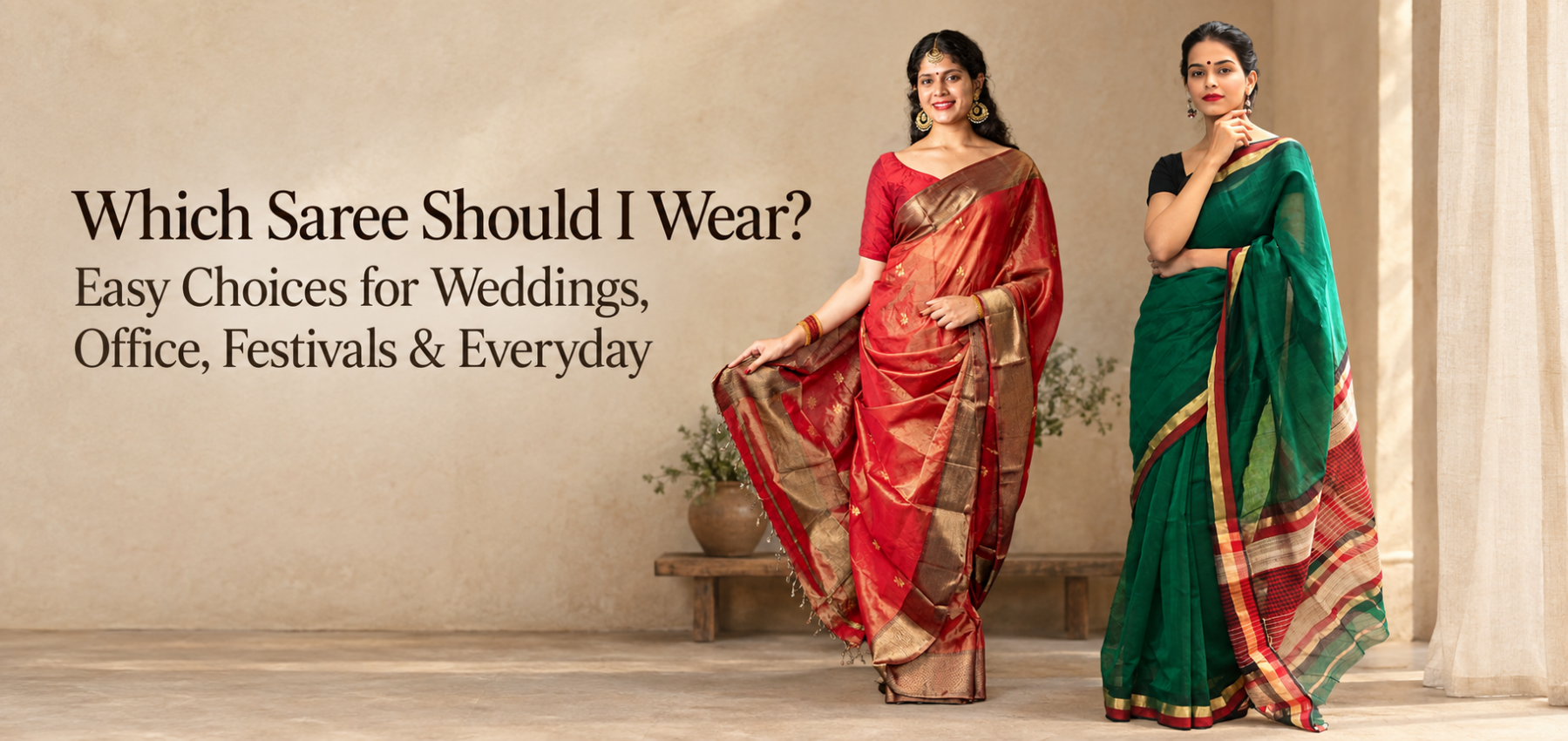
Which Saree Should I Wear? Easy Choices for Weddings, Office, Festivals & Everyday
September 17th, 2026 -
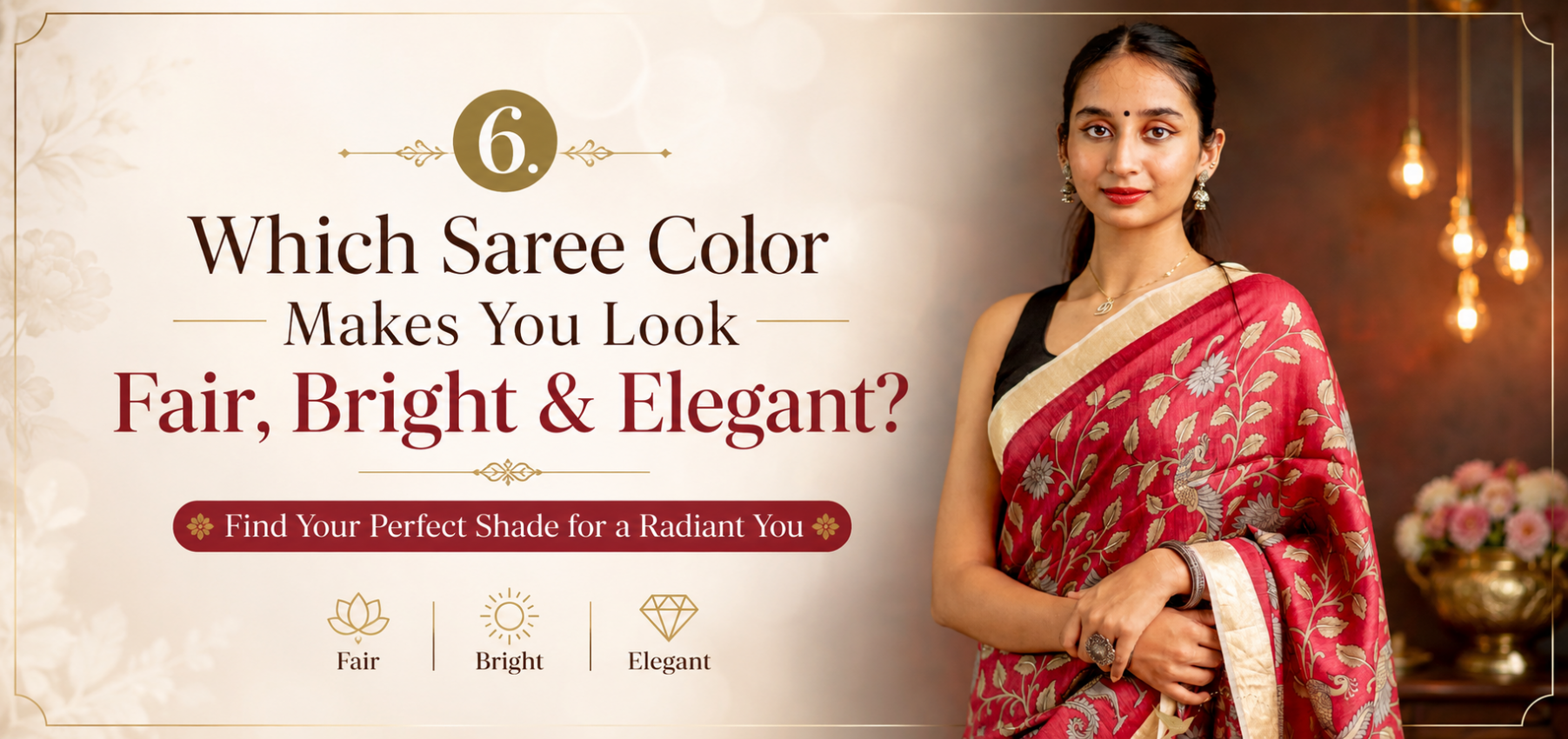 August 25th, 2026
 -
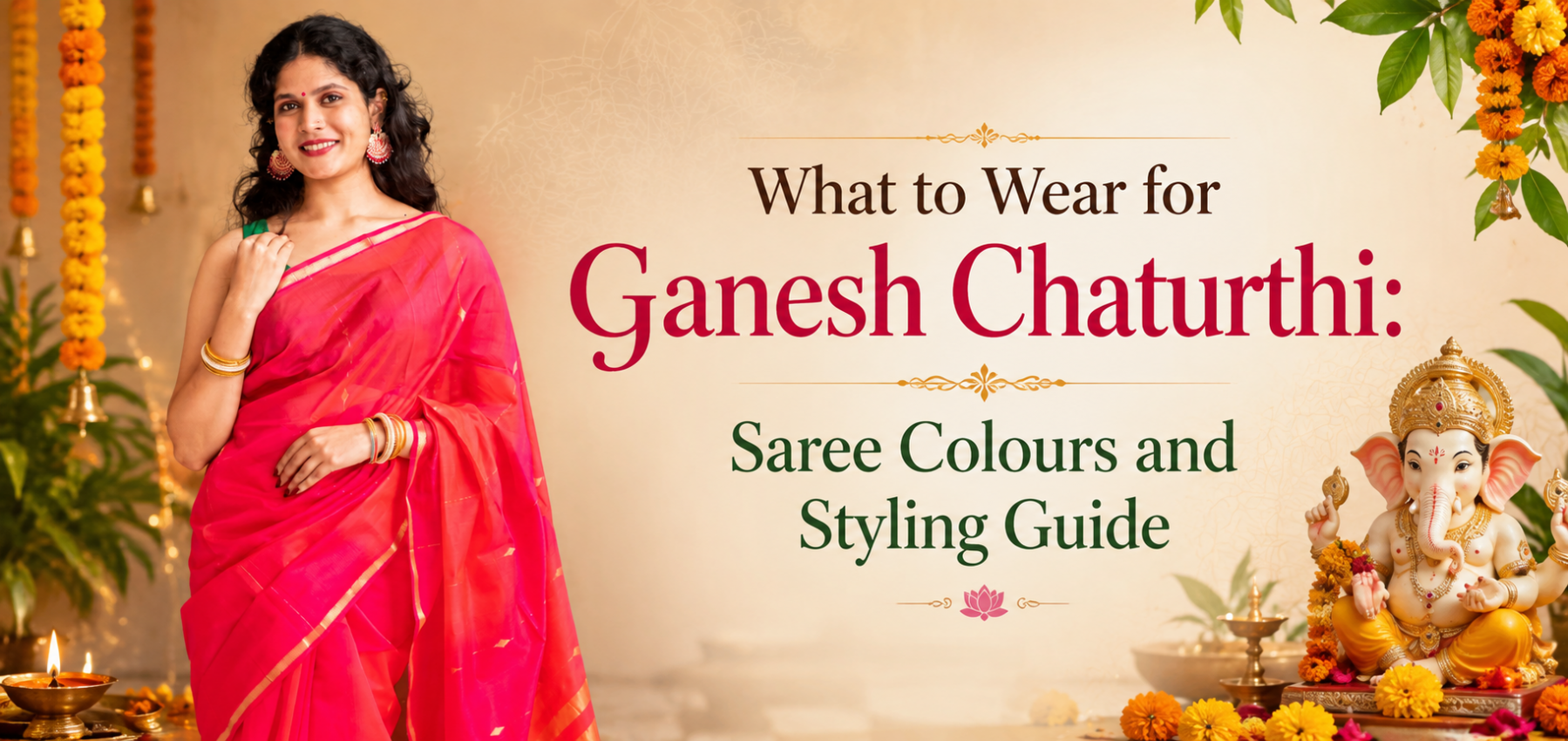
What to Wear for Ganesh Chaturthi: Saree Colours and Styling Guide
August 24th, 2026 -
 August 24th, 2026