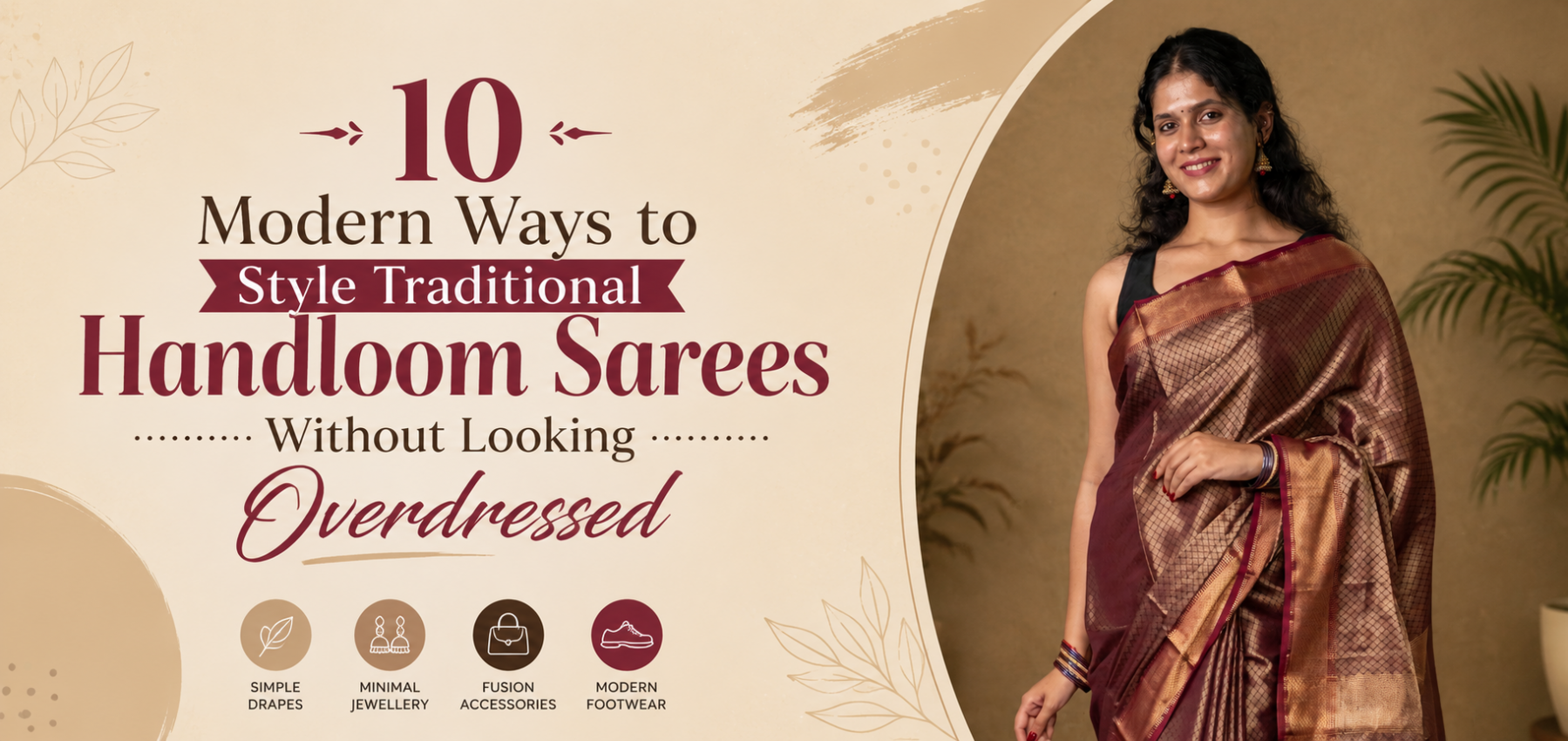
Office Saree Guide 2026: Comfortable Handloom Sarees That Look Professional All Day
Quick answer: The most comfortable, professional sarees for the workplace are lightweight handloom weaves — Maheshwari silk, handwoven cotton checks, Chanderi cotton, and hand-painted Batik cotton — styled in muted or neutral colours with a structured blouse and a neatly pinned pallu. These fabrics breathe through long working hours and hold their shape from the morning commute to an evening meeting.
The saree is steadily reclaiming space in the Indian workplace — not as an occasional festive choice, but as everyday office attire. Across corporate offices, schools, courts, and government departments, more women are choosing handloom over synthetic blends, largely because handwoven fabrics are simply easier to live in through a nine-hour workday. This guide breaks down exactly which handloom sarees work best for the office, how to style them so they read as polished rather than effortful, and how to build a small, dependable rotation you can rely on all year.
Why More Working Women Are Choosing Handloom in 2026
Synthetic and power-loom fabrics tend to trap heat, cling through long meetings, and lose their shape within a season of regular wear. Handloom fabrics behave differently — natural fibres like silk and cotton breathe, regulate body temperature, and soften with use rather than wearing out. This shift in preference is part of a broader pattern: sarees for working women are increasingly chosen for performance, not just appearance, which is why handwoven cotton and silk-cotton blends are quietly replacing georgette and polyester in office wardrobes across Indian cities.
What Actually Makes a Saree "Office-Appropriate"?
An office-ready saree isn't defined by price or fabric alone — it's defined by how it behaves through the day. The right pick holds its pleats without constant adjustment, doesn't crease badly on a commute, and pairs easily with a structured blouse. Restraint matters more than richness here; a best saree for office wear usually has a muted palette, a clean border, and minimal embellishment, so it reads as composed rather than ceremonial.
The Best Handloom Fabrics for a Long Office Day
Not every handloom weave suits a desk job equally well. These four hold up best across a typical Indian workday.
Maheshwari Silk — Polished and Lightweight
Woven on the banks of the Narmada, Maheshwari silk uses a silk-cotton blend that drapes cleanly and carries a subtle, non-flashy sheen — ideal for presentations and client-facing days. Its signature reversible border also means less fuss while dressing in the morning. A pure maheshwari silk saree in a solid or self-checked weave is one of the most dependable choices for a working wardrobe.
Handwoven Cotton Checks — The Everyday Workhorse
For daily wear, nothing beats a plain-weave or checked cotton handloom saree. It's breathable, easy to iron, and forgiving on busy mornings when there's no time for elaborate draping. Neutral checks in charcoal, ivory, or rust are particularly easy to repeat through the week without looking repetitive.
Chanderi Cotton — For Presentations and Client Meetings
Chanderi's sheer, almost translucent texture brings a touch of refinement without tipping into festive territory. It works well for days that carry slightly more weight — a board meeting, a conference, or an important client visit — where a little extra polish is welcome.
Hand-Painted Batik Cotton — For a Distinctive Desk-to-Dinner Look
For women who want their workwear to carry some personality, batik cotton sarees offer hand-painted, wax-resist patterns that still read as professional in muted earth tones. They're a good option for offices with a more relaxed dress code, or for transitioning straight from work to an evening plan without changing.
Colours and Patterns That Read as Professional
Neutral and muted tones — charcoal grey, ivory, steel blue, deep green, rust — consistently photograph and present as more "workplace" than bright festive colours. Subtle checks, tonal borders, and small woven motifs work better than bold contrast borders or heavy zari, which tend to pull a look toward occasion-wear rather than daily office dressing.
Blouse Choices That Hold Up Through a Workday
A structured, well-fitted blouse in cotton or silk-cotton does more for an office look than almost any other styling choice. Boat necks, collared shirt-style blouses, and full-sleeve fitted cuts all read as composed and professional. For days that call for a slightly more elevated look — say, a senior review or an industry event — a formal saree for office paired with a tailored, high-neck blouse strikes the right balance between authority and approachability.
Draping and Pallu Tips for All-Day Wear
A pallu pinned neatly at the shoulder stays put through a commute, a desk job, and a walk to a meeting room — which is exactly why it's the most practical choice for office wear. Keep pleats tucked firmly at the waist, use two or three safety pins at the shoulder and waist, and choose a petticoat that sits securely without slipping. These small mechanical details matter more to how "put-together" a saree looks by 5 p.m. than any accessory choice.
Climate also plays a role in how a drape holds up. In humid coastal cities, lighter cottons and silk-cotton blends resist creasing better than heavier silks, while in drier, air-conditioned offices further inland, slightly richer weaves like Maheshwari or Chanderi sit comfortably for longer stretches without needing readjustment. Carrying one or two extra safety pins in a desk drawer is a small habit that saves a lot of mid-afternoon fuss.
Building a Capsule Wardrobe of Office Sarees
Five to seven sarees, rotated thoughtfully, can comfortably cover a full working month without ever feeling repetitive. A practical starting mix looks like this: two neutral cotton checks for daily wear, one Maheshwari silk for client days, one Chanderi for presentations, and one piece from indian batik sarees for days that call for a bit more personality without tipping into festive territory. Building this kind of rotation slowly — rather than buying many sarees at once — also makes it easier to invest in genuinely well-made handloom pieces instead of fast-fashion alternatives that wear out within a season.
It helps to think in terms of "anchor" and "accent" sarees. Anchor pieces are the neutral, easy-care weaves you reach for on ordinary workdays — they should be sturdy, low-maintenance, and forgiving of a rushed morning. Accent pieces are the ones with more visible character — a richer border, a hand-painted motif, a slightly bolder colour — reserved for the days that carry a little more weight, whether that's a client presentation, an annual review, or a festive day at the office. Having even one or two accent sarees ready means you're never scrambling to put together a sharper look at short notice.
Caring for Handloom Sarees Between Workdays
Cotton handloom sarees can usually be hand-washed at home in cold water and air-dried in shade, while silk-blend weaves like Maheshwari are best dry-cleaned to preserve the border and sheen. Storing sarees folded in muslin cloth rather than plastic prevents yellowing and keeps natural dyes intact for years of repeated office wear. If you're starting a work wardrobe from scratch, browsing handcrafted sarees online from a source that documents fabric and weaving region makes it easier to choose pieces that will genuinely hold up to weekly use.
Common Mistakes That Make a Saree Look Less Professional
Heavy embellishment, very bright or clashing colours, a loosely pinned pallu, and stacking multiple jewellery pieces are the most common reasons a saree feels out of place at work. Most of these are easy to course-correct: simplify one element at a time, starting with jewellery, and the rest of the look usually falls into place.
Final Thoughts
A comfortable, professional saree for the office isn't about choosing the most expensive fabric — it's about choosing one that performs well across a full working day and styling it with restraint. Once you have a small rotation of dependable handloom pieces, dressing for work in a saree stops being a project and becomes routine. That's ultimately what makes handloom such a practical, long-term choice for sarees for working women across Indian offices, regardless of climate or industry.
Frequently Asked Questions
1. What is the best saree fabric for working women in India?
Handwoven cotton, Maheshwari silk, and Chanderi cotton are the most practical choices. They're breathable, hold their shape through long hours, and are easy to maintain between wears.
2. How many sarees do I need for a work wardrobe?
Five to seven sarees, rotated through the week, are usually enough — a mix of everyday cotton checks, one or two silk-blend pieces for important days, and one distinctive print for variety.
3. Can cotton sarees be worn for important meetings?
Yes. A well-pressed cotton saree in a neutral tone, paired with a structured blouse, looks composed and appropriate even for client meetings and formal reviews.
4. How do I keep a saree neat through a full workday?
Pin the pallu securely at the shoulder, tuck pleats firmly at the waist, and choose a fitted petticoat. These small adjustments keep the drape intact from morning till evening.
5. Are handloom sarees expensive compared to regular office wear?
Pricing varies by fabric, but handloom sarees often work out more economical over time, since they're durable, age well, and don't need replacing each season like fast-fashion alternatives.
-
Which Saree Should I Wear? Easy Choices for Weddings, Office, Festivals & Everyday
September 17th, 2026 -
 August 25th, 2026
 -

What to Wear for Ganesh Chaturthi: Saree Colours and Styling Guide
August 24th, 2026 -
 August 24th, 2026