Why the Right Fabric Makes All the Difference in Indian Ethnic Wear
Every Indian woman knows the feeling — you pick a saree or dupatta that looks stunning in the photograph, but the moment you wear it, something feels off. It drapes oddly, it feels too heavy for a summer afternoon, or it simply does not suit the occasion. More often than not, the culprit is not the colour or the print. It is the fabric.
Choosing the best fabric for every occasion is a skill that goes beyond aesthetics. It is about understanding how a textile behaves — how it drapes, breathes, catches light, and holds up across hours of wear. In India, where occasions range from a bright Diwali evening to a hushed office meeting to a week-long wedding celebration, getting the fabric right is what separates a good outfit from an unforgettable one.
This guide breaks down three of the most loved fabric categories in Indian ethnic wear — silk, cotton, and tissue — and helps you understand which one belongs in your wardrobe for which moment.
Understanding Indian Textile Fabrics Before You Choose
Before diving into individual fabrics, it helps to understand what you are actually evaluating when you hold a piece of cloth. Four things matter most: weight, drape, sheen, and breathability. A fabric that scores high on all four for one occasion may be completely wrong for another. Indian handloom traditions have spent centuries perfecting fabrics for specific climates and rituals — which is exactly why region-specific weaves like Maheshwari, Chanderi, and Kantha remain relevant even today.
What to Look for in a Fabric Before Buying
Ask yourself these four questions before selecting any fabric for ethnic wear:
How long will you be wearing it? A fabric that feels luxurious for the first two hours can become uncomfortable by hour six if it does not breathe well or is too heavy to manage.
What is the setting? An outdoor daytime event in May demands something entirely different from an air-conditioned banquet hall in December.
What is the formality level? Office wear, casual gatherings, festive events, and bridal functions each call for different visual textures and drape qualities.
How much draping effort are you comfortable with? Lighter fabrics are more forgiving and easier to manage. Heavier fabrics hold pleats better but require more practice and pinning.
Silk Sarees and Dupattas — When Tradition Demands the Best
Silk is perhaps the most celebrated fabric in Indian ethnic wear. Across generations, silk sarees and dupattas have been passed down as heirlooms, gifted at weddings, and saved for the most important occasions. But "silk" is not one uniform thing — there is a wide spectrum of silk weaves across India, each with its own character.
Which Occasions Call for Silk?
Silk earns its place at weddings, religious ceremonies, milestone celebrations, and any formal occasion where you want to make a lasting impression. The natural lustre of silk catches light beautifully in both daylight and artificial settings, making it the fabric of choice for events that will be photographed.
If you are attending a family wedding as a guest, a silk dupatta or saree in a deep jewel tone — think peacock blue, forest green, or burgundy — carries an effortless richness that synthetic fabrics cannot replicate.
The Case for Pure Maheshwari Silk
Among the regional silk weaves of India, Maheshwari stands apart for a very specific reason: it is woven on the banks of the Narmada river in Maheshwar, Madhya Pradesh, using a distinctive five-over-one checkered weave technique that creates a fabric with a reversible, two-sided lustre. A pure maheshwari silk saree is lighter than most silk varieties, which means it drapes more gracefully and is comfortable enough for longer wear — a quality that matters greatly at events that stretch across an entire day.
Maheshwari silk is particularly well-suited to semi-formal occasions where you want the elegance of silk without the stiffness. Think Karva Chauth gatherings, navratri evenings, or a formal dinner where you want to look polished but not overdressed.
Chanderi Silk — The Summer Silk India Loves
Chanderi is technically a blended weave — it combines silk weft with cotton warp — which gives it a sheerness and lightness that pure silk varieties do not have. A chanderi silk dupatta catches light with a subtle shimmer, drapes effortlessly over any outfit, and remains breathable enough to wear even in warmer months. It is the bridge between the casual comfort of cotton and the celebratory richness of silk.
Chanderi works beautifully for festivals, family functions, and late-evening events where you want a hint of shine without the weight of heavier silks.
Cotton Fabrics — The Everyday Choice That Never Compromises on Grace
Cotton has an image problem in Indian fashion that it absolutely does not deserve. For decades, cotton was seen as the "practical" choice — something you wore at home or on a casual day out. That perception has shifted dramatically, and rightly so. The finest handwoven cotton fabrics — think block-printed cotton, fine Maheshwari cotton, or hand-spun voile — are as refined as any silk, and far more versatile.
Why Cotton Works for More Occasions Than You Think
India's climate is the most compelling argument for cotton. In a country where summer temperatures regularly cross 40°C and humidity is a constant companion in several regions, a fabric that breathes, wicks moisture, and stays comfortable through long hours of wear is not just preferred — it is necessary.
But breathability alone does not make cotton relevant across occasions. What makes handwoven or hand-printed cotton special is the craftsmanship embedded in it. A well-executed batik print saree online — where the wax-resist technique creates layered, intricate patterns across the fabric — carries as much artisanal value as any silk weave.
Cotton for Workplace Dressing
The workplace has opened up significantly to Indian ethnic wear over the past decade, and cotton leads this shift. A crisp cotton saree or a cotton dupatta paired with a linen kurta is one of the most elegant and practical choices for a working Indian woman. It communicates professionalism without sacrificing cultural identity.
If you are looking for a formal saree for office, choose cotton in structured weaves with minimal embellishment — fine stripes, subtle geometric block prints, or clean borders work best. Avoid heavy zari work or very bright colours for formal office environments unless the office culture actively encourages festive dressing.
Cotton for Casual and Festive Occasions
For casual family gatherings, daytime festive occasions, or Sunday puja at home, cotton is your most comfortable and elegant choice. A hand-block-printed cotton dupatta adds visual interest to a plain kurta without effort. For Diwali morning rituals or a casual mehendi function, a cotton saree in a warm festive colour is entirely appropriate — and far more comfortable than you would be in silk or tissue.
Tissue Fabric — The Understated Showstopper for Festive Occasions
Tissue is perhaps the most misunderstood fabric in Indian ethnic wear. Many women associate it exclusively with bridal or heavily embellished styles — that broad, stiff, golden fabric that comes out only at weddings. But authentic handwoven tissue is a far more nuanced fabric than that association suggests.
What Makes Tissue Fabric Different?
Tissue fabric is woven with metallic zari threads — gold, silver, or copper-coloured — interlaced with silk, cotton, or blended fibres. What sets it apart is that the metallic threads are part of the weave structure itself, not applied or embroidered on the surface. This means the shimmer is consistent, catches light from every angle, and does not fade or peel over time the way surface embellishments can.
Tissue is also remarkably lightweight relative to its visual richness. A handwoven tissue saree delivers the kind of luminous, all-over shimmer that looks spectacular in photographs — without the physical weight of brocade, velvet, or heavily embroidered fabrics. This makes it genuinely wearable for long events, not just for a few photogenic hours.
When to Choose Tissue Over Silk
Tissue is the right choice when you want dramatic visual impact but cannot afford the heaviness of traditional brocade silk. For sangeet evenings, cocktail functions within wedding celebrations, or any festive occasion where you want to stand out gracefully, tissue earns its place.
Tissue Chanderi — a regional variant that combines Chanderi's characteristic sheerness with zari tissue weaving — is particularly beautiful for festive evenings. It is lighter and more breathable than standard tissue, which makes it a practical choice for celebrations in warmer months or regions.
Tissue Dupattas as a Styling Tool
A tissue dupatta is one of the smartest additions to any ethnic wardrobe because it transforms an otherwise simple outfit instantly. A handwoven dupatta in tissue, draped over a cotton or silk base outfit, adds the festive shimmer you need for a celebration without committing to a full tissue ensemble. It is also a practical way to explore the fabric if you are new to tissue before investing in a full saree.
A Quick Fabric Guide for Every Indian Occasion
Wedding (Guest)
Choose silk — Maheshwari silk or Chanderi silk — in deep, jewel-toned colours. If you want to stand out elegantly, a tissue dupatta over a silk base is a sophisticated layering choice.
Festive Occasions (Diwali, Navratri, Eid)
Cotton for daytime; Chanderi silk or tissue for evening functions. Batik or block-printed cotton sarees work beautifully for daytime celebrations.
Office and Workplace
Structured cotton or fine Maheshwari silk sarees in muted tones. Avoid heavy embellishments and very sheer fabrics for formal professional settings.
Casual Family Gatherings
Handwoven cotton in any colour or print. Comfortable, easy to manage, and appropriate for extended wear throughout the day.
Bridal and Special Ceremonies
Pure silk or handwoven tissue sarees are traditional choices. Tissue sarees are increasingly popular for brides who want visual richness without the weight of heavier bridal fabrics.
How to Care for Silk, Cotton, and Tissue at Home
Caring for Silk
Dry cleaning is the safest option for pure silk sarees, especially those with zari borders or heavy embellishment. If hand-washing, use cold water and a mild detergent, and never wring or twist the fabric. Store silk sarees wrapped in muslin cloth, away from direct sunlight.
Caring for Cotton
Handwoven cotton can typically be hand-washed in cold water. For block-printed cottons, wash separately for the first few washes as natural dyes may run slightly. Dry in shade rather than direct sunlight to preserve colour depth. Iron at medium heat while slightly damp for the crispest result.
Caring for Tissue
Tissue is delicate — the metallic threads can snag on jewellery, rough surfaces, or even dry skin. Dry cleaning is strongly recommended. Store tissue sarees and dupattas in soft muslin or net bags, unfolded if possible to prevent permanent crease lines in the metallic threads.
Frequently Asked Questions
Which fabric is best for wearing a saree in Indian summer?
Cotton is the best fabric for Indian summers. It is breathable, moisture-wicking, and comfortable across long hours of wear. Handwoven cotton sarees — including fine block-printed varieties — are particularly well-suited to daytime summer occasions. Chanderi, which blends cotton and silk, is also a good option for slightly more formal summer events.
What is the difference between tissue silk and pure silk sarees?
Pure silk sarees are woven entirely from silk threads and carry a smooth, consistent lustre with natural weight. Tissue fabric is woven with metallic zari threads interlaced with silk or cotton — giving it an all-over shimmer that is more dramatic than pure silk. Tissue is typically lighter than heavy pure silk varieties despite its richer visual appearance.
Can cotton sarees be worn to weddings in India?
Yes, cotton sarees can absolutely be worn to Indian weddings, particularly for daytime functions like haldi, mehendi, or morning ceremonies. High-quality handwoven cotton sarees with fine borders or block-print work are entirely appropriate as guest attire for casual wedding functions. For main ceremony events like the wedding reception, silk or tissue is generally more suitable.
What makes Maheshwari silk different from other silk sarees?
Maheshwari silk is woven in Maheshwar, Madhya Pradesh, using a traditional five-over-one weave technique that creates a reversible, two-sided lustre. It is lighter and more breathable than many other Indian silk varieties, which makes it comfortable for longer wear. Its characteristic ribbed texture and subtle sheen make it a refined choice for both festive and semi-formal occasions.
Is tissue fabric suitable for everyday wear or only for special occasions?
Tissue fabric is best reserved for festive and special occasions rather than daily wear. Its metallic zari threads are delicate and can snag with regular handling, and the fabric requires dry cleaning, making it impractical for daily use. For everyday elegance, cotton or fine Chanderi silk are far more practical choices that still maintain a refined look.
-
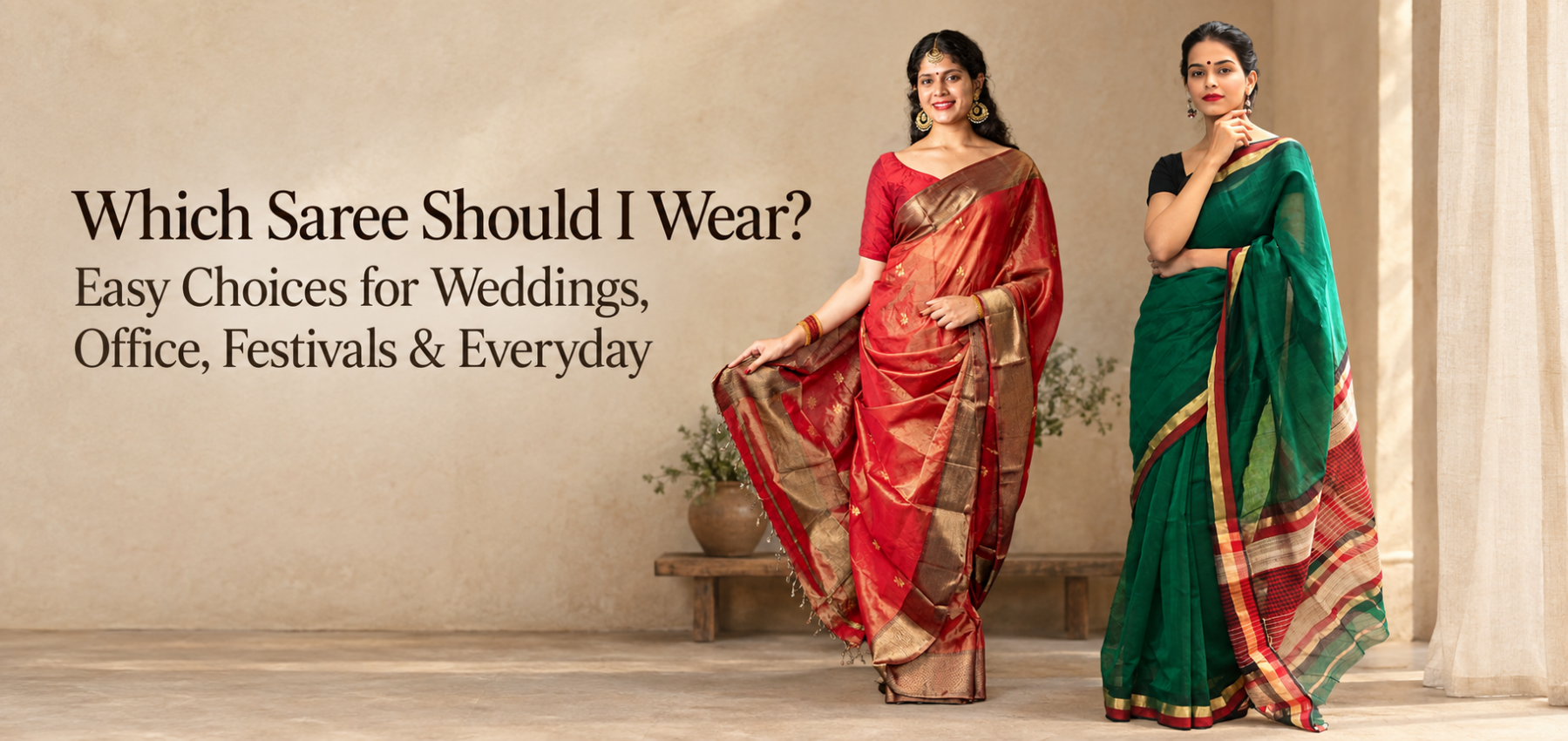
Which Saree Should I Wear? Easy Choices for Weddings, Office, Festivals & Everyday
September 17th, 2026 -
 August 25th, 2026
 -
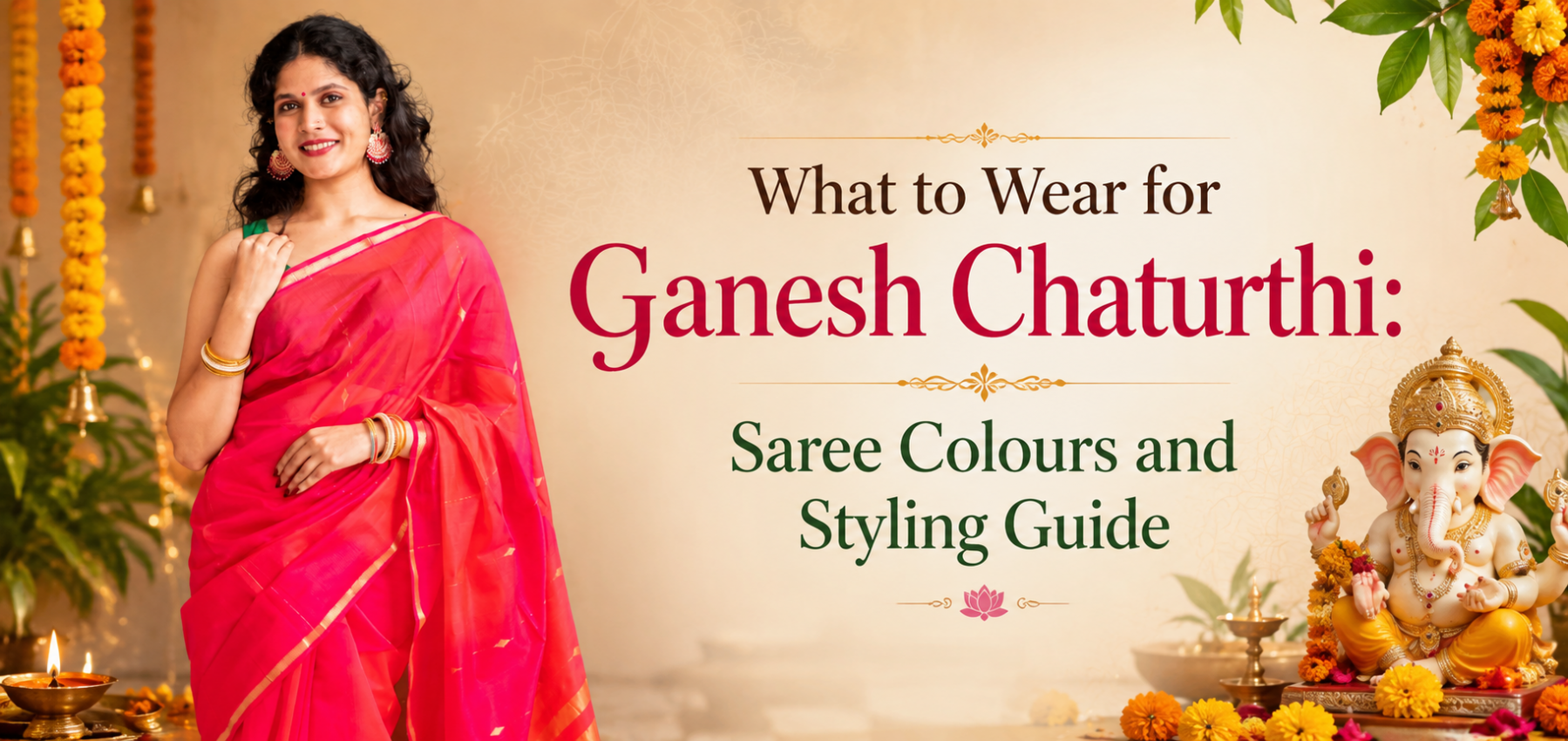
What to Wear for Ganesh Chaturthi: Saree Colours and Styling Guide
August 24th, 2026 -
 August 24th, 2026